Getting Around Los Angeles: Car, Metro and Rideshare Explained
What is the best way to get around Los Angeles?
A rental car is the practical default for most visitors, since the city has no single centre and many attractions sit far apart. LA Metro rail and bus cover Downtown, Hollywood, Koreatown, Santa Monica and Long Beach reasonably well, and rideshare fills the gaps, but neither replaces a car for a wider itinerary.
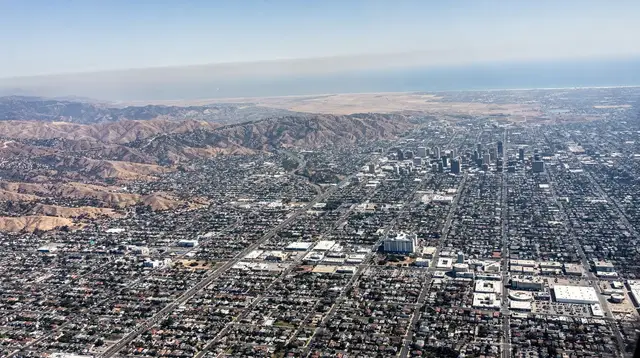
Los Angeles does not have a centre the way most cities do. It is a basin ringed by mountains, stitched together from districts that developed as separate towns, and the practical result is that two neighbourhoods that look close together on a map can easily sit 30 to 60 minutes apart by car, depending on the time of day.
This page focuses specifically on getting around the Los Angeles side of the region — Downtown LA, Hollywood, Griffith Observatory, Beverly Hills, West Hollywood and Pasadena — which is a denser, more sprawling urban core than Santa Barbara’s transport picture, a smaller and more rural stretch of coast covered separately.
Los Angeles is several cities, not one
Before anything else, it helps to be clear about scale. The City of Los Angeles itself covers a huge footprint, and the wider urbanised area stretches well beyond its formal boundary into places like Santa Monica, Long Beach and Pasadena, each an independently incorporated city with its own government. Distances between them are best measured in driving time, not kilometres or miles, because the same route can take roughly twice as long during weekday rush hour as it does off-peak. Planning a day around two or three areas, rather than trying to cover the whole basin, tends to work far better than an ambitious point-to-point itinerary.
Renting a car: the default choice for most visitors
For most trips built around Things to Do in Los Angeles, a rental car is simply the most reliable option. Many of the region’s best-known stops — the Getty Center, the wider beach towns, the desert, Orange County — are not realistically reachable by public transport, and even within the city, having a car removes the guesswork of connecting bus and rail lines across an area this large.
A day of economy car rental commonly runs in the rough range of $40 to $90 or more depending on season and demand, and parking is the other cost to budget for: dense areas and major attractions typically charge somewhere between $10 and $30 or more per day. It is worth checking a specific attraction’s parking policy before arriving, since some sites reduce their rate later in the day.
The trade-off is traffic. LA’s freeways are known as much by nickname as by number — the 405, the 101, the 10, the 5 — and congestion peaks roughly on weekday mornings and again in the late afternoon through early evening. A drive that takes 20 minutes at midday can stretch past 45 minutes at 5pm. Built-in navigation apps that route around live congestion are close to essential, and it is worth deliberately avoiding freeway travel during peak windows when an itinerary allows it.
LA Metro: useful on specific corridors, not a citywide solution
LA Metro’s rail and bus network does cover meaningful ground within the city, and it is worth using where it fits. The system reaches Downtown, Hollywood and Koreatown well, the E Line extends out to Santa Monica, and the A Line runs down to Long Beach. A single fare is a flat $1.75 with free transfers within two hours, and daily and weekly spending is capped at $5 and $18 respectively, which makes it genuinely inexpensive for the routes it serves.
What Metro does not do is knit the whole region together. It does not meaningfully reach Beverly Hills, West Hollywood, Malibu, the South Bay beach towns, or anywhere in Orange County or the desert, and gaps between stations often still require a rideshare or a fair amount of walking. Treating Metro as a way to cover a couple of well-served corridors — say, a Downtown and Hollywood day, or a Santa Monica beach day — works well. Treating it as a substitute for a car across a full Los Angeles itinerary does not.
| Mode | Best for | Rough cost | Limitation |
|---|---|---|---|
| Rental car | Any multi-area itinerary, day trips | $40-90+/day plus parking | Traffic at peak hours, parking fees |
| LA Metro rail/bus | Downtown, Hollywood, Koreatown, Santa Monica, Long Beach | $1.75/ride, $5/day cap | Does not reach most of the wider region |
| Rideshare (Uber/Lyft) | Short hops within one area | Varies with distance and demand | Costs add up over a spread-out day |
Rideshare and taxis: good for gaps, not for a whole itinerary
Uber and Lyft are widely available across the city and fill in where Metro does not reach — a ride from a Hollywood hotel to a West Hollywood restaurant, for instance, or the last stretch between a Metro station and a specific attraction. Rideshare tends to work best as a complement to either a rental car or a Metro-based plan focused on well-served areas, rather than as the backbone of an entire trip, since stacking several rides across a spread-out day in Los Angeles adds up quickly in both cost and time.
Biking, scooters and getting around on foot within one area
Within a single walkable pocket — Santa Monica and Venice, Downtown’s Arts District, or a stretch of Hollywood Boulevard — biking or an e-scooter can be faster than waiting for a rideshare and considerably cheaper than stacking several short car trips.
Dockless bike and scooter rentals are common along the coast, and a standard bike rental or an electric bike rental makes covering the flat beach path between Santa Monica and Venice, or the Long Beach waterfront, easy without moving a car at all. The bike and scooter tours guide goes into more detail on specific routes and rental logistics.
Walking, by contrast, only really works within a single neighbourhood. Downtown, Hollywood Boulevard and the Third Street Promenade in Santa Monica are each comfortably walkable on their own, while the gaps between neighbourhoods remain firmly a driving, transit or rideshare matter — trying to walk between them wastes far more time than it saves. The safety and neighborhoods guide is worth checking before deciding which areas to explore on foot, particularly after dark.
Choosing your airport matters more here than in most cities
LAX is the main international gateway and the default choice for most visitors, but it is not automatically the best one. Hollywood Burbank Airport (BUR), Long Beach Airport (LGB), John Wayne Airport (SNA) in Orange County, and Ontario International Airport (ONT) are all smaller alternatives, and picking the right one for where you are staying can meaningfully cut driving time. A trip centred on Hollywood, Griffith Observatory or Pasadena, for example, is often a noticeably shorter drive from Burbank than from LAX, while a stay closer to Long Beach or Orange County favours LGB or SNA.
Seeing the city from above or from the water
Two experiences worth separating clearly from everyday transport are helicopter flights and boat trips out of Long Beach. Neither replaces a car or the Metro for getting between attractions, but both offer a genuinely different way to take in the skyline, the coastline and the sprawl of the basin without sitting in freeway traffic.
A helicopter route that traces the city’s landmarks from the air, such as the helicopter flight past well-known Los Angeles landmarks, gives a sense of scale that is hard to get from the ground, and a guided overview like the full-day tour covering the city’s main highlights can be a practical way to see several distant districts in one outing without driving yourself between each stop.
For visitors who prefer to have someone else navigate the freeways entirely for a day, a private option such as the private, customisable Los Angeles tour or a structured overview like the guided city highlights tour removes the transport planning from the equation for that portion of the trip, which can be worth the cost on a short visit where time matters more than budget.
Groups travelling together have a similar option at a different scale: a party bus rental with a chauffeur keeps a whole group moving between venues on a night out without splitting into several separate rideshares.
Long Beach adds a handful of low-key options beyond the standard sightseeing tour and boat cruise. A water bike rental in Alamitos Bay, a swan boat rental at Rainbow Lagoon, or for a longer outing a private sailboat rental with a captain each turn a stretch of waterfront into the day’s activity rather than a way of getting somewhere else.
Closer to Downtown, an Echo Park Lake swan pedal boat rental is a similarly low-key way to spend an hour in the city without needing to drive anywhere else that day.
Planning your route by area, not by attraction list
Because distances in Los Angeles are governed by traffic rather than straight-line distance, the most efficient way to plan is by grouping stops geographically and tackling one or two areas per day rather than criss-crossing the basin. A Hollywood and Griffith Observatory day pairs naturally, since both sit in the same part of the city; a Downtown day covering Union Station, the Arts District and Grand Central Market works well together; and a Beverly Hills and West Hollywood afternoon groups two adjacent, walkable pockets.
Longer excursions further out, whether to the desert or the coast beyond the city, are best treated as their own dedicated day rather than squeezed in alongside in-city stops. For a structured starting point, the two-day budget itinerary built around minimal driving is a useful reference for what is realistically achievable without a car, and the rental car versus rideshare comparison goes deeper into the cost trade-offs between the two.
Practical timing tips
A few habits make a real difference to how much of the day gets lost to transport. Scheduling any freeway-dependent plans outside the weekday morning and evening peaks avoids the worst of the congestion. Building in a buffer of at least 15 to 20 minutes beyond a navigation app’s estimate for any cross-town drive is a reasonable safety margin, since traffic conditions shift quickly.
And checking parking costs and availability in advance for a specific stop, particularly around Griffith Observatory at sunset or any weekend beach visit, avoids arriving only to circle for a space. For attractions with separate advance-ticket systems, the passes and skip-the-line guide and the wider look at transfers and getting from the airport both cover the booking side of the logistics in more detail.
Getting around Los Angeles: frequently asked questions
Do I need a rental car in Los Angeles?
For most itineraries, yes. A car is the only realistic way to combine beaches, Hollywood, museums and any day trip into one visit, since the city covers a huge area with no single walkable centre.
Can I get around Los Angeles without a car?
It is possible if your trip stays close to a Metro rail line, such as Downtown, Hollywood, Koreatown, Santa Monica or Long Beach, filling gaps with rideshare. Trips further afield, including the Getty Center, Malibu or the desert, become much harder without a car. The Metro coverage explainer walks through exactly which areas work and which do not.
Does LA Metro go to the beach?
The E Line reaches Santa Monica and the A Line reaches Long Beach, so those two beach areas are Metro-accessible. Other coastal spots such as Venice, Malibu and Manhattan Beach are not directly served by rail.
Which airport should I fly into for Los Angeles?
LAX is the main international gateway, but Hollywood Burbank, Long Beach, John Wayne in Orange County and Ontario are smaller alternatives that can meaningfully cut driving time depending on where you are staying.
How bad is Los Angeles traffic?
Traffic peaks on weekday mornings and again in the late afternoon and early evening. The same drive can easily take twice as long at rush hour as it does in free-flowing traffic, so timing matters as much as distance — see the driving and parking guide for more on avoiding the worst of it.
Is Uber or Lyft enough to see Los Angeles?
Rideshare works well for short hops within one area, such as Hollywood or Downtown, but stacking several rides across a spread-out day adds up in cost and time compared with a rental car. The car versus rideshare cost breakdown compares the two directly.
Can I take a helicopter or boat instead of driving in Los Angeles?
Helicopter flights and boat trips around Long Beach are memorable ways to see the coastline and skyline from a different angle, but they are sightseeing experiences, not a practical substitute for everyday transport around the city.
Should I rent a car for the whole trip or only part of it?
Many visitors do best with a hybrid approach: relying on Metro and rideshare for a Downtown or Hollywood-focused stretch of the trip, then picking up a rental car specifically for the days that involve the beaches, the desert or any day trip outside the immediate city. This avoids paying for parking on the days a car adds little value while still covering the days where it is close to essential. The budget-focused two-day itinerary and the wider passes and tickets guide are useful starting points for structuring a trip this way, alongside general planning notes on the Los Angeles planning hub.
Tours with transport included
Verified deep-linked GetYourGuide tours. Book through these links and we earn a small commission at no cost to you.
GetYourGuide does not provide a product photo for this activity — the image shows the meeting point, photographed by us.