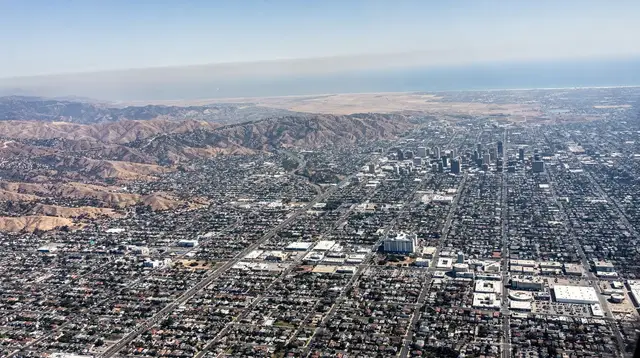
Does the LA Metro Cover Enough of the City?
Does the LA Metro rail network cover enough of Los Angeles for a visit?
It covers a real slice of the city well — Downtown, Hollywood, Koreatown and Santa Monica on the E Line, and Long Beach on the A Line — but it does not reach Beverly Hills, Malibu, Venice Beach, the desert, Orange County or the Central Coast, so most itineraries still need a car or rideshare for part of the trip.
What the Metro rail lines actually reach
I got asked this question by three different friends planning their first LA trip within the same month, and I gave three different answers before I sat down and actually mapped it out properly. The honest answer is: it depends entirely on which part of the city you mean, because “the LA Metro” is not one thing that either works or doesn’t — it’s a rail network that covers some corridors extremely well and simply does not exist in others.
Here’s the part that surprised me most when I first moved here and started using it seriously. The E Line (the light rail line most visitors end up on) runs a genuinely useful corridor through the middle of the basin: Downtown LA, through Koreatown, up toward Hollywood, and all the way out to Santa Monica near the beach. That’s not a token connection — it’s a real, ride-the-whole-way, come-out-the-other-end-somewhere-useful line, and I’ve used it to go from a Downtown hotel to the Santa Monica Pier without touching a car door.
The other line worth knowing about is the A Line, which reaches down to Long Beach — useful if you’re staying near Downtown and want to see the Queen Mary or spend a day by that stretch of coast without renting anything.
Beyond those two corridors, there’s also a Metro connection into Pasadena and out toward Universal Studios Hollywood via the B Line, which I mention because people often assume the rail system is only the E and A Lines — it isn’t, but the two I’ve described above are the ones that matter most for a typical first visit.
What it flatly does not cover
This is the list I wish someone had given me before my first trip, because I spent an afternoon trying to figure out a rail route to Malibu that simply does not exist.
- Beverly Hills — no Metro rail station in the city itself; you’re walking from a nearby stop plus a fair distance, or you’re driving.
- Malibu — nothing. The Pacific Coast Highway corridor north of Santa Monica has no rail service at all.
- Venice Beach — close to the Santa Monica E Line stop on a map, but it’s a walk of well over half an hour along the boardwalk, not a quick hop.
- The desert — Palm Springs, Joshua Tree, all of it is car territory. No rail option exists.
- Orange County — Disneyland Anaheim, Newport Beach, Laguna Beach: outside the Metro rail network entirely.
- The Central Coast — Santa Barbara, Solvang, and everything further up the coast, no rail link from LA.
If your trip touches any of those areas — and for most first-time visitors, at least one of them is on the list — the Metro is only ever going to be part of your answer, never the whole answer.
What I actually did with it
On my last trip I stayed near Hollywood for the first two nights specifically because it sits on the E Line, and it changed how I moved through those days. I took the rail down to Downtown one morning, wandered the Arts District and Grand Central Market on foot, then rode it straight back without ever looking for parking — which, if you’ve dealt with Downtown parking, is worth something on its own.
A few days later, staying closer to the beach, I did the same thing in reverse: rode the E Line out from Santa Monica into Koreatown for dinner, no car involved. Those two stretches of the trip were genuinely easier by rail than they would have been by car, mostly because I wasn’t hunting for parking or watching a map app recalculate around traffic.
But the days I went to Malibu and up into the hills above Griffith Observatory, the Metro wasn’t part of the plan at all — it physically couldn’t be. I picked up a rental for those days and dropped it again once I was back in a rail-served part of the city, which kept the daily rental cost down without giving up the flexibility I needed for the coastal drive.
My rule of thumb: combine, don’t choose one or the other
The mistake I see people make is treating this as an either/or decision — either “I’ll rent a car for the whole trip” or “I’ll use transit for the whole trip.” Neither extreme matches how the city is actually built. My rule now is simple: if I’m staying and mostly moving between Downtown, Hollywood, Koreatown, Santa Monica or Long Beach, I lean on the E and A Lines and walk the last stretch. The moment my plans include Beverly Hills for more than a passing look, Malibu, Venice Beach proper, the desert, Orange County or anywhere up the coast, I book a rental car or budget for rideshare for those specific days.
That combination — rail plus walking for the corridors it actually serves, a car or rideshare for everything else — has worked better for me than committing to one mode for the entire trip. It also means I’m not paying for a rental sitting in a hotel garage on the days I’m only moving between Hollywood and Santa Monica.
a guided highlights tour that covers several of these districts in one day without you having to plan the route yourself is a good option for the days you’d rather not think about transit logistics at all, and if the Hollywood Sign is on your list, a guided hike up to the Hollywood Sign viewpoints solves a spot the rail network genuinely cannot reach on its own. For a wider loop through the more spread-out districts, an open-air bus tour through Hollywood and Beverly Hills covers ground that would otherwise mean stitching together rail, walking and rideshare. And if you’re building a longer trip that reaches beyond the city into the wider Southern California region, a multi-day tour departing from Los Angeles is worth a look rather than trying to self-drive the whole route.
For deeper planning on the car question itself, it’s worth reading do you need to rent a car in Los Angeles and driving and parking in Los Angeles, which cover the region-wide picture rather than just the rail network.
If you’re deciding between renting outright or leaning on apps, rental car vs rideshare in Los Angeles lays out the trade-offs, and where to stay in Los Angeles by itinerary is genuinely the single decision that determines how much you’ll lean on the Metro versus a car, since picking a hotel on the E Line corridor changes everything about how the rest of the trip flows.
FAQ: getting around Los Angeles by Metro rail
Can I visit Los Angeles without ever renting a car if I stick to the Metro?
Only if your entire trip stays within the E Line and A Line corridors — Downtown, Koreatown, Hollywood, Santa Monica and Long Beach. Step outside that footprint and you’ll need a rideshare or rental car.
Does the Metro reach Beverly Hills or Rodeo Drive?
No. There’s no Metro rail station in Beverly Hills itself, so you’d be walking a significant distance from the nearest stop or arriving by car or rideshare instead.
Is Venice Beach on the Metro line?
Not directly. The E Line ends in Santa Monica, and Venice Beach is a long walk south along the boardwalk from there, not a short connection.
Can I get to Malibu by Metro?
No, there is no rail service along the Pacific Coast Highway toward Malibu. A car is the only realistic option for that stretch of coast.
Does the Metro connect to Disneyland or Orange County?
No, Orange County — including Disneyland Anaheim, Newport Beach and Laguna Beach — sits outside the Metro rail network entirely.
What about the desert, like Palm Springs or Joshua Tree?
Also no rail connection. Both require a car for the drive out from the city.
Is it worth combining Metro with walking rather than driving everywhere?
For the districts it actually serves, yes — I’ve found riding the E Line and walking the last stretch faster and less stressful than driving and parking in Downtown or Hollywood specifically.
Should I rent a car for my whole LA trip just in case?
Not necessarily. A more efficient approach for many trips is renting only for the days that include areas outside the rail network, and relying on the E and A Lines plus walking on the days that stay within them.
Tours with transport included
Verified deep-linked GetYourGuide tours. Book through these links and we earn a small commission at no cost to you.
GetYourGuide does not provide a product photo for this activity — the image shows the meeting point, photographed by us.