A cove town, not a boardwalk town
Laguna Beach is the stretch of Orange County coast where the shoreline stops being flat. Instead of one long continuous beach, the town is strung along a series of small, separate coves tucked beneath sandstone cliffs, each reached by its own set of steps or a short walking path from Pacific Coast Highway. That geography shapes almost everything about a visit: there is no single “the beach” the way there is in Huntington Beach, just a sequence of distinct pockets of sand, tide pools and headlands to work through one at a time.
The town’s other defining trait is its identity as an art colony. Laguna Beach has hosted a working community of painters and craftspeople since the early twentieth century, and that history is still visible today in the concentration of galleries along Pacific Coast Highway and Forest Avenue, in the summer arts festivals, and in a general civic emphasis on preserving views and open coastline rather than building it out. This combination of cliffs, coves and galleries is what separates Laguna from its two closest neighbors.
Newport Beach, just north, is built around a working harbor and a boating culture, with piers, marinas and a much more developed waterfront. Huntington Beach, further north still, is the region’s flat, wide, classically Californian surf beach, with a long municipal pier and boardwalk. Laguna sits between the two in character: quieter and more vertical than Huntington, more artistic and less nautical than Newport.
Getting there from Los Angeles
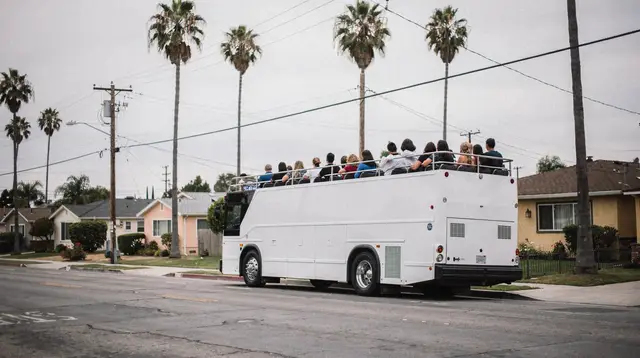
Laguna Beach is roughly 1 to 1.5 hours from central Los Angeles by car under normal conditions, though that range stretches considerably during weekday rush hour and on summer weekend afternoons, when the coastal approach and Pacific Coast Highway itself can back up. As with most destinations spread across the Los Angeles region, a car is the practical way in: there is no direct LA Metro rail or bus line reaching Laguna Beach, and stitching together public transit from the city would involve multiple transfers and a journey considerably longer than driving. Most visitors either self-drive, join an organized day tour, or arrange a private transfer.
For a first look at the coastline without planning logistics yourself, an organized day trip such as the small-group SUV day tour from Los Angeles to Laguna Beach covers the drive and typically pairs Laguna with nearby stops, which is a reasonable option if you’d rather not deal with coastal parking yourself on a first visit.
Once in town, Laguna Beach itself is compact and walkable along its central stretch, with the main coves, restaurants and galleries within a short walk of each other around the town center. A car (or an organized tour) remains the more realistic way to reach the town in the first place and to explore the wider Orange County coast beyond it, including Dana Point to the south and Newport Beach to the north.
Parking and timing
Laguna Beach’s popularity and its limited flat land near the coves mean that parking is one of the most practical constraints on a visit, particularly in summer. Public lots and metered street parking near the most popular coves fill early on warm weekends, and prices rise with demand in peak season. It is not accurate to say that parking is easy to find in Laguna Beach in summer; the realistic expectation is that arriving early in the day, or being flexible about which cove you park near and walking from there, meaningfully improves your odds. Some visitors choose to arrive by rideshare specifically to skip the parking question altogether, particularly for an evening dinner or gallery visit rather than a beach day.
Timing your visit within the day also matters. Coastal Southern California can bring overcast mornings in late spring and early summer — a marine layer of low cloud that typically burns off by midday — so a beach-focused morning in May or June may start grayer than expected even when the forecast reads “sunny.” Afternoons are generally the more reliably clear window during that period. By contrast, high summer brings warmer water, larger crowds and the tightest parking, while September and October often combine some of the clearest, warmest days of the year with lighter crowds than July and August.
The coves, one at a time
Laguna’s coves each have a slightly different character, and no single one can stand in for the whole town, which is part of why claims that Laguna Beach can be thoroughly seen in under an hour don’t hold up — getting a genuine sense of the place means moving between several of these pockets of coastline, not glancing at one from a viewpoint.
Main Beach, at the heart of downtown, is the widest and most central stretch of sand, backed by the town’s shops and restaurants and a popular spot for volleyball and casual swimming. Heisler Park, on the bluffs just north, is less a beach than a clifftop walking path with panoramic ocean views, tide pools below, and access down to several smaller coves including Divers Cove, which is popular with snorkelers thanks to a protected marine reserve just offshore.
Further along the coast, Crescent Bay and Shaw’s Cove offer quieter, more residential settings with their own tide pools and, at Crescent Bay, a wider crescent of sand backed by bluff-top homes. South of downtown, Thousand Steps Beach (which, despite the name, involves closer to a couple hundred steps) is a long, less crowded stretch of sand favored by those willing to make the climb back up.
Moving between these coves on foot along the coastal path, or by car with short hops down side streets off Pacific Coast Highway, is the practical way to see more than one in a day.
The art colony identity
Laguna’s galleries cluster most densely along Pacific Coast Highway through downtown and along Forest Avenue, ranging from long-established fine art galleries to smaller studios showing local painters, photographers and sculptors. The town’s arts calendar peaks in summer with its best-known festivals, which draw visitors specifically for the art rather than the beach, and gallery walks and open studios happen at other points in the year as well.
For a slower-paced visit that takes in this side of the town alongside its food scene, a guided outing such as the walking food tour through downtown Laguna Beach combines tastings with a look at the gallery district and the town’s small-scale, pedestrian-friendly layout.
On and in the water
Laguna Beach’s marine reserves, protecting the waters off several of its coves, make it a genuinely good spot for snorkeling and paddling compared with flatter, sandier beaches elsewhere in Orange County, though the same rocky coastline that creates good marine habitat also means more variable entry points and conditions than a straightforward sandy surf beach. As with the rest of the Los Angeles and Orange County coast, water stays cool year-round by the standards of visitors used to warmer seas; a wetsuit is standard for anything beyond a short swim, especially outside the warmest summer months.
Surfing is available at several of the coves and breaks around town, generally on a smaller, more sheltered scale than the open beach breaks at Huntington Beach further north, which makes Laguna a reasonable place for a first lesson. A surf lesson in Laguna Beach is worth booking ahead rather than showing up and hoping for an opening, particularly in summer when instructors and equipment are in higher demand.
For a calmer way onto the water, a guided ocean kayak tour along the Laguna Beach coastline is a way to see the coves and tide-pool formations from the water with a guide who knows the local conditions and marine life.
Booking ahead applies broadly to any guided activity in Laguna Beach during the busier months: surf lessons, kayak tours and similar small-group or private outings tend to have limited daily capacity, and summer weekend slots can fill days in advance.
Ghost tours and evening walks
Beyond its daytime identity as a cove town and art colony, Laguna Beach also has a lower-key evening side built around its older buildings and local lore. A guided outing like the Laguna Lanterns & Laments Ghost Tour walks through this history after dark, which is a reasonable way to fill an evening in town for visitors who have already spent the day at the coves and galleries. For a broader look at similar walks and true-crime themed outings around town, see the Laguna Beach ghost and true crime guide.
Hiking above the coves
The bluffs and headlands framing Laguna’s coves also offer walking and biking beyond the clifftop path at Heisler Park. A day tour such as the Orange County Hike and Bike Day Tour covers some of this terrain with a guide, which suits visitors who want a more structured outdoor outing than simply walking the coastal path between coves on their own.
Pairing Laguna Beach with Catalina Island
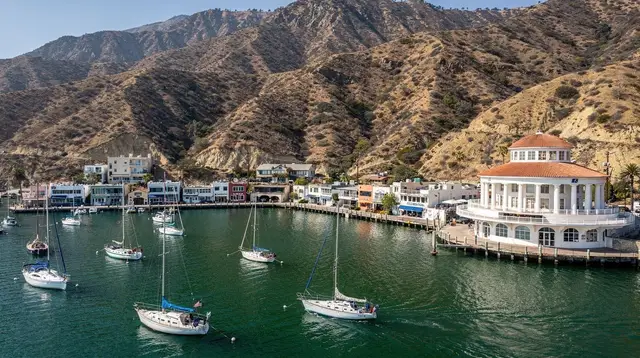
Laguna Beach also works as part of a longer Orange County itinerary that includes Catalina Island, reached most directly by ferry from nearby Newport Beach rather than from Laguna itself. The ferry from Newport Beach to Avalon on Catalina Island is the practical way to make that crossing if a Laguna Beach visit is being combined with a day or two on the island.
For more on island activities once there, see the Catalina Island boat cruises guide, and for a sample plan that strings the two together, the two-day Orange County and Catalina itinerary covers a coastal day plus a day on the island.
Where Laguna fits in a wider trip
Laguna Beach pairs naturally with the rest of the Orange County coast. Dana Point, a short drive south, is the launch point for most of the region’s whale-watching trips. Newport Beach, just north, adds harbor cruises and a very different, more developed waterfront. Huntington Beach, further north again, is the place to go for a classic wide, flat surf beach rather than Laguna’s coves. Together, these towns make up the coastal half of an Orange County itinerary that sits apart from the theme-park-driven visits to Disneyland Anaheim further inland.
Within a broader Southern California trip, Laguna Beach works well as a day trip from a Los Angeles base, as a stop on a longer coastal drive, or as one stop among several Orange County beach towns visited over two or three days. It is not, on its own, a multi-day base for most visitors unless a slower, art-and-coastline-focused trip is specifically the goal.
Planning resources
For visitors weighing whether Laguna Beach fits a specific kind of trip, the Laguna Beach day trips guide rounds up options for a single-day visit from Los Angeles or nearby Orange County towns, while the Laguna Beach water sports guide goes deeper into snorkeling, kayaking and surfing options beyond what’s covered above.
Travelers deciding how to get around more broadly may find the do you need to rent a car in Los Angeles and driving and parking in Los Angeles posts useful, since the same car-dependent logic that applies across the LA region applies to reaching Laguna Beach. For a multi-day frame that includes Laguna alongside the rest of the coast, see the three-day LA beaches itinerary or, for a longer trip up the coast, the five-day Pacific Coast Highway road trip itinerary.
Practical notes
| Detail | What to expect |
|---|---|
| Drive from central LA | Roughly 1-1.5 hours, longer at rush hour or on summer weekends |
| Getting there | Car, private transfer, or organized day tour; no direct LA Metro service |
| Parking | Limited near the coves; fills early on warm weekends, priced higher in peak season |
| Water temperature | Cool year-round; a wetsuit is standard for surfing or extended swimming |
| Best months | Late spring through autumn, with September-October often clearest and less crowded |
| Booking ahead | Recommended for surf lessons, kayak tours and guided walks in peak season |
Frequently asked questions about visiting Laguna Beach
How far is Laguna Beach from Los Angeles?
Laguna Beach is roughly 1 to 1.5 hours from central Los Angeles by car in normal traffic, though the drive can take noticeably longer during weekday rush hour or on busy summer weekend afternoons along Pacific Coast Highway.
Can I visit Laguna Beach without a car?
There is no direct LA Metro line to Laguna Beach, so most visitors arrive by car, private transfer or an organized day tour from Los Angeles or nearby Orange County towns. Once there, the downtown area and several coves are walkable from each other.
Is parking difficult in Laguna Beach?
Parking near the most popular coves is limited and fills early on warm weekends, especially in summer, and prices rise with demand. It is not realistic to count on easy, immediate parking during peak season; arriving early or being flexible about which cove to park near helps.
How is Laguna Beach different from Newport Beach and Huntington Beach?
Laguna Beach is defined by rocky coves, cliffside walking paths and a long-running art colony. Newport Beach, just to the north, centers on a working harbor and boating culture, while Huntington Beach, further north, is a flat, wide, classic surf beach with a long pier. Each town has its own distinct character despite sitting along the same stretch of coast.
Can Laguna Beach be seen in under an hour?
Not really. The town is spread across several separate coves connected by walking paths or short drives, plus a gallery district worth its own time, so a meaningful visit generally takes several hours at minimum, and a full day allows for a more relaxed pace across multiple coves.
Is the ocean warm enough to swim in at Laguna Beach?
The Pacific along Laguna Beach stays cool year-round, even in summer, unlike warmer seas some visitors may expect. A wetsuit is standard for surfing or for spending extended time in the water.
When is the best time to visit Laguna Beach?
Late spring through autumn generally offers the most reliable weather, with September and October often bringing clear skies, comfortably warm water and lighter crowds than the peak of summer. Late spring and early summer mornings can be overcast before typically clearing by afternoon.
Do I need to book activities like surf lessons or kayak tours in advance?
Yes, particularly in summer. Surf lessons, kayak tours and similar small-group or private activities in Laguna Beach have limited daily capacity, and weekend slots in peak season can fill up days ahead of time.