Where Dana Point Fits on the Orange County Coast
Dana Point sits on the southern stretch of the Orange County coastline, between the wider urban harbor of Newport Beach to the north and the cliffside village of Laguna Beach to the south. All three towns are part of the same coastal run, but they serve different kinds of visits. Newport Beach has a bigger, busier harbor with a broader mix of boating, dining and beach clubs. Laguna Beach is built around walkable cliffs, coves and a compact art-gallery downtown, best explored on foot. Dana Point is smaller and more single-purpose: its identity is the harbor itself, and specifically what leaves from it by boat.
That single-purpose character is the reason Dana Point has become Orange County’s default base for ocean wildlife trips. The harbor sits close to a deep offshore drop-off and a migration corridor used by several whale species, which puts boats within reach of open water faster than from most other Southern California harbors. Locally, Dana Point is sometimes referred to informally as a whale-watching capital of the region, a reputation built on decades of consistent sightings rather than any single guarantee.
For a first-time visitor deciding between the three towns, a rough rule of thumb: choose Dana Point primarily for boat-based wildlife and harbor life, Laguna Beach for cliffs and coastline on foot, and Newport Beach for a wider range of harbor activities and dining. Many visitors combine two of the three in a single day, since they sit within a short drive of each other along the coast.
Getting to Dana Point from Los Angeles
Dana Point is roughly one to one and a half hours by car from central Los Angeles, depending on the route and, more significantly, the time of day. This is not a short hop: it should not be assumed to be reachable in under half an hour, and traffic on the connecting freeways can meaningfully change the driving time in either direction. Leaving before or after the morning and evening commute windows generally makes for a smoother drive.
A car is effectively the only practical way to reach Dana Point. There is no LA Metro rail or bus service that reaches the harbor, and the town sits outside the reach of the region’s rail network entirely. Visitors relying on rideshare can reach Dana Point that way, but the one-way fare from central LA reflects the distance and should be weighed against renting a car, particularly if the plan includes stops in Laguna Beach or Newport Beach along the way.
Once in town, Dana Point itself is compact and walkable around the harbor area, so a car is mainly needed to arrive and to reach nearby towns, not to get around once parked.
| From | Approx. drive time | Notes |
|---|---|---|
| Downtown LA | 1-1.5 hours | Longer at peak commute times |
| Santa Monica / Westside | 1-1.5 hours | Coastal route can be scenic but slower |
| Anaheim / Disneyland area | 30-45 minutes | Closer than central LA |
| Laguna Beach | 10-15 minutes | Easy pairing for a single day |
The Harbor and What It’s Built Around
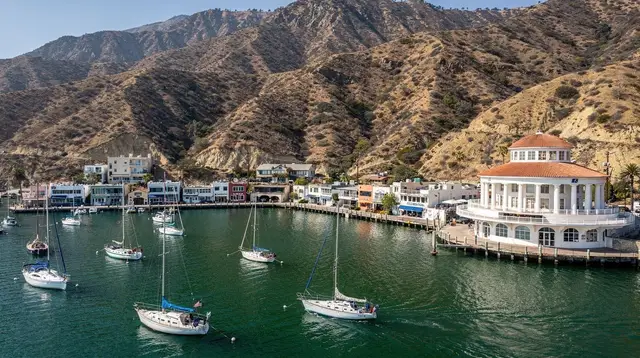
Dana Point Harbor is the centre of any visit. It’s a working marina with charter boats, restaurants, shops and a walkable waterfront, rebuilt in recent years with new promenades and dining. Unlike a beach-town main street, the harbor is genuinely the point of Dana Point rather than a secondary feature, and most visitor activity radiates from it.
The harbor’s boats run a mix of trips: whale and dolphin watching excursions, sunset and evening cruises, and smaller guided outings such as kayaking trips that explore the sea caves along the nearby coastline. A guided kayak and hike combining sea caves and tide pools is a different kind of outing from the wildlife-watching boats — closer to the shoreline, slower paced, and focused on coastal geology rather than open-water sightings.
For a different perspective on the coastline, an air tour over the Orange County coast departing from John Wayne Airport covers Dana Point and its neighbouring towns from above, which can help visitors get their bearings on how the harbor towns relate to each other along the shore.
Evenings at the harbor have their own character, with restaurants and a slower pace once the day-trip boats are back. A evening wine cruise around the harbor with light snacks is a low-key way to see the marina lit up without booking a full wildlife excursion, and works well as an evening add-on to a daytime whale-watching trip rather than a replacement for one.
Whale and Dolphin Watching: What to Actually Expect
Dolphins are seen on most boat trips out of Dana Point across the year; large pods of common dolphins are a regular sight offshore, and many operators build their trips around near-guaranteed dolphin encounters even outside peak whale season. Whales are a different matter. Sightings depend heavily on the species and the time of year, since different whales pass through Southern California waters on different migration schedules.
Gray whales are typically seen in the winter and early spring as they migrate along the coast, while other species, including blue whales, tend to appear later in the year. No operator can promise a whale sighting on a specific outing — reputable trips are honest about this, and some offer a free return trip if nothing is spotted, rather than guaranteeing a sighting outright.
A standard whale and dolphin watching boat tour from the harbor is the most common way to do this, typically running a couple of hours on a larger vessel with a naturalist guide. For a faster, more physical version of the same idea, a zodiac-style speedboat tour focused on dolphins and whales covers more distance in less time and sits lower to the water, which suits visitors who want a livelier ride over a slower, more comfortable one.
A third option, a dolphin and whale watching trip with an underwater viewing area, adds a below-the-waterline vantage point, which can be worthwhile with children or anyone who prefers watching through a window to scanning open water from a rail.
Because sightings are seasonal and boats have limited capacity, booking ahead is worth doing, particularly during the winter and early spring gray whale migration and on weekends generally, when boats fill up faster than on a typical weekday.
| Species | Typical season | Notes |
|---|---|---|
| Common dolphins | Year-round | Large pods, frequently seen on most trips |
| Gray whales | Roughly December-April | Coastal migration route, most predictable whale sightings |
| Blue whales | Roughly summer | Less predictable timing year to year |
| Other species (orcas, humpbacks) | Occasional, variable | Not a reliable planning basis |
Weather and When to Go
Dana Point shares the coastal marine layer common to much of the Southern California shoreline, meaning late spring and early summer mornings can be overcast even when inland areas are sunny — a pattern locally nicknamed May Gray and June Gloom. Afternoons on the same days often clear up, so a later start can mean better visibility and comfort on the water. Late summer into autumn tends to bring more consistently sunny conditions, though it falls outside the peak gray whale season.
Given all this, there’s no single perfect month for Dana Point — the right time depends on the goal. Visitors chasing gray whales specifically should target winter into early spring. Visitors mainly interested in dolphins, harbor life and general coastal scenery have more flexibility and can plan around avoiding the gloomiest morning windows instead.
A Realistic Day in Dana Point
A typical visit starts with a morning or early-afternoon boat trip, since wildlife activity and calmer water conditions tend to favour earlier departures before afternoon wind picks up. After the boat trip, the harbor itself has enough restaurants and shops to fill an hour or two, and the walkable promenade makes for an easy stretch after time on the water.
Visitors with more time often extend the day toward Laguna Beach, a short drive south, for its cliffside coves and walkable downtown, or toward Newport Beach to the north for a wider mix of harbor activities. Both pairings work as a single extended day trip from Los Angeles, though driving Dana Point, Laguna Beach and Newport Beach all in one day is ambitious given the overall distance back to LA — most visitors do well picking one neighbour rather than both.
For general planning across the wider Orange County region, including how Dana Point compares to Huntington Beach and Dana Point’s inland neighbour Irvine, a broader multi-day itinerary makes more sense than trying to cover everything from a single Dana Point base. A two-day Orange County and Catalina Island itinerary is a reasonable starting template for combining Dana Point with other stops in the region.
Budget for a Dana Point Day
Costs in Dana Point are driven mainly by the boat trip chosen, plus parking and food at the harbor. Whale and dolphin watching tours are generally mid-range compared with other Orange County activities, and prices rise during peak whale season and on weekends. As with the rest of the region, displayed prices exclude sales tax, and a tip is customary on top of restaurant and tour-guide services.
| Item | Approx. cost |
|---|---|
| Whale/dolphin watching tour | $40-75 per person |
| Zodiac-style speedboat tour | $60-90 per person |
| Kayak and sea cave outing | $70-110 per person |
| Evening harbor cruise with snacks | $50-85 per person |
| Harbor parking | $10-25 per day |
| Casual harbor meal | $15-30 per person |
Beyond the Harbor
Dana Point’s activities are not limited to whale watching. Paddleboarding is popular in the calmer waters of the harbor itself; a private guided paddleboarding session in Dana Point Harbor is a gentler, low-cost way to spend an hour or two on the water without booking a full boat charter. For visitors with more advanced water skills, a guided kelp forest spearfishing outing off the nearby coast is a niche but notable option for those specifically looking for it, distinct from the sightseeing-focused boat trips most visitors book.
Rental boats are also an option nearby: a electric boat rental in Newport Beach Harbor is a short drive north and suits visitors who want to captain their own slow-speed harbor cruise rather than join a guided trip.
For a longer day beyond the mainland coast, Catalina Island is reachable by ferry from nearby harbors, and an inside adventure tour of Catalina Island pairs well as a separate day trip for visitors staying in the area longer than a single afternoon, rather than as an add-on to a Dana Point day itself, given the ferry crossing and separate scheduling involved.
Where Dana Point Sits Among Nearby Towns
- Laguna Beach: cliffside coves, a walkable art-focused downtown, best explored on foot rather than by boat.
- Newport Beach: a larger, busier harbor with a wider range of boating, dining and beach-club options.
- Huntington Beach: long sandy beach and a more classic Southern California surf-town feel, further north.
- San Clemente: a smaller beach town south of Dana Point, part of the same coastal stretch.
- Catalina Island: a ferry crossing away, best treated as a separate excursion.
Visitors planning several days in the region rather than a single Dana Point trip may find a broader look at things to do in Orange County useful for weighing Dana Point against its neighbours before settling on an itinerary.
Dana Point FAQ: Whale Watching, Access and Timing
Is whale watching guaranteed on a Dana Point boat trip?
No. Dolphins are seen on most trips year-round, but whale sightings depend on migration timing and are never guaranteed on any single outing, even during peak season. Some operators offer a free return trip if no whales are spotted, which is worth checking when booking rather than assuming any sighting is certain.
How far is Dana Point from downtown Los Angeles?
Roughly one to one and a half hours by car, depending on traffic and the time of day. It is not a quick trip and should not be planned as a same-day round trip in under half an hour each way; leaving outside peak commute windows generally shortens the drive.
Can I get to Dana Point without a car?
There is no LA Metro rail or bus service reaching Dana Point, so a car or rideshare is effectively required. Rideshare is workable for a one-way trip but the fare reflects the distance, and having a car is more practical for visitors also planning stops in Laguna Beach or Newport Beach.
When is the best time to see gray whales from Dana Point?
Roughly December through April, when gray whales migrate along the Southern California coast. Other species, including blue whales, tend to appear later in the year, so the best month depends on which species a visitor hopes to see.
Does the marine layer affect boat trips?
Coastal mornings in late spring and early summer can be overcast due to the marine layer, locally called May Gray and June Gloom, even when inland areas are sunny. Afternoons often clear, so a later departure can mean better visibility.
How does Dana Point compare to Newport Beach and Laguna Beach?
Dana Point is smaller and centred almost entirely on its harbor and boat trips. Newport Beach has a larger harbor with a broader range of activities and dining. Laguna Beach is built around walkable cliffs and coves rather than boating. Many visitors pair Dana Point with one of the other two in a single day.
Should I book a whale watching tour in advance?
Yes, particularly during the winter and early spring gray whale season and on weekends year-round, when boats fill up. Advance booking also allows for more flexibility if a trip needs to be rescheduled around weather or sea conditions.
Is Dana Point suitable for a half-day trip from Los Angeles?
Yes. A morning or early-afternoon whale and dolphin watching trip plus time at the harbor fits comfortably into a half day, though the roughly one to one and a half hour drive each way means the total day is longer than the time spent in Dana Point itself.