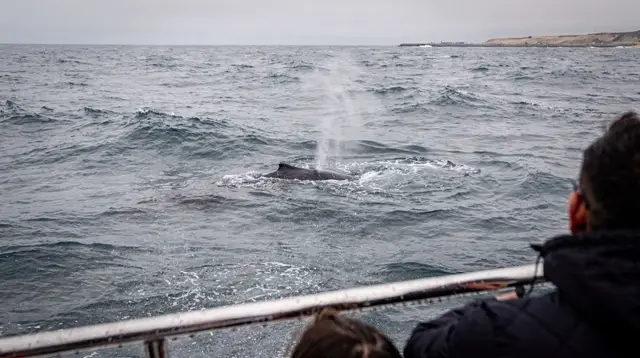
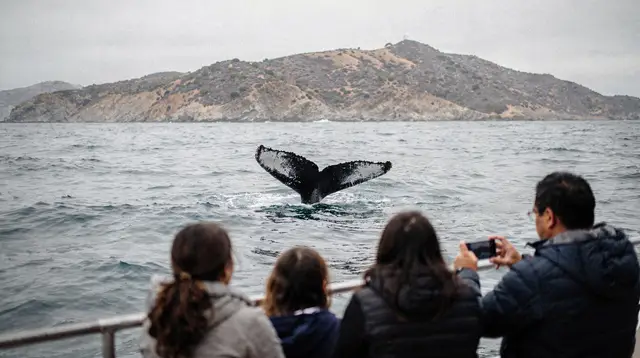
Whale and Dolphin Watching from Dana Point
Is Dana Point a good place to go whale watching?
Yes. Dana Point is one of the most established whale-watching ports on the Southern California coast, with frequent sailings year-round. Sightings are never guaranteed on any single trip, and which species you are likely to see depends heavily on the season.
Why Dana Point is a serious whale-watching port, not a detour
Dana Point sits at the southern end of the Orange County coastline, well south of the city of Los Angeles and separate from Newport Beach, even though the two harbors are close enough that visitors sometimes assume they are the same stop. They are not. Dana Point has its own harbor, its own fleet of whale-watching and dolphin-watching boats, and its own long-running reputation as a base for marine wildlife trips along this part of the Pacific coast.
If a trip is built around whale watching specifically, choosing which harbor to depart from — Dana Point, Newport Beach, or further north near Los Angeles — matters more than it might first appear, because each port fishes slightly different water and runs on its own schedule.
This guide focuses specifically on what departs from Dana Point: the range of boat formats on offer, how the season shapes what you are likely to see, and the practical points that get glossed over in marketing copy. For whale watching that starts elsewhere along the coast, see the separate guides for Newport Beach and Catalina Island, which are genuinely different departures with different boats and different waters, not alternative names for the same trip.
What “whale watching” actually covers at Dana Point
The phrase covers more than one kind of outing, and the formats are not interchangeable. A standard whale-watching boat is a larger vessel, often the same style of boat used for harbor cruises, with covered seating, indoor cabin space, restrooms on board, and a naturalist or marine biologist narrating what the boat is seeing.
It is a comparatively gentle ride: the boat is stable, the pace is unhurried, and passengers can move around, sit inside if the weather turns, and bring young children or older relatives without much concern about the physical demands of the trip. The standard whale and dolphin watching cruise from Dana Point runs on this model and is the easiest entry point for most visitors.
A zodiac trip is a different kind of experience, not a faster version of the same thing. A zodiac is a rigid-hull inflatable boat: open to the elements, low to the water, and built for speed and maneuverability rather than comfort. Passengers sit straddling the inflatable tubes rather than in cabin seating, the ride is noticeably bumpier, spray comes over the sides regularly, and the boat can reposition quickly when dolphins or a whale are sighted nearby.
It sits closer to the water and moves faster than a standard tour boat, which some visitors find thrilling and others find genuinely uncomfortable. The fast zodiac-style dolphin and whale watching trip is built around this more physical, higher-adrenaline format, and it should not be booked expecting the same comfort level as the standard boat — the two are meant for different kinds of travelers, not ranked versions of the same product.
A third option adds underwater viewing to the mix: some boats are fitted with hull windows or an underwater camera system that lets passengers see dolphins swimming alongside or beneath the boat, which works especially well since dolphins are seen on most trips regardless of whether a whale appears that day. The whale and dolphin watching cruise with underwater viewing is worth considering for anyone who wants a look below the surface rather than only at the waterline.
Boat vs zodiac: a straight comparison
| Standard boat | Zodiac | |
|---|---|---|
| Seating | Covered cabin, bench seating | Open, straddling inflatable tubes |
| Ride comfort | Stable, gentle | Bumpy, fast, wet |
| Restrooms on board | Usually yes | Usually no |
| Typical duration | 2-2.5 hours | 1-1.5 hours |
| Best suited to | Families, older travelers, anyone prone to motion sensitivity | Adventurous travelers wanting a faster, closer ride |
| Weather sensitivity | Lower | Higher — cancels more readily in swell or wind |
Neither format is objectively better; they are built for different priorities, and choosing the wrong one for a family with small children or an unsteady relative is the most common regret reported after a Dana Point trip.
Season and what you are actually likely to see
What passes offshore near Dana Point changes across the year, and no single trip covers every species equally well. Roughly, the gray whale migration is strongest from around December through April, as whales move along the coast between feeding and breeding grounds — this stretch is generally considered the most reliable winter-into-spring window for whale sightings specifically. Other species, including blue whales and various dolphin species, move through at different points across the spring and summer months, so “best season” genuinely depends on which animal a traveler hopes to see rather than there being one universal peak month.
Dolphins, by contrast, are resident in these waters much of the year and are seen on the clear majority of departures regardless of season — they are usually the reliable part of the trip even when a whale does not appear. It is worth being direct about this: no operator departing from Dana Point can honestly promise a whale sighting on a specific booked date. Marine wildlife moves on its own schedule, and any single outing, even in peak season, can come back having seen dolphins and no whale. Multi-day visitors who specifically want to maximize whale odds sometimes book more than one departure across their stay for exactly this reason.
Booking, timing and weather
Whale-watching and zodiac departures from Dana Point are generally sold as scheduled trips at set times through the day, and booking ahead of arrival is the more reliable approach, particularly on weekends and through the winter migration window when demand is highest. Same-day tickets sometimes remain available, but counting on that is a risk, especially for a trip built around a single day’s schedule.
Ocean conditions matter more here than on a typical sightseeing cruise. Rough seas, high wind or poor visibility can lead a captain to cancel or reschedule a departure, and this applies more readily to zodiac trips than to the larger standard boats, since the smaller inflatable craft handles swell far less comfortably. Travelers with a tight schedule should treat a whale-watching trip as weather-dependent and, where possible, avoid scheduling it for the very last available slot of a visit to the area.
Beyond the water: pairing a marine trip with the coastline
Dana Point’s appeal is not limited to what happens offshore. The coastal hike and ecology tour covers the bluffs and shoreline around the harbor on foot, which works well as a complement to a morning boat trip rather than a substitute for it — it explains the coastal ecology from land rather than from the water, and gives a different, slower-paced view of the same stretch of coast.
For travelers who want to build a fuller day around the harbor rather than around the whale-watching trip alone, browsing the wider Dana Point activities page or the boat cruises category gives a sense of the other options based at the same harbor, including sunset and evening cruises that are built for scenery and dining rather than wildlife spotting.
Several other ways to see the same stretch of coast sit alongside the whale-watching boats without competing with them directly. The kayak and hike tour through the sea caves and tide pools gets close to the shoreline itself rather than out into open water, which suits travelers who want a slower, more hands-on look at the coastline on the same day as a boat trip, typically as a separate half-day rather than back to back with a full whale-watching outing.
For a calmer, self-paced option inside the harbor, the private paddleboarding session in Dana Point Harbor stays in the sheltered water rather than heading offshore, so it is a reasonable add-on even for visitors who found a zodiac trip too physical. Travelers who prefer to stay on land but still want to cover ground along the water can look at the guided ebike tour along the Dana Point coastline, which moves along the bluffs and harbor at a pace between walking and driving.
For an entirely different vantage point, the coastal air tour departing from John Wayne Airport covers the same coastline from above, including Dana Point, Newport Beach and Laguna Beach in a single flight — it is not a substitute for spotting whales from the water, since wildlife is much harder to pick out from altitude, but it gives a useful sense of how the harbors and coastline relate to one another geographically.
And for visitors who want to close out a day on the water without another wildlife-focused trip, the evening harbor wine cruise with snacks stays inside the harbor itself, built around sunset and scenery rather than sightings, and works well booked for the evening of the same day as a morning whale-watching departure.
Getting to Dana Point
Dana Point is south of both Los Angeles and Newport Beach, and it sits within the wider Orange County region alongside Laguna Beach to its north.
There is no direct rail or Metro line to the harbor, so a rental car or rideshare is the practical way to get there for most visitors staying in Los Angeles proper; driving time from central Los Angeles runs a little over an hour outside of rush hour, longer during it, which is worth building into the plan for an early-morning departure. Visitors already based closer to the coast, in Newport Beach or Laguna Beach, have a noticeably shorter drive.
Where Dana Point whale watching fits in a wider trip
For travelers building a longer Orange County or Southern California coastal itinerary, whale watching from Dana Point pairs naturally with time in Laguna Beach, Newport Beach or Huntington Beach, and with a look at the two-day Orange County and Catalina itinerary for a sense of how these stops sequence together.
Anyone still deciding between departure ports should also compare this page against the dedicated guides to whale watching from Newport Beach and whale watching from Catalina Island before booking, since the boats, schedules and even likely sighting patterns differ by port.
For a broader sense of what else the region offers beyond marine wildlife, the Dana Point water sports guide, the hiking and nature guide and the Dana Point boat cruises guide cover activities based at the same harbor that do not require a whale-watching trip specifically. Travelers weighing bike or scooter options along the same coastline can also check the Dana Point bike and scooter tours guide, and anyone curious about the air tour option above can find more context in the Dana Point helicopter flights guide.
What to bring on a whale-watching trip
The right preparation depends on which format is booked, but a few points apply across both. Layers matter more than most first-time visitors expect: the water is noticeably cooler than the air on land, and a boat moving at speed generates its own wind chill even on a warm day, so a windbreaker or light jacket is worth bringing even in summer. Sunscreen and sunglasses matter as much on an overcast day as a clear one, since glare off the water is constant regardless of cloud cover.
On a zodiac specifically, expect to get wet from spray; a change of clothes left in the car, rather than packed for the boat itself, is the simplest fix. Motion sensitivity is worth thinking about honestly before booking — the standard boat’s slower, steadier ride suits most people prone to seasickness far better than a zodiac’s faster, choppier motion, and no format eliminates the risk of some discomfort in a lot of wind or swell.
Binoculars are useful but not essential; naturalists on the standard boats generally narrate what the boat is approaching, and dolphins in particular are usually close enough to see clearly without them. Arriving at the harbor with enough time before a scheduled departure — parking at Dana Point Harbor can take longer than expected on a busy weekend — avoids the stress of rushing to the dock, and most operators will not hold a boat for a late arrival.
Choosing between Dana Point and nearby departure ports
Dana Point is one of several Southern California harbors running whale-watching trips, and it is worth being clear-eyed about how it compares rather than assuming one port is simply better than another. The whale and dolphin watching boat adventure departing from the Los Angeles area covers waters further north, closer to Marina del Rey and the Santa Monica coastline, which suits travelers based in Los Angeles proper who do not want to drive south to Orange County at all.
Long Beach and the South Bay sit roughly between Los Angeles and Dana Point geographically, and Catalina Island offers a whale-and-dolphin trip departing from Avalon itself rather than from the mainland, which only makes sense as part of a longer island stay rather than a standalone day trip.
None of these ports are simply interchangeable substitutes for Dana Point. Each departs from different water, runs on a different schedule, and suits a different base location — the practical question for most travelers is less “which port is best” and more “which port is closest to where I am already staying, or already planning to be that day.” Comparing this guide against the dedicated pages for whale watching around Los Angeles and the Catalina Island day-trip guide before booking helps settle that question for a specific itinerary.
Frequently asked questions about whale watching from Dana Point
Is Dana Point the same as Newport Beach for whale watching?
No. Dana Point and Newport Beach are separate harbors along the same stretch of Orange County coast, each with their own operators and boats. They fish similar offshore waters, but a booking at one port does not depart from or connect to the other.
Is a whale sighting guaranteed?
No responsible operator can promise a sighting on every departure. Dolphins are seen on the large majority of trips, but whales are wild animals moving through open ocean, and any specific outing can come up without one.
What is the best season to see whales from Dana Point?
It depends on the species. Winter into spring, roughly December through April, is the strongest window for the gray whale migration past the Orange County coast, while other species pass through at different points across the year.
What is the difference between a zodiac tour and a regular boat tour?
A zodiac is a smaller, open, rigid-hull inflatable boat that sits low and moves fast, giving a more physical, wetter ride closer to the water. A standard whale-watching boat is larger, more stable, and includes covered seating, restrooms and a slower, steadier pace.
Can I book a whale-watching trip on the same day I arrive at Dana Point?
Some departures do sell same-day, but availability is not reliable, especially on weekends and during the peak winter migration. Booking a specific date and time in advance is the safer approach.
What happens if the weather cancels a trip?
Whale-watching boats and zodiacs operate at the discretion of the captain and harbor conditions. A trip called off for rough seas or high wind is typically rebooked for another sailing rather than simply refunded outright, though policies vary by operator.
Do I need to drive to Dana Point specifically, or can I go from Los Angeles?
Dana Point is a separate destination south of Los Angeles, roughly an hour or more by car from most parts of the city depending on traffic. It is not a stop you pass through on the way to Newport Beach or Catalina Island; it is its own harbor with its own departures.
Is Dana Point whale watching suitable for young children?
A standard boat with covered seating and restrooms tends to suit families better than a zodiac, which involves sitting on the inflatable tubes, moving fast, and getting sprayed with water — a format some younger children and motion-sensitive travelers find uncomfortable.
Whale Watching Trips
Verified deep-linked GetYourGuide tours. Book through these links and we earn a small commission at no cost to you.
GetYourGuide does not provide a product photo for this activity — the image shows the meeting point, photographed by us.