A region without a single centre
Most cities offer a historic core to orient a first visit around. Los Angeles does not work that way. What gets called “Los Angeles” in practice is a basin ringed by mountains, opening onto the Pacific, patched together from districts that each function almost like their own small city — plus, beyond the city limits, a much wider constellation of beach towns, desert resorts and wine country. Understanding that layout matters more here than in almost any other destination, because it changes how a trip should be planned from the very first day.
Take four places that look close together on a map: Downtown LA, Hollywood, Beverly Hills and Griffith Observatory. On paper they sit within a few kilometres of one another. In practice, moving between any two of them can take 30 to 60 minutes or more by car, depending on the time of day. This isn’t a quirk of a bad route — it’s the basic unit of distance in Los Angeles. Locals and repeat visitors think in drive time, not map distance, and a visit planned around kilometres or straight-line proximity will consistently run late.
This page is the starting point for the whole site: it explains how the region fits together and how to move through it, rather than repeating what’s on each district’s own page. For the detail on any single area — Hollywood, Downtown, Beverly Hills, West Hollywood, Griffith Observatory or Pasadena — the dedicated Hollywood, Downtown LA, Beverly Hills, West Hollywood, Griffith Observatory and Pasadena guides go deeper.
The districts that make up a visit
Hollywood is where most first-time visitors picture Los Angeles: Hollywood Boulevard, the Walk of Fame, and the hillside sign visible from a distance. Downtown LA (DTLA) is the historic and financial core, home to Union Station, the Arts District and Grand Central Market — but it is not the centre of gravity for most trips the way a European old town would be, and plenty of visitors spend little or no time there.
Beverly Hills and West Hollywood sit west of Hollywood, known respectively for Rodeo Drive shopping and the Sunset Strip’s nightlife. Griffith Observatory, inside Griffith Park, is the best-known vantage point for skyline and sign views. Pasadena, northeast of Downtown, is a separate incorporated city with its own historic architecture and museums. Each of these is worth a half-day to a full day on its own, and none of them is a quick stop on the way to another.
A common misconception worth clearing up early: Hollywood is a district within the City of Los Angeles, but Santa Monica, Beverly Hills, West Hollywood, Culver City, Pasadena, Long Beach, Malibu and Burbank are independent incorporated cities with their own governments. They sit inside the same urban area and often feel seamless from a visitor’s seat in traffic, but administratively they are not neighbourhoods of Los Angeles.
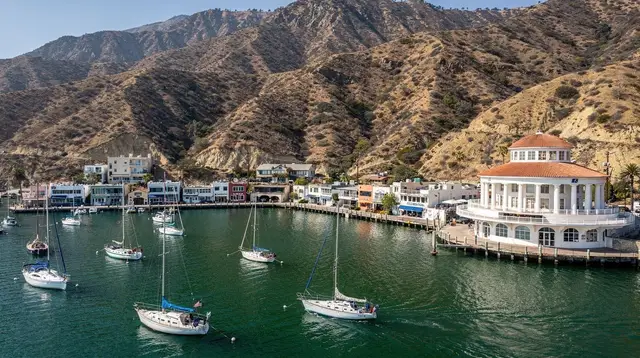
Beyond the city itself, a trip typically stretches to the LA beaches — Santa Monica, Venice Beach, Malibu, the South Bay and Long Beach — and often to Orange County for Disneyland Resort and its coastal towns. Further out again are Catalina Island, reached only by ferry, the Central Coast around Santa Barbara, and the desert around Palm Springs and Joshua Tree.
Getting around: the practical backbone of a trip
A rental car is the default for most visitors, and it’s worth budgeting for one before anything else in the itinerary. Attractions like the Getty Center, the beaches, Orange County and the desert are not realistically reachable without one. LA Metro’s rail and bus network covers Downtown, Hollywood, Koreatown, Pasadena, Santa Monica and Long Beach reasonably well, and rideshare apps such as Uber and Lyft fill in gaps within that same core area — but neither substitutes for a car once a route includes Beverly Hills, Malibu, the desert or anywhere in Orange County.
Freeways are known locally by number and often by nickname — the 405, the 101, the 10, the 5. Traffic peaks on weekday mornings and again in the late afternoon and early evening, and the same drive can easily take twice as long at rush hour as it does in free-flowing traffic. Building slack into a daily schedule, especially around those windows, saves more frustration than almost any other single planning decision.
Five airports serve the region, and choosing the right one can save real driving time: LAX is the main international gateway, while Hollywood Burbank, Long Beach, John Wayne in Orange County and Ontario in the Inland Empire are smaller alternatives worth checking against where the trip’s accommodation is based.
| Airport | Best suited to |
|---|---|
| LAX | Most international arrivals, widest flight choice |
| Hollywood Burbank (BUR) | Hollywood, Downtown, Pasadena stays |
| Long Beach (LGB) | South Bay, Long Beach, Orange County stays |
| John Wayne, Orange County (SNA) | Disneyland, Newport Beach, Laguna Beach stays |
| Ontario (ONT) | Desert-bound trips via the Inland Empire |
When to go
Los Angeles has a mediterranean climate: dry, sunny summers and a wetter winter, with most of the modest annual rainfall falling between roughly November and March. Along the coast, a marine layer known locally as May Gray and June Gloom often keeps mornings overcast in late spring and early summer, even while inland areas like Downtown or Pasadena sit under clear skies. It usually burns off by early afternoon, so a coastal morning plan shouldn’t be written off entirely — just don’t expect sunrise beach photos in that window.
In autumn, dry offshore Santa Ana winds can push temperatures up sharply and raise wildfire risk, which is a real seasonal consideration inland and in the hills. Inland valleys, the Coachella Valley around Palm Springs, and the desert proper run noticeably hotter than the coast — often by 10°C (about 20°F) or more on the same day, so packing and pacing need to account for two different climates in a single trip.
Spring (March-May) and autumn (September-November) generally offer the best balance of warm weather, manageable crowds and lower theme park pricing tiers. Summer brings the warmest, driest weather but also the heaviest crowds and hottest desert temperatures; winter is mild and quiet, with the highest chance of rain, though still relatively little of it by most standards.
Booking ahead
Reservations matter more in Los Angeles than the words “spontaneous road trip” might suggest. Griffith Observatory’s grounds are free, but parking is limited and fills fast, especially at sunset and weekends; its planetarium show is a separate timed ticket. The Getty Center is free to enter but requires paid parking at the base of the hill before a free tram ride up; the Getty Villa in Malibu needs a timed-entry reservation booked in advance.
Theme park tickets across the region are generally dated to a specific calendar day and bought ahead rather than at the gate. Popular guided experiences — sign hikes, city tours, helicopter flights — also fill up during peak season, so booking a few days to a few weeks out is worth doing rather than assuming a same-day slot will be available.
A guided overview on day one can help make sense of the layout described above before setting off independently. The Los Angeles: City Highlights Tour with Guide covers several of the city’s headline districts in a single day with a local guide handling the driving and route logic. For a closer look at the sign itself, since there’s no direct public access to its base, the Los Angeles: Hollywood Sign Guided Hike takes visitors to legitimate viewpoints on marked trails.
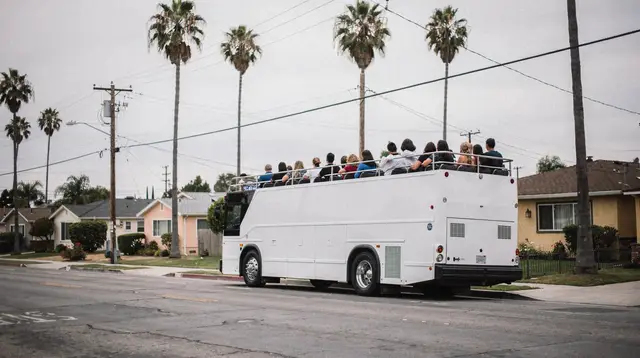
An open-top Hollywood and Beverly Hills open-air bus tour is a low-effort way to cover ground between those two districts without driving and parking repeatedly. For a different vantage point entirely, a helicopter tour over Los Angeles landmarks shows just how spread out the basin really is from above.
A few things worth getting right before you go
Los Angeles is not the capital of California — that’s Sacramento, well to the north. Disneyland Resort is in Anaheim, in Orange County, not in the city of Los Angeles itself; it’s roughly 45-60 minutes from central LA depending on traffic and a separate resort from Walt Disney World in Florida. The Pacific Ocean off Los Angeles is cold year-round — it is not a warm swimming sea, and water stays cool even at the height of summer, which catches many visitors off guard. San Francisco is not a realistic day trip: it sits roughly 550-600 km (about 350-380 miles) north, generally requiring a flight or a long drive rather than a quick side trip.
On money matters, displayed prices exclude sales tax, which runs in the roughly 9.5-10.25 percent range across LA County depending on the specific city, and a tip is expected on top of that at sit-down restaurants, bars and for services like taxis and hotel staff — the total on a bill or receipt will be noticeably higher than the number printed on the menu. Rough 2026 order-of-magnitude costs: a coffee around $4-6, a casual meal $12-20 per person, a mid-range dinner $30-60+ per person before tip, and a day of economy car rental commonly $40-90 or more depending on season and demand.
Distances from Los Angeles
| Destination | Approximate driving time |
|---|---|
| Las Vegas | About 4 hours |
| San Diego | About 2 hours |
| Santa Barbara | About 2 hours |
| Palm Springs | About 2 hours |
| Joshua Tree | About 2 hours 30 minutes |
These are order-of-magnitude figures for free-flowing traffic; weekend and holiday departures out of the basin can add an hour or more, particularly heading toward Las Vegas or the desert on a Friday afternoon.
Putting together a first route
For a genuinely first visit, a common approach is two or three days split across Hollywood, Griffith Observatory and Downtown, followed by two days on the beaches around Santa Monica and Venice, with a day or two held back for either Orange County’s theme parks or a desert detour to Palm Springs and Joshua Tree. Trying to cover all of that in fewer than four days usually means cutting driving time to zero slack, which tends to backfire the first time a freeway slows down.
The two-day first-timer itinerary and the three-day classics itinerary both lay out sample day-by-day routes built around this same logic — a handful of areas per day, grouped by geography rather than by attraction type.
Los Angeles region FAQ
Do you need a car in Los Angeles?
For most itineraries, yes. A rental car is the practical default, since many highlights such as the Getty Center, the beaches, the desert and Orange County are not realistically reachable without one. The LA Metro and rideshare apps cover parts of the basin well, but neither replaces a car for a wider trip.
Which areas does the LA Metro actually reach?
The rail and bus network covers Downtown, Hollywood, Koreatown, Pasadena, Santa Monica and Long Beach reasonably well. Beverly Hills, West Hollywood, Malibu, the desert and Orange County are largely outside its reach, which is why a car or rideshare fills the rest of a typical route.
Which airport should you fly into?
LAX is the main international gateway, but Hollywood Burbank, Long Beach, John Wayne in Orange County and Ontario in the Inland Empire are smaller alternatives that can save significant driving time depending on where you are staying. Picking the right one matters more here than in most cities.
Is Disneyland in Los Angeles?
No. Disneyland Resort is in Anaheim, in Orange County, roughly 45-60 minutes from central Los Angeles depending on traffic. It is a separate resort from Walt Disney World in Florida.
Can you walk up to the Hollywood Sign?
No. There is no public access right to its base for casual visitors. It is viewed and photographed from marked viewpoints and hiking trails in Griffith Park and the surrounding hills, or from a distance around the Hollywood district.
What is May Gray and June Gloom?
A marine layer of low cloud and fog that often keeps coastal mornings overcast in late spring and early summer, even when inland areas such as Downtown or Pasadena are sunny. It typically burns off by early afternoon.
How far is Los Angeles from Las Vegas, San Diego and the desert?
Las Vegas is roughly 4 hours by car, San Diego and Santa Barbara are roughly 2 hours, Palm Springs is roughly 2 hours, and Joshua Tree is roughly 2 hours 30 minutes. All of these are order-of-magnitude figures that can grow substantially in weekend or holiday traffic.