What Beverly Hills actually is
Beverly Hills is an independent incorporated city in its own right, surrounded by but administratively separate from Los Angeles, and it should not be confused with its two most talked-about neighbours. West Hollywood is the district known for nightlife and design showrooms, and Hollywood is the historic home of classic-era film tourism, the Walk of Fame and studio history.
Beverly Hills is a different kind of place altogether: a low-density, car-first residential city built around wide, tree-lined streets, manicured front lawns and architecturally varied houses, paired with a compact, polished shopping district at its centre. The appeal here is not a single landmark to check off a list — it is the atmosphere of the place itself, the sense of having crossed into a part of the region where the streets, the gardens and the storefronts are all maintained to an unusually high standard.
That distinction matters when planning a visit. Travelers expecting a Hollywood-style tourist strip, or a West Hollywood-style evening of bars and clubs, will find Beverly Hills quieter and more residential than either. It rewards a slower pace: a drive along winding streets, a stroll through the shopping core, and time spent simply noticing the landscaping, the gates and the architecture rather than chasing a specific attraction.
The residential streets
The heart of a Beverly Hills visit, for most travelers, is the drive through its residential neighbourhoods. Wide boulevards curve past hedges, iron gates and driveways, with houses set back far enough from the street that only their upper floors, rooflines or landscaped entrances are visible from a passing car.
This is by design: Beverly Hills is a genuinely private residential community, not a stage set, and the overwhelming majority of the homes here are lived in year-round by people who value that privacy. Visitors should set expectations accordingly. A drive through these streets offers glimpses of grand exteriors and beautifully kept grounds, not access inside any property, and there is no guarantee of seeing a particular house, let alone its owner.
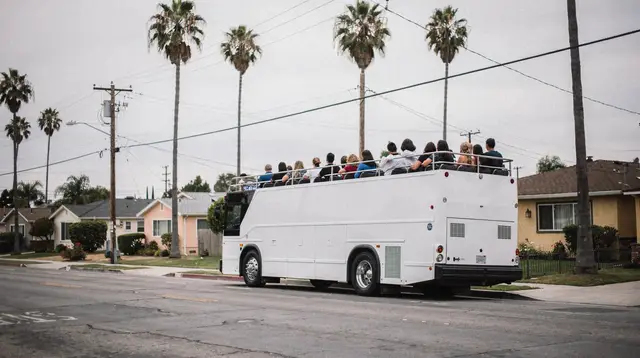
An organized tour, typically run by van or minibus with a local guide who narrates the neighbourhood’s history and points out notable addresses, is the most efficient way to cover the residential streets without getting lost in a maze of similar-looking lanes, and it adds context that a self-driven pass through the same streets would miss. For travelers who prefer to set their own pace, a self-driven loop works too, provided expectations stay realistic: this is sightseeing from the outside, at low speed, respecting that every street here is someone’s front yard.
a guided bike ride through the residential streets of Beverly Hills and neighbouring Bel-Air is a slower, quieter alternative to a van tour, better suited to travelers who want more time to look and photograph at their own pace along flat, well-shaded routes.
The shopping district
At the centre of Beverly Hills sits a compact, walkable shopping district lined with flagship boutiques from many of the world’s best-known luxury houses, interspersed with high-end jewellers, art galleries and a handful of long-established restaurants and hotels. Unlike the residential streets, this part of the city is genuinely made for walking: wide, shaded pavements, valet stands outside nearly every building, and a general air of unhurried browsing rather than commerce. Even travelers with no intention of buying anything find it worth an hour or two simply for the window displays, the people-watching and the contrast with the residential quiet a few blocks away.
The district is compact enough to cover on foot once parked, but parking itself is worth planning for: public structures serve the shopping core, and many hotels and restaurants offer valet parking, which is often the simplest option given how few visitors arrive without a car. Midweek mornings tend to be calmer than weekend afternoons, when both browsing crowds and traffic build up.
Getting there and getting around
Beverly Hills sits roughly 20 to 40 minutes by car from both Downtown LA and central Hollywood, with the wide range reflecting how much Los Angeles traffic varies through the day rather than any real change in distance. A weekday morning or evening rush-hour drive can easily run toward the long end of that range, while an off-peak midday trip covers the same ground in closer to twenty minutes. There is no way around this variability: always sanity-check timing against the time of day, not just the distance shown on a map.
A car, whether a rental or a rideshare, is the practical way to see Beverly Hills. The city is genuinely not dense in public transit, and its low-rise, spread-out residential layout is the opposite of a transit-friendly grid — this is a place built entirely around driveways and street parking, not bus stops. Visitors relying solely on Los Angeles Metro rail or bus service will find it covers the shopping core only indirectly and leaves the residential streets essentially out of reach; a rideshare or a short rental-car loop fills that gap far more reliably. Anyone building a car-free itinerary around Los Angeles should treat Beverly Hills as one of the harder districts to reach without a vehicle, alongside the wider Westside.
Within the shopping district itself, once parked, everything is walkable. It is really only the residential streets — where the appeal is precisely the slow drive past house after house — that call for a car or an organized tour rather than a walk.
What to expect, honestly
Beverly Hills rewards visitors who arrive with realistic expectations. Seeing a celebrity is possible but never guaranteed, and no tour, guide or map can promise it — residents value their privacy, and most days pass without any sighting at all. What is reliably on offer is the architecture, the landscaping and the overall atmosphere of the district, which is worth the visit in its own right even on a day when no famous face appears. Property interiors are essentially never open to casual visitors; what can be seen is limited to street-facing facades, gates and grounds, whether from a passing car, a guided van tour or a bike ride through the neighbourhood.
a narrated celebrity-homes tour that also swings through Hollywood on the way from Santa Monica is a practical option for travelers based on the coast who want to combine a Beverly Hills pass with other districts in a single outing, rather than driving back and forth separately.
Combining Beverly Hills with a wider day
Because Beverly Hills sits close to several other notable districts, it rarely needs to be the sole focus of a day. A common pattern is to pair a morning or early-afternoon pass through Beverly Hills with a visit to West Hollywood for lunch or an afternoon of browsing, or with Hollywood itself for a more classic sightseeing stop — both are within the same 20-to-40-minute driving band as Downtown LA, so a single day can realistically string two or three of these districts together without excessive backtracking, provided the schedule avoids peak traffic windows.
an open-air bus tour covering both Hollywood and Beverly Hills is built specifically for this kind of combined day, following a fixed loop that saves the trouble of separately routing between the two districts.
Travelers with more time might extend the theme further into the region: Palm Springs has its own, very different take on celebrity-home tourism, set against a desert backdrop rather than manicured lawns, and makes a natural comparison for anyone drawn to this angle of Southern California travel. A three-day Beverly Hills and Westside luxury itinerary is one structured way to build a longer stay around this side of the region, and a two-day first-time Los Angeles itinerary folds a shorter Beverly Hills stop into a broader introduction to the city.
Practical notes
| Item | What to expect |
|---|---|
| Getting there from Downtown LA or Hollywood | 20-40 minutes by car, depending on traffic |
| Public transit coverage | Limited; a car or rideshare is the practical default |
| Property access | Facades and grounds visible from the street only; interiors are private |
| Best time of day | Weekday mornings, ahead of weekend crowds and rush-hour traffic |
| Typical stay | Half a day for a focused visit, a full day combined with a nearby district |
| Parking | Public structures and valet in the shopping district; street parking is limited on residential blocks |
On cost, a half-day visit built around a guided drive or bike tour, plus lunch and some browsing in the shopping district, commonly runs in the rough range of $80-220 per person before any purchases, with the wide spread reflecting whether the day includes a paid tour, a sit-down meal, or just a self-driven loop and window-shopping. As with the rest of Los Angeles, prices shown on menus and price tags exclude sales tax, and a tip on top of the bill is expected at any sit-down restaurant. A dedicated budget planning tool can help rough out a fuller day or trip once Beverly Hills is combined with other districts.
Weather-wise, Beverly Hills follows the same broad pattern as the rest of the Los Angeles basin: dry, warm summers and a cooler, wetter winter, with the wettest months falling roughly between November and March. In late spring and early summer, mornings near the coast — including on the Westside — can turn grey with low cloud before burning off by midday, a local pattern sometimes called “May Gray” or “June Gloom.” None of this is a serious obstacle to a visit; it mainly affects photography light and whether an early or later start makes more sense on a given day.
Beverly Hills FAQ
Can you visit inside celebrity homes in Beverly Hills?
No. The properties in Beverly Hills are private residences, and interiors are not open to visitors under any circumstances, tour or otherwise. What can be seen is limited to what is visible from the street: facades, gates, landscaping and rooflines, whether on a self-driven pass, a guided van tour or a bike tour of the neighbourhood.
Is Beverly Hills part of the city of Los Angeles?
No. Beverly Hills is an independent incorporated city with its own government, completely surrounded by the Los Angeles urban area but administratively separate from it, in the same way as Santa Monica, West Hollywood and Culver City.
How do you get around Beverly Hills without a car?
It is genuinely difficult. Public transit coverage is limited across the city, and the residential streets in particular are not designed for pedestrians or transit users. A rideshare or a short rental-car loop is the practical way to reach and move around Beverly Hills; only the compact shopping core itself is comfortably walkable once parked there.
How long does it take to get to Beverly Hills from Hollywood or Downtown LA?
Roughly 20 to 40 minutes by car either way, with the exact time depending heavily on the time of day. Rush-hour trips, typically weekday mornings and late afternoons, run toward the longer end; off-peak midday trips are usually closer to twenty minutes.
What is the difference between Beverly Hills, West Hollywood and Hollywood?
Beverly Hills is a residential luxury city best known for its houses and upscale shopping. West Hollywood, immediately adjacent, is known for nightlife, design showrooms and a livelier evening scene. Hollywood, a district within the city of Los Angeles, is centred on classic-era film history and tourist landmarks like the Walk of Fame. All three sit within a short drive of each other but offer distinctly different days out.
Is Beverly Hills worth visiting if you are on a tight schedule?
For most travelers, yes, as a half-day add-on rather than a standalone destination. Combining a Beverly Hills drive or tour with a nearby district such as West Hollywood or Hollywood on the same day is the most efficient way to fit it into a short Los Angeles trip.
What is the best time of day to visit Beverly Hills?
Weekday mornings tend to be the calmest, with lighter traffic on the drive in and fewer crowds in the shopping district before it fills up later in the day. Weekend afternoons are the busiest, both for browsing crowds and for road traffic getting there.
Do you need to book a tour, or can you just drive through on your own?
Either works. A guided tour, by van or bike, adds narration and local context and removes the risk of getting turned around in the residential streets, while a self-driven loop offers more flexibility on timing. Neither option offers access inside any property; the difference is context and convenience, not what can actually be seen.