Palm Springs Celebrity Homes: Midcentury Modern Star Tours
What are the Palm Springs celebrity homes tours, and how are they different from Los Angeles star tours?
Palm Springs celebrity home tours drive, cycle or ride past midcentury modern estates once owned by classic Hollywood stars, in the desert about two hours from Los Angeles. Unlike the coastal Beverly Hills or Malibu circuits, the focus here is architecture from the 1950s and 1960s, not current celebrity residences, and visitors view exteriors from public roads without entering any property.
Why Palm Springs has its own celebrity homes circuit
Most visitors picture celebrity home tours as a coastal activity: a van winding through Beverly Hills or along a stretch of the Pacific Coast Highway toward Malibu. Palm Springs offers a genuinely different version of the same idea, set roughly two hours inland at Palm Springs, in the desert basin known as the Coachella Valley. From the 1930s through the 1960s, this was the place Hollywood went to escape the studio system on weekends, and the houses that survive from that era are as much an architectural story as a star-spotting one.
Where a Santa Monica or Beverly Hills tour tends to mix a handful of older estates with the current addresses of working actors and musicians, the Palm Springs version is anchored almost entirely in the past: midcentury modern houses, built by architects working in glass, steel and clean geometric lines suited to the desert light, and once owned by an older generation of stars who wanted privacy rather than a beachfront view. That distinction matters for what a visitor should actually expect here.
What “celebrity homes” means in a desert context
The core format is the same as on the coast: a vehicle drives or a bike rider pedals past a sequence of private residences, with a guide narrating who lived there and why the house matters architecturally, without anyone getting out to approach the property. What differs in Palm Springs is the emphasis. Guides here spend as much time on architecture, roofline shapes, breeze-block screens and pool placement as they do on the names of former owners, because the Palm Springs story is inseparable from the midcentury modern movement itself.
Frank Sinatra’s early Palm Springs house and several other Rat Pack-era properties are frequently referenced points on these routes, alongside homes designed by architects associated with the desert modernist style. Exact stops vary by operator and by what remains visible from a public street in a given year, since ownership and landscaping change. No tour promises, and no visitor should expect, an actual celebrity sighting: these are historical drive-bys through a residential neighborhood, not a chance encounter with anyone currently famous.
How the tours actually run
Three formats cover most of what is bookable in Palm Springs, and they suit different paces and budgets.
| Format | Typical pace | Best for |
|---|---|---|
| Small open-air vehicle or van tour | 1.5-2 hours, seated | First-time visitors, hot afternoons, minimal effort |
| Guided e-bike tour | 2-2.5 hours, cycling with assist | Visitors who want to also see street-level architectural detail |
| Golf cart or self-driving windmill-style tour | 1.5-2 hours, low-speed open vehicle | Small groups wanting a more private pace |
A driven, narrated option covers the ground efficiently and works well regardless of the outside temperature, which matters more here than on a coastal tour. You can book this style directly: a narrated ride past Palm Springs’ celebrity estates covers the main midcentury neighborhoods without requiring anyone to be outside for long stretches.
Cyclists who want to slow down and look closely at facades, rather than glimpse them from a moving vehicle, tend to prefer the e-bike format. An assisted bike keeps the effort manageable even with the valley’s mild winter warmth, and stops allow time for photos of the architecture itself. a narrated e-bike route through the historic neighborhoods is built around this slower, closer-look pace, and works best in the cooler months rather than midsummer.
A third option swaps the bike for a low-speed open vehicle, which some visitors find more comfortable for a longer route or a hotter day, since it needs no physical effort while still keeping the open-air feel. a golf-cart-style tour combining the historic district with the valley’s wind farms pairs the neighborhood drive-by with a look at the Coachella Valley’s wind turbines on the way out of town, which is a detour the purely residential tours don’t include.
Palm Springs versus the coastal celebrity tours
It’s worth being explicit about what this page is not, because “celebrity homes” searches often land on the wrong city for what a visitor actually wants.
- A Beverly Hills or Malibu celebrity tour is coastal or hillside, mixes current and historical residents, and usually departs from central Los Angeles or the Westside on the same day.
- A Palm Springs celebrity tour is inland desert, weighted toward 1950s-60s architecture and an older generation of stars, and requires the roughly two-hour drive out from Los Angeles first, generally as part of a Palm Springs stay rather than a same-day loop.
Visitors deciding between the two are choosing between two different trips, not two versions of the same afternoon. If proximity to the coast and current celebrity culture matters more, the Santa Monica or Los Angeles versions of this format are the better fit; if midcentury design and desert history are the draw, Palm Springs is the one built around them. See how the broader desert region compares to its neighbor at Palm Springs vs. Joshua Tree.
Getting to Palm Springs, and getting the timing right
Palm Springs sits at the western edge of the Coachella Valley, roughly two hours by car from central Los Angeles on Interstate 10, longer at rush hour or on a Friday afternoon departure. There is no direct rail connection that makes sense for a day visit; driving or a scheduled shuttle is the realistic way in. Once in Palm Springs, most of the historic residential districts, including the Twin Palms and Movie Colony neighborhoods referenced on these tours, are compact enough to cover on a single outing.
Timing matters more here than almost anywhere else covered on this site. Summer daytime temperatures in the Coachella Valley routinely climb well past what is comfortable for anything beyond a short, air-conditioned drive-by, and an e-bike or golf-cart tour in July or August is not something to plan around. The genuinely pleasant window runs roughly from November through April, when mornings and late afternoons are mild and even a walking pace through the neighborhoods is comfortable. Read more on managing desert heat at Visiting the Desert in Summer.
Building a fuller Palm Springs day or stay
A celebrity homes tour is typically a two-hour piece of a longer Palm Springs visit rather than the whole point of the trip. The Palm Springs Aerial Tramway, a short drive from downtown, climbs from desert floor to a pine forest in minutes and pairs naturally with a homes tour earlier or later in the same day. A downtown food tour or a private walking tour of the Twin Palms neighborhood are other ways to fill out a stay without needing a car for every leg. See the fuller range of options at things to do in Palm Springs and under celebrity homes tours for the format across every location it’s offered.
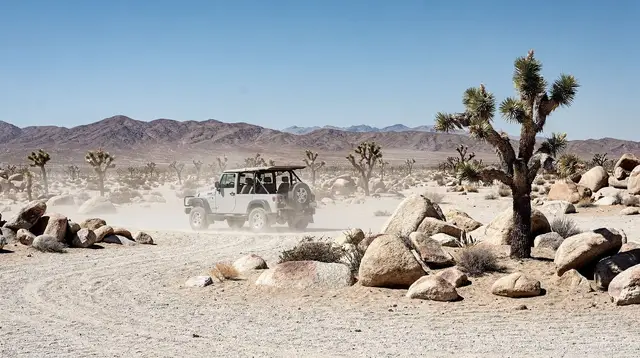
Travelers extending beyond Palm Springs itself most often add Joshua Tree and Joshua Tree National Park, roughly 45 minutes to an hour further east, for a very different desert landscape of granite boulders and Joshua trees rather than residential streets. Death Valley is a further, more demanding drive again, best treated as its own dedicated day rather than an add-on.
A ready-made structure for combining these is the three-day Palm Springs and Joshua Tree itinerary, or the longer four-day desert loop through Palm Springs, Joshua Tree and Death Valley for visitors with more time.
It’s also worth flagging what Palm Springs is not. The wider region, sometimes grouped loosely with the Inland Empire, depends on Los Angeles for its airport connections and its visitor base, but it is not part of the city of Los Angeles and functions as its own distinct desert destination. A visitor expecting a short coastal detour will be surprised by both the drive time and the climate difference.
A closer look at the architecture on the route
Part of what separates this tour from a purely name-dropping drive-by is the design vocabulary that recurs house after house: flat and butterfly rooflines, floor-to-ceiling glass walls facing private pools, decorative concrete breeze-block screens used for shade and privacy, and a deliberate blurring of indoor and outdoor living suited to a dry climate. Guides on most of these tours will point this out explicitly, tying specific design choices to the desert’s light and heat rather than treating the houses purely as celebrity trivia. Visitors with an interest in architecture, rather than star names specifically, often get as much out of the tour as those drawn by the Sinatra-era history.
For a slower, more conversational version of this same neighborhood, a small private walking tour trades vehicle speed for time to actually stop and look. a private walking tour through the Twin Palms neighborhood is built for exactly that pace, and works well paired with one of the vehicle-based tours on a different day of the same stay, since the two formats show different levels of detail rather than duplicating the same route.
Practical notes before booking
- Book for the season you’re actually visiting. A route that’s pleasant on an e-bike in February can be genuinely uncomfortable, and in extreme cases risky, in July; if visiting outside November-April, favor an air-conditioned vehicle option over cycling.
- No one goes inside a house. Every format described here is an exterior, public-street experience; none includes entry to a private residence.
- Pair it with the Tramway or a food tour, not with Joshua Tree the same day. The Aerial Tramway and downtown Palm Springs sit minutes away; Joshua Tree adds a meaningful extra drive and deserves its own time block.
- A car isn’t required for the tour, but it helps for the rest of the valley. Rideshare and the tours’ own pickup services cover the historic neighborhoods; reaching Joshua Tree or the wind farms independently generally calls for a car.
- Confirm the vehicle type before booking on a hot day. A golf-cart or open-air tram tour trades some comfort for the open-air view; a fully enclosed van option, where offered, is the better call once temperatures climb.
Frequently asked questions about Palm Springs celebrity homes tours
Do Palm Springs celebrity home tours let you go inside the houses?
No. Almost all of these estates are privately owned and occupied, so tours drive or cycle past on public streets and point out exterior architecture and history. A small number of midcentury houses open for specific ticketed events, such as annual design festivals, but that is separate from a standard celebrity homes tour.
Is Palm Springs a day trip from Los Angeles, or does it need an overnight stay?
Palm Springs is roughly two hours’ drive from central Los Angeles without traffic, which makes a single long day possible but tight once a homes tour, a meal and any extra sightseeing are added. Most visitors who also want Joshua Tree or the Aerial Tramway find an overnight in Palm Springs more comfortable than a same-day round trip.
When is the best time of year to see the Palm Springs celebrity homes?
Roughly November through April, when daytime temperatures in the Coachella Valley are mild enough for a bike tour or a walk between viewpoints. Summer routinely brings extreme desert heat that makes anything other than a short drive-by uncomfortable and potentially unsafe.
Which stars’ homes are typically pointed out on these tours?
Operators commonly point out desert homes and getaways associated with midcentury-era stars such as Frank Sinatra, Elvis Presley, and other Rat Pack-adjacent figures, alongside architecturally significant houses by modernist architects. Exact names and houses vary by operator and by what is currently visible from the street.
How is a Palm Springs celebrity homes tour different from one in Beverly Hills or Malibu?
Beverly Hills and Malibu tours generally follow coastal and hillside streets and mix references to current celebrities with older estates. Palm Springs tours are set in the desert, lean heavily on midcentury modern architecture from the 1950s-60s, and reference an older generation of Hollywood stars who used the desert as a retreat from the city.
Are Joshua Tree and Death Valley part of a Palm Springs celebrity homes visit?
Not directly. Joshua Tree National Park and Death Valley are separate desert destinations further from Palm Springs, each with its own driving time, entrance fee and very different scenery. They are commonly combined with a Palm Springs stay on a multi-day desert itinerary, but they are not part of the homes tour itself.
Do I need a car for a Palm Springs celebrity homes tour, or can I go without one?
Most operators offer a vehicle, whether a van, an open-air tram-style vehicle, a golf cart or a guided e-bike, so a personal rental car is not required for the tour itself. A car (or rideshare) is still useful for getting to and from Palm Springs from Los Angeles and for reaching other parts of the Coachella Valley.
Seasonal Los Angeles tours
Verified deep-linked GetYourGuide tours. Book through these links and we earn a small commission at no cost to you.
GetYourGuide does not provide a product photo for this activity — the image shows the meeting point, photographed by us.