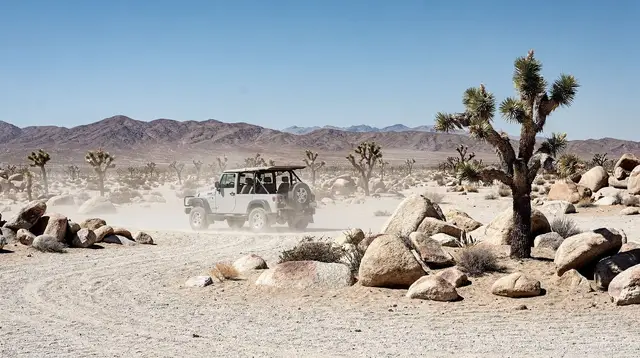
3 Days in Palm Springs and Joshua Tree
Is 3 days enough for Palm Springs and Joshua Tree?
Yes — three days is a comfortable, accessible length for this pairing: roughly a day and a half in Palm Springs and the Coachella Valley, and a full day inside Joshua Tree National Park, all within about two hours' drive of Los Angeles. For a longer loop that adds Death Valley, see the /itineraries/four-days-desert-palm-springs-joshua-tree-death-valley/ itinerary instead.
This three-day loop stays close to Los Angeles — about two hours by car in normal traffic — and pairs the mid-century glamour of Palm Springs with a full day exploring the boulder fields and Joshua trees of Joshua Tree National Park. It is designed as an accessible long weekend, not a full desert grand tour: for a longer version that also reaches Death Valley, see the four-day desert itinerary instead.
A car is not optional here. Neither Palm Springs nor Joshua Tree National Park has meaningful public transport coverage, and there is no train or bus link between the two — every leg of this itinerary, including the drive to the trailheads and attractions once you are inside the national park, has to be done by car. Fill the tank before heading out from Los Angeles; services thin out considerably once you leave the freeway.
Seasonality matters more here than almost anywhere else covered in this guide. The desert around Palm Springs and Joshua Tree swings from very pleasant to genuinely dangerous depending on the month. The period from roughly November to April is the most comfortable stretch for walking around outdoors and hiking; summer heat in this part of the Colorado and Mojave deserts is severe enough that hiking in the middle of the day is not something to plan around casually. Whatever the season, carry more water than feels necessary, start any hike early in the day, and check conditions before setting out — this itinerary does not promise a comfortable hike in the height of summer, and treats the desert’s heat as a planning constraint, not a footnote.
Day 1: Arrival and Palm Springs style
Leave Los Angeles in the morning to give yourself a full afternoon in Palm Springs. The drive east on the freeway takes a little under two hours outside of rush hour, though it can stretch well beyond that if you leave during a weekday morning commute window — check traffic before you go rather than assuming a fixed drive time.
Once you arrive, Palm Springs rewards a slow first afternoon. The city’s mid-century modern architecture — low-slung glass-and-stone houses tucked against the San Jacinto Mountains — is best appreciated by driving or riding through the residential neighborhoods rather than trying to see it on foot in the heat. A guided drive through the celebrity-home districts is a relaxed way to get oriented on your first afternoon; the tour Explore Palm Springs Celebrity Homes in Style covers this ground with a driver so you’re not navigating and sightseeing at the same time (book a guided drive past the Palm Springs celebrity homes).
Downtown Palm Springs itself is walkable in the cooler hours of the day — Palm Canyon Drive has restaurants, galleries and shops, and it’s a pleasant place to have dinner outdoors once the sun is low. If you’d rather see the wider valley from above before dinner, the Palm Springs Aerial Tramway climbs from the desert floor to the pine forests of Mount San Jacinto in about ten minutes, and the temperature difference at the top can be dramatic (ride the Palm Springs Aerial Tramway up Mount San Jacinto).
Stay overnight in Palm Springs; it puts you close to both the valley sights on Day 2 and the drive into Joshua Tree National Park on Day 3.
Day 2: Palm Springs and the Coachella Valley
Spend your second day exploring the wider Coachella Valley at a relaxed pace. Palm Springs is known as much for its windmills as its architecture — the San Gorgonio Pass just outside town holds one of the largest wind farms in the country, and a guided golf cart tour through the district is a low-effort, open-air way to see both the windmills and more of the desert landscape up close, with commentary on how the valley developed (take a guided golf cart tour of the Palm Springs windmills).
For a different pace and a more offbeat introduction to the city’s history and gossip, an open-top sightseeing bus tour hosted by a local drag queen is one of Palm Springs’ better-known experiences — irreverent, entertaining, and a good option for an afternoon when you’d rather be driven around than drive yourself (join a drag queen-hosted sightseeing bus tour of Palm Springs).
If you have energy left in the late afternoon, the Palm Springs Art Museum and the shops along El Paseo in nearby Palm Desert are worth a stop, and Palm Springs’ many mid-century hotels are worth a look even if you’re not staying in one — several have public-facing pools, bars and gardens open to non-guests. Have an early dinner and an early night: Day 3 starts before the heat builds.
Day 3: A full day in Joshua Tree National Park
Joshua Tree National Park is roughly 45 minutes to an hour from Palm Springs depending on which entrance you use, and it deserves a genuinely full day rather than a quick loop. The park is large, and moving between its main areas — the boulder-strewn Hidden Valley and Jumbo Rocks areas, Keys View, the Cholla Cactus Garden further south — means driving from one pullout to the next; there is no shuttle or public transit inside the park, and distances between sights are longer than they look on the map.
Start early. Entering the park in the first cooler hours of the morning is both more comfortable and gives you the best light for photography among the boulders and Joshua trees. Bring more water than you think you’ll need, and plan any hiking for the morning rather than the middle of the day, particularly outside the cooler months of November through April — this is a real desert park with limited shade, limited cell signal in many areas, and a per-vehicle entrance fee at the gate.
For visitors who want to go beyond roadside stops, a guided backcountry tour is a good way to see parts of the park that are hard to find or access safely on your own, with a guide handling navigation and pacing (go on a guided backcountry tour inside Joshua Tree National Park). Those looking for something more adrenaline-focused can try a rappelling experience on the park’s granite formations, a popular option among the park’s boulder fields for visitors with some outdoor experience (try a rappelling experience among Joshua Tree National Park’s boulders).
As evening approaches, the high desert around Joshua Tree is known for exceptionally dark, clear night skies — one of the closest genuinely dark-sky areas to Los Angeles. A sound bath under the stars is one of the more distinctive ways to close out a desert day, combining stargazing with a guided relaxation session in the open air (experience a soundbath under the stars near Joshua Tree).
If you’d rather bring home something tangible from the trip, a cyanotype sunprint workshop uses the desert’s strong sunlight to create photographic-style prints and makes for a relaxed, low-key activity earlier in the day if your schedule allows (make a cyanotype sunprint in a Joshua Tree workshop).
Head back to Los Angeles in the evening, or stay a third night in the Joshua Tree area if you’d rather make the drive back the next morning instead of after a full day outdoors.
Planning this trip: what to know before you go
| Consideration | What to expect |
|---|---|
| Drive from LA to Palm Springs | Roughly 1.5–2 hours outside rush hour |
| Palm Springs to Joshua Tree National Park | Roughly 45 minutes to 1 hour, entrance-dependent |
| Public transport coverage | None meaningful — a car is required for this entire itinerary |
| Best months | Roughly November through April for outdoor comfort |
| Inside the park | No shuttle; every site is reached by car, then on foot |
| Entrance fee | Per-vehicle fee at Joshua Tree National Park gates |
For a broader comparison of desert options from Los Angeles, see Palm Springs vs Joshua Tree, and for the extended version of this route that continues on to Death Valley, see the four-day desert itinerary. If you’re weighing whether summer works for this trip at all, visiting the desert in summer lays out the seasonal trade-offs in more detail, and best time to visit Los Angeles by zone covers how the desert’s calendar differs from the coast.
FAQ: Palm Springs and Joshua Tree in 3 days
Do I need a car for this itinerary?
Yes. There is no meaningful public transport between Los Angeles, Palm Springs and Joshua Tree National Park, and no shuttle service inside the park itself — every leg of this trip, including getting between sites inside Joshua Tree, requires a car. See our guide on renting a car versus rideshare in Los Angeles for context on this decision more broadly.
What is the best time of year to do this trip?
Roughly November through April is the most comfortable window for walking around Palm Springs and hiking in Joshua Tree. Summer heat in this part of the desert is severe enough that midday hiking is not something to plan around; if you’re traveling in summer, plan activities for the early morning and evening and treat water and shade as non-negotiable.
Can I hike in Joshua Tree in the middle of summer?
Not comfortably, and it isn’t something this itinerary recommends. Summer heat in the park is intense, shade is limited, and services inside the park boundary are sparse. If you’re visiting in summer, shift any hiking to the earliest morning hours, carry substantially more water than usual, and treat the middle of the day as rest time rather than hiking time.
Is there public transport between Palm Springs and Joshua Tree National Park?
No. There is no bus or rail link between the two, and no shuttle inside the national park itself. A rental car (or a guided tour with transport included) is the only practical way to cover this itinerary.
How does this differ from the four-day desert itinerary?
This three-day version stays focused on Palm Springs and Joshua Tree National Park as a more accessible long-weekend trip. The four-day desert itinerary extends the same core route further out to Death Valley, which adds significant driving time and is better suited to travelers with an extra day to spare.
Is Joshua Tree National Park doable in one day?
A single full day is enough to see the park’s main areas — Hidden Valley, Jumbo Rocks, Keys View and the Cholla Cactus Garden — but it’s a genuinely full day of driving between pullouts and short walks, not a quick loop. Starting early in the morning makes a meaningful difference to both comfort and photography light.
Do I need to book Joshua Tree National Park in advance?
The park itself does not typically require a timed-entry reservation, but it does charge a per-vehicle entrance fee at the gate, and guided activities such as backcountry tours or rappelling experiences are worth booking ahead of your visit rather than arranging on arrival.
What should I pack for this trip?
More water than feels necessary, sun protection, layers for cooler evenings (especially in the aerial tramway’s mountain-top temperatures or after dark in the park), and a full tank of gas before leaving Palm Springs — services thin out quickly once you’re inside Joshua Tree National Park.
Seasonal Los Angeles tours
Verified deep-linked GetYourGuide tours. Book through these links and we earn a small commission at no cost to you.
GetYourGuide does not provide a product photo for this activity — the image shows the meeting point, photographed by us.