Visiting the Desert in Summer: Why I'd Think Twice
Should I visit Palm Springs, Joshua Tree or Death Valley in summer?
I wouldn't plan a full day of hiking or outdoor exploring there between roughly June and September. Daytime highs regularly climb well past 40°C, and Death Valley in particular is one of the hottest places on earth in summer. If summer is your only window, keep desert time short, early-morning or after-sunset, and well hydrated, or shift those plans to November-April instead.
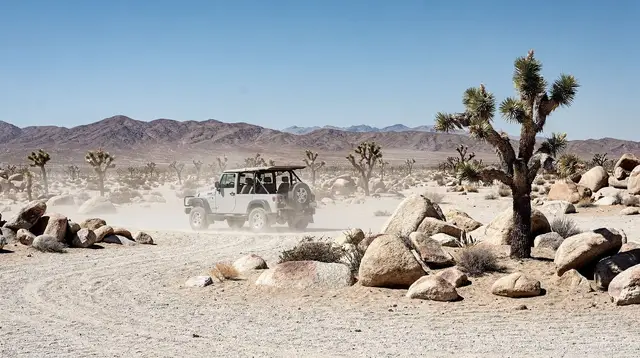
I learned this one the hard way. A few summers ago I drove out from Los Angeles to Joshua Tree on what I thought was a reasonable plan: arrive mid-morning, do a longer loop hike, be back by early afternoon before it got “too hot.” By 10:30am the car’s thermometer read 41°C and climbing, the trail had no shade for most of its length, and I remember standing next to a joshua tree thinking that this was clearly a bad decision, not an inconvenient one. We cut the hike short, sat in the shaded visitor center for an hour, and drove home. Nobody got hurt, but it was close enough to a bad afternoon that I’ve never repeated it.
That’s really the point of this post. Palm Springs, Joshua Tree and Death Valley are genuinely worth a trip, and I still send people there constantly — just not for a full day of hiking or exploring on foot between roughly June and September. This is a personal, opinionated take, not a comparison of which desert to pick (I’ve written about that separately in Palm Springs vs Joshua Tree); this one is only about the summer timing question.
Why summer in the desert is a different kind of hot
Los Angeles itself has a mild, coastal-influenced climate most of the year, and even its warmest summer days rarely feel extreme near the water. The desert is not the same climate at all, even though it’s only about two hours from the city by car. Palm Springs and Joshua Tree regularly run 10°C or more hotter than downtown LA or the beaches on the same day, and Death Valley goes further still — it’s one of the hottest places on the planet, and summer afternoons there routinely exceed 45-49°C. I won’t quote you a specific temperature for a specific date, because that’s a promise nobody can make in advance, but the pattern every summer is the same: it gets dangerously hot, for hours at a stretch, with little shade anywhere.
The other thing that catches visitors out is how little margin for error the desert gives you. Phone signal is patchy or absent across large stretches of Joshua Tree National Park and Death Valley, services (water, fuel, shade) are spaced far apart, and a flat tire or a wrong turn that would be a minor annoyance elsewhere becomes a real problem with no shade and 45°C heat. I don’t say any of this to be alarmist — thousands of people visit safely every summer — but I won’t tell you a mid-day hike is safe in July, because it isn’t a claim I can honestly make.
What I actually tell people who are only free in summer
If your travel dates are fixed and summer is genuinely the only window you have, here’s what I’d actually do, based on the version of this trip I’d take myself.
Flip the clock, not the destination. Desert mornings before about 9am and the hour or two after sunset are a completely different experience — still warm, but survivable, often beautiful with long shadows and soft light. If you want to see Joshua Tree or the Anza-Borrego area in summer, that’s the window: out at first light, back indoors by mid-morning.
Treat the middle of the day as indoor time, on purpose. In Palm Springs that means museums, the Palm Springs Aerial Tramway (the top of the tramway runs noticeably cooler than the valley floor), spas, and air-conditioned architecture tours rather than hiking trails. I’d rather build a summer desert day around that rhythm than pretend the afternoon doesn’t exist.
Consider swapping the desert day for a city day instead. Honestly, in peak summer heat, this is often what I’d actually recommend: keep the desert as a shorter, cooler-hours visit, and spend more of your trip in Los Angeles itself, where the coastal air keeps things far more comfortable. A guided city day works well here — I’ve done a full-day guided tour covering LA’s main landmarks on a scorching July week specifically because it kept us moving between air-conditioned stops instead of standing in a parking lot in the sun.
An open-air bus tour through Hollywood and Beverly Hills is a bit more exposed but still far milder than the desert, especially scheduled for morning departure. If you want a completely different way to see the desert’s shape without walking through it, a helicopter tour over LA’s landmarks is a genuinely cooler alternative to a hiking day, seen from the air rather than the trail.
Head for elevation instead of the low desert. Big Bear Lake sits at over 2,000 metres and runs noticeably cooler than Palm Springs or Joshua Tree on the same afternoon — it’s a reasonable summer substitute if what you actually want is mountains and open air rather than the specific low-desert landscape.
Hydrate more than feels necessary, and carry more water than you think you need. This is the one piece of advice that applies whatever time of day you go: more water than seems reasonable, electrolytes if you’re out for hours, and a real plan for shade, not an assumption that you’ll find some.
If your dates are flexible at all, move the trip. November through April is when this part of Southern California genuinely shines — daytime temperatures in Palm Springs and Joshua Tree drop into a comfortable range, hiking is pleasant rather than risky, and Death Valley becomes one of the best cool-season landscapes in the country. If you can shift a desert-focused itinerary — something like a three-day Palm Springs and Joshua Tree trip or the longer four-day desert loop through Palm Springs, Joshua Tree and Death Valley — into that window instead, I would, every time.
What I’m not going to tell you
I won’t tell you there’s a safe way to spend a full day hiking in the desert in the middle of summer, because there isn’t one I’d stand behind. And I won’t give you a maximum temperature for a specific date, because desert heat varies year to year and week to week, and a number I quote today could be wrong by the time you actually travel.
What I can tell you is the pattern, and the pattern doesn’t change: check what to expect zone by zone before you build the itinerary, keep any desert time in summer to the cooler hours, and don’t be afraid to swap a desert day for a cooler one somewhere else in the region — the things to do near Palm Springs and Joshua Tree pages both list indoor and early-morning options if you want to see the ideas laid out.
Frequently asked questions about visiting the desert near LA in summer
Is it safe to hike in Joshua Tree or Death Valley in July or August?
I wouldn’t plan a full daytime hike there in peak summer. Daytime highs regularly exceed 40-45°C with little shade, and conditions can turn dangerous quickly. Early morning or after-sunset outings, kept short, are a safer approach if you’re visiting in summer regardless.
How far are Palm Springs and Joshua Tree from Los Angeles?
Both are roughly two hours by car from central Los Angeles, but the climate changes dramatically over that drive — the desert runs noticeably hotter than the city or the coast, often by 10°C or more on the same day.
What’s the best time of year to visit the desert near LA?
Roughly November through April, when daytime temperatures are comfortable for hiking and outdoor exploring. If your trip falls outside that window and your dates can move, I’d shift a desert-focused itinerary into that season if at all possible.
What can I do in the desert if I’m only there in summer?
Focus on early morning (before about 9am) or the hour or two after sunset, and treat the middle of the day as indoor time — museums, the Palm Springs Aerial Tramway, spas — rather than trail time. Or shift the day toward cooler higher-elevation spots like Big Bear Lake, or simply spend more of the trip in Los Angeles itself.
Is Death Valley worse than Palm Springs or Joshua Tree in summer?
Yes, generally. Death Valley is one of the hottest places on earth and its summer afternoons routinely exceed what Palm Springs or Joshua Tree see, so I’d treat it as the highest-caution option of the three if you’re travelling in summer.
Do I need to bring my own water into the desert?
Yes, more than feels necessary. Services are spaced far apart, phone signal is patchy in much of Joshua Tree and Death Valley, and there’s no guarantee of finding water or shade when you need it, so carrying your own is the safer default.
Can I still enjoy a desert day trip if my only free dates are in summer?
You can, but I’d restructure it: cooler-hours activity in the early morning or evening, indoor or shaded plans for the middle of the day, heavy hydration throughout, and a willingness to shorten or skip a planned hike if conditions feel worse than expected.
Seasonal Los Angeles tours
Verified deep-linked GetYourGuide tours. Book through these links and we earn a small commission at no cost to you.
GetYourGuide does not provide a product photo for this activity — the image shows the meeting point, photographed by us.