Joshua Tree Desert Adventures: Stargazing, Caves and Full Moon Hikes
What can you actually do in Joshua Tree in a single visit?
Joshua Tree supports half-day and evening activities such as guided stargazing, cave scrambles, a full moon hike or a cyanotype art workshop, on top of daytime hiking and family-friendly rock climbing. These are single-session experiences, not multi-day expeditions, and most run rain or shine except for astronomy activities, which depend on clear skies.
A different kind of desert trip
Most guides that mention the desert around Los Angeles are built around the road trip: several days looping through Palm Springs, Joshua Tree, and sometimes on to Death Valley or Las Vegas. That is a real and worthwhile way to see the region, and it has its own itinerary if that is what you are after. This page is about something narrower and, for a lot of visitors, more realistic: what you can actually do inside Joshua Tree itself, on a single half-day or evening, without rearranging your whole Los Angeles trip around a multi-day desert loop.
Joshua Tree National Park sits roughly two and a half hours east of central Los Angeles by car. There is no meaningful public transport link to the park, so a rental car is the normal way in — the same is true if you are coming from Palm Springs, which sits much closer, roughly forty minutes away, and works well as a base for an evening activity here. If you are deciding between the two as a base, the Palm Springs versus Joshua Tree comparison walks through the trade-offs.
The activities below are grouped by what they actually feel like to do, rather than by age group or fitness level, because that is usually the more useful way to decide between them: a quiet evening under the stars is a very different trip than an active half-day of climbing or archery, even though both happen inside the same park boundary. Most visitors pick one or two of these rather than trying to fit all of them into a single trip, and that is enough to get a real sense of the park beyond the drive-through view from the main road.
For a wider comparison of how a desert day fits against the rest of a Los Angeles itinerary, the desert adventures overview for Los Angeles and the Anza-Borrego and San Jacinto desert adventures guide cover other pockets of the same wider desert region.
Stargazing in one of the darkest skies near a major US city
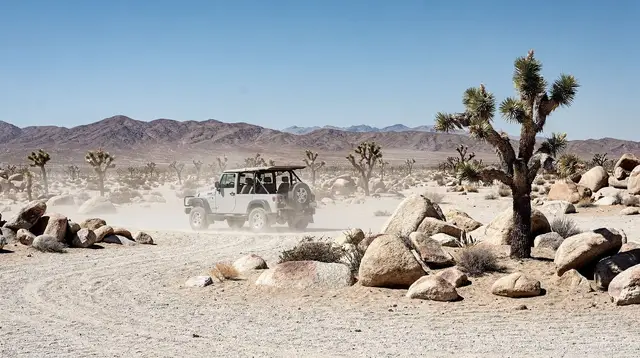
Joshua Tree’s distance from the light pollution of the Los Angeles basin is exactly what makes it worth the drive after dark. A guided professional stargazing session in the park typically includes telescopes, a guide who can point out constellations and planets, and enough context to make sense of what you are looking at, rather than just standing in the dark.
Two things matter for planning this realistically. First, it depends on the sky: cloud cover or a hazy night genuinely changes what you will see, and no operator can promise a clear view on a given date. Second, groups are kept small on purpose, which is part of what makes the experience good, but it also means popular nights sell out — book ahead rather than assuming you can turn up on a whim. This is a two-to-three-hour evening activity, not something that requires an overnight stay, though many visitors do pair it with a night in Palm Springs or a nearby desert town.
A full moon hike, on the calendar’s terms
A guided full moon hike with a local guide is a specific kind of night walk: it is timed to the days around the actual full moon, when moonlight is bright enough to walk the desert landscape without needing a headlamp for most of the route. Because it is tied to the lunar calendar, it is not an activity you can book for any random night of your trip — check the schedule against your dates before you build the rest of your evening around it.
As with stargazing, weather can affect the experience, and a guide will generally be upfront about conditions rather than promise a flawless walk regardless of cloud cover or wind. Treat it as a strong seasonal bonus if your dates line up, not as a guaranteed centrepiece you should plan an entire trip around. For visitors interested in the mechanics of how these night activities compare, the jet lag and first day guide has useful context on adjusting to an evening-heavy schedule after a long flight.
Underground and off the main trails: caves and corridors
Joshua Tree’s granite boulder fields hide narrow passages, slot-like corridors and small cave systems that most day visitors never see because they are not obvious from the main pullouts. A guided caves and corridors adventure tour takes you into these formations with someone who knows the terrain, which matters here — a number of these spots are genuinely easy to walk past, and some involve scrambling over rock in ways that are more comfortable with guidance and the right footwear.
This runs as a daytime half-day activity rather than an overnight one, and it is a good complement to a stargazing evening: explore the rock formations by day, and come back after dark for the sky. If you would rather see the park’s geology at your own pace with commentary in your pocket, the self-guided audio tour of the park is a lower-commitment alternative to a guided walk.
A creative half-day: the cyanotype workshop
Not every desert activity here is about hiking or looking up. A cyanotype sunprint workshop uses the desert’s intense sunlight to expose blue-toned prints from plants and objects you gather nearby — it is a hands-on, low-strain way to spend two or three hours in the park, and it works well for visitors who want a break from hiking or for anyone travelling with a mix of ages and fitness levels.
Because the process depends on strong, direct sun, sessions are scheduled around the brightest part of the day, which in summer overlaps with the most dangerous heat window — one more reason a cooler-season visit, from roughly November to April, tends to be the more comfortable choice for daytime activities here.
Rock climbing for families, not expedition climbers
Joshua Tree is a serious destination for experienced rock climbers, but that is not what this section is about. A family rock climbing trip is built around beginners, including children, with instruction, equipment and routes chosen for a first climbing experience rather than technical routes. It runs as a half-day session, and it is one of the more approachable ways for a family to actually touch the park’s famous rock formations rather than just photographing them from a pullout.
If you are travelling with children and weighing this against other options nearby, the family-focused guide to the area and the broader pacing a family trip piece both help with balancing an active desert session against downtime elsewhere in a Los Angeles itinerary.
Archery and target shooting for a quick adrenaline break
Not everyone wants a hike or a climb, and a couple of shorter activities near the park scratch a different itch. A private one-hour archery experience close to Joshua Tree is a compact, instructor-led session that works well slotted between a morning drive out and an afternoon in the park itself, with no previous archery experience required.
A paintball and target shooting experience near the park is a similarly short, high-energy option for the same kind of gap in the day, and both are easy to combine with one of the calmer evening activities above rather than treating the whole day as one continuous adventure.
Rappelling and climbing for those who want more than a first lesson
The family rock climbing trip described above is deliberately built for beginners. For visitors who already climb, or who want something with more exposure, a rappelling experience in Joshua Tree National Park takes you down real rock faces with an instructor managing the ropes and safety systems, and a guided rock climbing trip is pitched at a level above the family session, with routes chosen for people who want an actual climbing outing rather than an introduction.
Both run as half-day sessions and depend on the same cooler-season logic as the other daytime activities here: November through April is more comfortable than a midsummer afternoon on exposed granite.
A free self-guided option if you would rather not book a tour
Not every visit needs to be built around a paid activity. A free local’s audio guide to Joshua Tree gives you commentary and route suggestions on your own phone, at your own pace, which suits visitors who prefer to explore independently or who are combining this stop with several other things in a single desert day. It is a reasonable way to get oriented on a first visit, or to fill the daytime hours before committing to one of the paid evening sessions above.
Sound and stillness after dark
A quieter alternative to a hike or a workshop is a guided soundbath session under the stars, which pairs the same dark desert sky used for stargazing with a seated, guided relaxation session rather than a walk. It suits visitors who want the atmosphere of a Joshua Tree evening without the physical activity of a hike, and like the other night sessions here, it depends on reasonable weather.
Planning one visit versus a longer loop
| Activity | Time needed | Best season | Depends on weather/moon? |
|---|---|---|---|
| Guided stargazing | 2-3 hours, evening | Year-round, clearer in autumn/winter | Yes, needs clear sky |
| Full moon hike | 2-3 hours, evening | Timed to lunar calendar | Yes, needs clear sky and moon phase |
| Caves and corridors tour | Half-day | November-April most comfortable | No, but hot in summer |
| Cyanotype workshop | 2-3 hours, daytime | Year-round, avoid midday summer heat | Needs sun, not rain |
| Family rock climbing | Half-day | November-April most comfortable | Weather-dependent for comfort |
| Soundbath under the stars | 1-2 hours, evening | Year-round, clearer in autumn/winter | Yes, needs clear sky |
None of these require more than a single day trip out from Los Angeles, or an overnight stay in the Palm Springs area if you prefer not to drive back the same night. If your interest runs toward a longer desert itinerary that strings several of these together with Death Valley or the Mojave, that belongs on the multi-day road trip planning pages rather than here — see the desert road trip itinerary for that version of the trip, or the shorter three-day Palm Springs and Joshua Tree itinerary if you want a middle ground between a single evening and a full multi-day loop.
If you are trying to decide how many of these to combine in one visit, it helps to think in terms of day versus night rather than trying to schedule everything back to back. A realistic pattern is one daytime activity — caves, climbing, rappelling, archery or the cyanotype workshop — paired with one evening activity such as stargazing, the full moon hike or the soundbath, with a break in between rather than treating the desert as a place to pack wall-to-wall bookings.
Visitors continuing on afterward toward Death Valley or a longer loop through Las Vegas can treat Joshua Tree as the first stop rather than the whole trip; the seven-day Grand Canyon, Las Vegas and desert itinerary is built around exactly that kind of sequencing.
Getting there and the practical basics
There is no shortcut around the drive: budget roughly two and a half hours each way from central Los Angeles, more from the far side of the city or in heavy traffic. A rental car is close to mandatory — public transport does not serve the park in any practical way, and ride-hailing coverage thins out well before you reach the desert. Fuel up before you arrive, since services inside and immediately around the park are limited, and phone signal can be patchy once you are away from the main road.
Joshua Tree charges a standard National Park per-vehicle entrance fee, separate from whatever guided activity you book. Bring more water than feels necessary, dress in layers for evening activities since desert temperatures drop fast after sunset even when the day was hot, and check current conditions before committing to a summer daytime activity — heat here is a real risk, not a minor inconvenience, and no guide or operator can make a dangerously hot afternoon safe by itself.
The visiting the desert in summer piece goes into more detail on how to judge whether a given stretch of dates is workable at all, and the best time to visit Los Angeles by zone guide places the desert’s seasonal pattern alongside the rest of the region for anyone still deciding when to travel.
Most of these activities meet at a specific trailhead or staging point inside or near the park rather than at a central visitor center, so read your confirmation details carefully once you book — arriving at the wrong pullout can cost you the first thirty minutes of a two-hour session. Cell service is unreliable in much of the park, so it is worth saving your meeting point and driving directions before you lose signal on the way in, rather than counting on being able to look them up again once you are close.
Joshua Tree desert activities: frequently asked questions
How far is Joshua Tree from Los Angeles?
Joshua Tree National Park is roughly two and a half hours from central Los Angeles by car, depending on traffic on the way out through the Inland Empire. A rental car is the practical way to get there, since there is no public transport route that serves the park itself.
Do I need a permit or ticket to enter the park?
Joshua Tree is a US National Park with a per-vehicle entrance fee. Guided activities such as stargazing tours or cave hikes are usually booked and paid separately from that entrance fee, so budget for both.
Is Joshua Tree safe to visit in summer?
Summer desert heat in Joshua Tree is genuinely dangerous, with daytime temperatures that regularly climb well above what most visitors are used to. Carry more water than feels necessary, avoid strenuous hiking in the middle of the day, and treat any midsummer visit with real caution rather than assuming it will be fine.
Is a full moon hike or stargazing tour guaranteed to go ahead?
No. Both depend on the lunar calendar and the weather. A full moon hike only runs close to the actual full moon date, and a stargazing session needs a clear night sky to be worthwhile. Cloud cover, wind or a mismatched calendar date can mean the experience is postponed, so book with some flexibility in your schedule.
Can families with young children do these activities?
Some of them, yes. Family-oriented rock climbing sessions in Joshua Tree are designed around beginners and children, with instruction and equipment included. Late-night stargazing and full moon hikes are better suited to older children and adults who can manage a few hours outdoors after dark.
How long do these desert activities take?
Most run as a single half-day or evening session, typically two to four hours, rather than a full day. That makes them easy to combine with a daytime visit to the park or with a stay in Palm Springs, without committing to a multi-day desert itinerary.
Should I book in advance?
Yes. Stargazing sessions, full moon hikes and workshops like the cyanotype printing experience run with restricted group sizes, and popular dates around the full moon or on weekends fill up. Booking ahead also protects against a specific evening being sold out once you arrive.
Desert Adventures
Verified deep-linked GetYourGuide tours. Book through these links and we earn a small commission at no cost to you.
GetYourGuide does not provide a product photo for this activity — the image shows the meeting point, photographed by us.