Palm Springs Desert Adventures: Canyons, Caves and Stars
What kind of desert adventures can I do from Palm Springs?
Palm Springs works as a comfortable base for guided jeep tours through the Indian Canyons, evening stargazing sessions, cave and slot-canyon exploring, and creative workshops such as cyanotype printing. These are gentler, discovery-focused outings rather than technical climbing or rappelling, and most need to be booked in advance.
Why Palm Springs works as a desert base
Ask a first-time visitor to picture “desert adventures near Los Angeles” and they usually imagine Joshua Tree National Park: boulder fields, climbers, rappelling routes, campsites under a wide-open sky. That is one real version of the desert around Los Angeles, but it is not the only one, and for a lot of travelers it is not the most comfortable one. Palm Springs offers a different proposition: a proper town with hotels, restaurants, spas and a walkable downtown, wrapped around a genuinely dramatic desert landscape, with guided outings that come to you rather than requiring you to plan a backcountry trip yourself.
This page is about that version of the desert — jeep tours into palm-lined canyons, evening stargazing under some of the darkest skies within reach of Los Angeles, cave and corridor exploring, and even a hands-on cyanotype printing workshop that turns a desert afternoon into a keepsake. None of it demands climbing gear, route-finding skills or physical toughness. It is the desert as a place to look at, learn about and photograph, not conquer.
It helps to be clear about what Palm Springs is not, too. It is not a substitute for the national park experience at Joshua Tree National Park, where the appeal is precisely the rock formations, climbing routes and campground nights inside protected wilderness. And it is a different kind of desert outing from the high-altitude jeep routes covered on the Anza & San Jacinto Mountains page, which climb into pine forest and cooler mountain air rather than staying down in the canyon floor. Palm Springs sits between the two: a real town with a soft landing, used as a springboard for varied, accessible desert experiences during the day and a comfortable bed at night.
Getting there from Los Angeles
Palm Springs is roughly two hours by car from central Los Angeles, mostly along the 10 freeway east through the Inland Empire before the valley opens out and the wind turbines around the San Gorgonio Pass come into view. A rental car is the realistic way to make the trip; Palm Springs and the wider Coachella Valley were built around driving, and while some transfer and tour operators do offer pickup from LA hotels for specific full-day experiences, there is no meaningful public transit link that gets you there and back on your own schedule.
If you are combining Palm Springs with other stops, note that it also connects naturally toward Joshua Tree and the wider Coachella Valley, so many visitors treat it as one leg of a longer desert loop rather than a single out-and-back day trip.
Traffic on the 10 can add real time at either end of the day, particularly on Friday afternoons heading out of LA and Sunday afternoons heading back, so building in some flexibility around departure time is worth doing if your schedule allows it.
Jeep tours into the Indian Canyons
The signature Palm Springs outing is a guided jeep tour into the Indian Canyons, a set of canyons on Agua Caliente Band of Cahuilla Indians tribal land just south of downtown. Unlike much of the surrounding desert, these canyons hold year-round streams fed by snowmelt from the San Jacinto Mountains, which support dense groves of native California fan palms — the kind of oasis scenery that looks almost out of place against the dry hillsides around it.
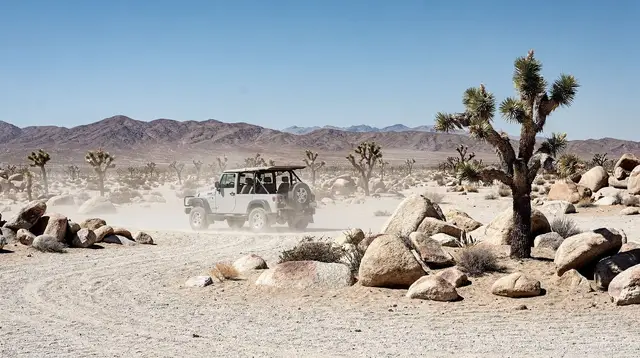
A typical jeep-and-hike combination tour drives sections of rougher terrain that would be impractical on foot or by regular car, then stops for shorter guided walks into specific canyon sections, with a naturalist guide explaining the plant life, geology and Cahuilla history along the way. It is a format built for people who want to see real desert wilderness without committing to a full hiking itinerary, and it works well for a wide range of fitness levels and age groups.
a guided jeep and hiking combination tour through the Indian Canyons covers this experience directly, pairing the drive with short walks to the palm oases.
For a lower-effort way to take in the same valley and mountain backdrop, the Palm Springs Aerial Tramway climbs from the desert floor up into the San Jacinto Mountains in a rotating cable car, swapping cactus and sand for pine forest in well under fifteen minutes — a striking contrast that needs no hiking at all.
Stargazing without leaving the valley
The Coachella Valley’s dry air and distance from the densest parts of the Los Angeles light dome make it a genuinely good place to look up. Guided stargazing sessions, typically run in the evening away from the brightest parts of town, pair a naturalist or astronomer with a telescope setup and a running commentary on what is currently visible — planets, star clusters, sometimes the Milky Way on a clear, moonless night.
These sessions run on a fixed schedule and depend on group size and equipment, so they need to be booked ahead rather than arranged on the spot; turning up without a reservation is the most common way visitors miss out on this one. Because visibility depends on the moon phase and seasonal weather, checking the specific date’s conditions when booking is worth the extra minute.
Caves, corridors and quieter walks
Beyond the marquee canyon tours, the hills and washes around Palm Springs hold smaller rock formations, corridors and cave-like passages that guided walking outings explore at an easy pace. These are a good option for travelers who want to get closer to the desert landscape on foot without the vehicle-based format of a jeep tour, or who are looking for something shorter and less structured than a full canyon hike.
A guided golf cart tour is another low-effort way to cover ground, more commonly used to explore Palm Springs’ mid-century modern neighborhoods and windmill farm views than the backcountry, but it is worth mentioning alongside the canyon options because it fits the same “comfortable base” idea: see a lot, walk little. a guided golf cart tour past the valley’s wind farm and neighborhoods is the version of that idea built around the windmills and architecture rather than the canyons.
Riders who want a middle ground between a jeep tour and a walking tour sometimes prefer covering the town and its desert edges by e-bike; a narrated e-bike tour around Palm Springs covers more distance than walking without requiring real physical effort, with a guide narrating along the way.
A creative detour: cyanotype workshops
Not every desert activity in Palm Springs is about landscape alone. Cyanotype printing — an old photographic process that uses sunlight to turn plant material and found objects into deep blue-toned prints — has found a natural home here, where reliable sun and desert plant life give the process plenty to work with.
A typical workshop walks participants through coating paper, arranging natural materials, exposing the print in direct desert sun and rinsing the finished piece, producing a physical souvenir that is a little more personal than a photograph. It is a relaxed, low-key activity that pairs well with a spa afternoon or a quieter day between more active outings, and it fits the same theme running through this page: Palm Springs rewards visitors who come to experience the desert rather than push through it.
Palm Springs vs. Joshua Tree vs. Anza & San Jacinto
| Palm Springs desert adventures | Joshua Tree National Park | Anza & San Jacinto Mountains | |
|---|---|---|---|
| Format | Guided jeep, walking, cave and creative outings from a town base | Self-directed hiking, climbing, rappelling inside the park | High-altitude jeep tours into forested mountain terrain |
| Physical demand | Low to moderate | Moderate to high (climbing/rappelling optional but central) | Low to moderate |
| Best for | Comfort-focused visitors wanting variety without exertion | Hikers, climbers, campers | Scenery and cooler air at altitude |
| Lodging | Hotels, resorts and spas in town | Camping or lodging outside the park | Day trip from Palm Springs or LA |
| Booking lead time | Required for stargazing, caves, jeep tours | Not required for self-guided hiking | Recommended for guided jeep tours |
When to visit
Palm Springs summers are extremely hot, with daytime temperatures regularly climbing well past 40°C (104°F) between roughly June and September. That heat rules out most outdoor canyon walks, jeep excursions and stargazing sessions during the day, and it meaningfully limits evening options too. This page will not pretend otherwise: summer is not a good season for the outdoor activities described above, even though the town itself stays open and some visitors do come for pool time, spas and heavily discounted summer hotel rates.
Autumn and spring are the seasons that make Palm Springs’ desert adventures genuinely pleasant — daytime temperatures that allow for a full afternoon outdoors, and evenings cool enough to make stargazing comfortable rather than an endurance test. Winter is milder still during the day but brings colder nights, which is worth factoring into an evening stargazing booking. Whatever the season, checking a specific tour’s weather policy before booking is sensible, since extreme heat can lead operators to reschedule or cancel outdoor sessions.
Planning your day
Most of the activities on this page — jeep tours, stargazing, cave walks, workshops — run as scheduled, guided sessions rather than walk-up attractions, and the practical takeaway is straightforward: reserve ahead. Popular time slots, particularly weekend evenings and the cooler months, sell out, and turning up without a booking is the single most common way visitors miss out on a specific experience they had planned around.
A day built around Palm Springs works well when it starts with a morning jeep tour into the Indian Canyons while temperatures are still manageable, moves into a slower midday pace — lunch, a museum, a gentle golf cart or e-bike tour, or a cyanotype workshop — and closes with an evening stargazing session once the desert sky has properly darkened. That structure respects both the heat of the day and the schedules that guided operators run on, and it is a useful template whether you are spending one day in the valley or building it into a longer desert road trip itinerary.
If Palm Springs is one stop on a wider desert loop, it pairs naturally with Joshua Tree for hiking and rock formations, with Anza & San Jacinto for higher-altitude mountain scenery, and with the broader Coachella Valley for its resorts, golf and mid-century architecture.
For a wider look at what else the area offers beyond guided adventures, see things to do in Palm Springs and the area’s desert adventures category, which also covers Joshua Tree National Park and the Anza & San Jacinto options side by side.
Frequently asked questions about Palm Springs desert adventures
How far is Palm Springs from Los Angeles?
Palm Springs is roughly two hours by car from Los Angeles, and a rental car is the practical way to get there since public transport does not realistically cover the desert.
Is Palm Springs a good base for exploring the desert, or should I stay in Joshua Tree instead?
Palm Springs works well as a comfortable base with hotels, restaurants and spas, paired with guided day outings into the surrounding canyons and desert. Joshua Tree National Park itself is a separate destination geared more toward hiking, climbing and camping inside the park.
What is the best time of year for outdoor activities in Palm Springs?
Autumn and spring are the most comfortable seasons for outdoor activities around Palm Springs, with mild days and cool evenings. Summer brings extreme heat that makes most daytime outdoor activity unsafe or unpleasant.
Can I visit Palm Springs in summer?
You can, but summer daytime temperatures regularly exceed 40°C (104°F), which rules out most outdoor canyon or hiking activity during the day. Visitors who come in summer typically shift outdoor plans to early morning or evening, or focus on pools, spas and indoor attractions instead.
Do I need to book stargazing or cave tours in advance?
Yes. Guided stargazing sessions and cave or canyon exploring tours run on fixed schedules with limited group sizes and commonly sell out, especially on weekends and around the cooler months, so booking ahead is strongly recommended rather than optional.
What are the Indian Canyons?
The Indian Canyons are a set of palm-lined desert canyons on tribal land just south of Palm Springs, reached by jeep and short walks, known for year-round streams, fan palm oases and Cahuilla cultural history.
Is Palm Springs suitable for a non-strenuous desert visit?
Yes, that is one of its main draws compared with the national parks nearby. Jeep tours, golf cart tours, guided walks and evening stargazing require little physical exertion, unlike the climbing and rappelling activities associated with Joshua Tree National Park.
Seasonal Los Angeles tours
Verified deep-linked GetYourGuide tours. Book through these links and we earn a small commission at no cost to you.
GetYourGuide does not provide a product photo for this activity — the image shows the meeting point, photographed by us.