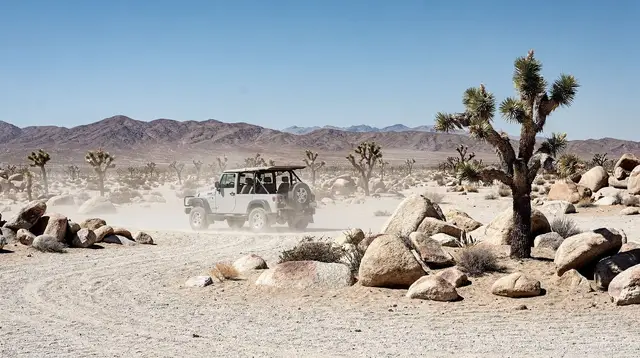
Joshua Tree National Park Desert Adventures: Climbing, Rappelling & Backcountry
What kind of desert adventures can you do inside Joshua Tree National Park?
Guided rock climbing, rappelling and backcountry hiking trips run inside the park itself with qualified guides, all bookable in advance. The park sits about two and a half hours from Los Angeles by car, and the safest, most comfortable season runs from November to April rather than summer.
Why Joshua Tree National Park is a different kind of desert trip
A lot of visitors to Southern California treat the desert as scenery: a drive-through stop, a photo of the odd, spiky trees the park is named for, maybe a short trail near a parking area. Joshua Tree National Park rewards a very different approach. The park is one of the most accessible places in the country to try real technical outdoor sports — rock climbing, rappelling and multi-hour backcountry hikes through boulder fields and washes — with a qualified guide handling the parts that would otherwise take years of practice to learn safely. This page is about that side of Joshua Tree: the park as an activity, not just a landscape you drive past.
That distinguishes it clearly from two other guides on this site. Things to do in Palm Springs covers the resort town used as a base for the wider desert region, where the pace is gentler — pools, spas, the aerial tramway up to a cooler mountain climate, golf. Nothing there requires a harness or a guide.
And the Anza and San Jacinto desert adventures guide covers a separate mountain range, mostly reached by off-road jeep tours, which is not the same protected national park land covered here. If the plan involves climbing on real rock, rappelling down it, or hiking into the park’s backcountry with a guide, this is the right page; if the plan is a comfortable desert town with a tram ride and a nice dinner, Palm Springs is.
Getting to Joshua Tree National Park
The park sits roughly two and a half hours east of central Los Angeles by car under normal traffic, and the drive itself is a fairly straightforward run along desert freeways once clear of the city. As with everywhere in the region, actual driving time depends heavily on when you leave — a Friday afternoon departure during rush hour can run noticeably longer than the same route mid-morning on a weekday. A rental car remains the practical way to reach the park independently: there is no useful public transit link, and ride-hailing coverage thins out fast once outside the LA basin.
For visitors based further south, a handful of guided tours run directly out of San Diego rather than Los Angeles, which can be a more convenient starting point depending on where a trip is centred. Either way, the park itself has no internal public transport — once inside, a vehicle, a guided tour vehicle, or your own feet on a trail is how you move between areas.
| From | Approx. drive time | Notes |
|---|---|---|
| Los Angeles | ~2.5 hours | Rental car practical default; watch weekday rush-hour timing |
| Palm Springs | ~45-60 minutes | Common base for a day trip into the park |
| San Diego | ~3-3.5 hours | Some guided private tours depart directly from San Diego |
Many visitors pair the park with a night in Palm Springs rather than attempting the round trip from LA in a single day, especially if a guided activity runs for several hours in the middle of it.
Guided rock climbing inside the park
Joshua Tree is internationally known among climbers for its granite and monzogranite formations, and guided rock climbing is the most established of the park’s technical activities. A guided trip typically pairs a small group with an instructor who supplies ropes, harnesses and other gear, chooses routes appropriate to the group’s experience level, and teaches the basics of movement on rock before leading a real climb. No prior climbing experience is required for an introductory guided outing, but a reasonable level of fitness and comfort with heights matters, since routes involve sustained upper- and lower-body effort in an exposed desert setting.
a guided rock climbing trip inside Joshua Tree National Park is the standard entry point for groups wanting a shared instructor and a set group size. For a smaller party or a couple wanting the guide’s full attention, a private guided rock climbing outing in the park runs on a similar format with a dedicated instructor instead of a shared group slot.
What none of these trips offer is a walk-up, no-reservation experience. Guided climbing in the park runs on limited daily capacity tied to permits and group logistics, and operators typically require booking well ahead of the visit date, particularly for weekends and the busier cooler months. Turning up at the park gate hoping to find an available guide is not a realistic plan.
Rappelling and technical descents
Separate from climbing, several operators run dedicated rappelling experiences that focus specifically on controlled descents down the park’s rock faces, rather than climbing up them. This tends to suit visitors who want the exposure and view of a technical descent without committing to the longer skill-building of a full climbing session, and it is often positioned as more approachable for first-timers.
a guided rappelling experience in Joshua Tree National Park includes the harness, rope systems and instruction needed to descend safely under supervision. As with climbing, this is not something to attempt without a qualified guide and proper equipment — the same rock formations that make the park a celebrated climbing destination also make unsupervised descents genuinely dangerous, and reservations are required rather than optional.
Backcountry hiking and multi-activity days
Beyond the two headline vertical activities, guided backcountry trips take small groups deeper into the park’s boulder fields, washes and less-visited trail networks than a typical short walk from a parking area would reach. These outings tend to run longer than a standard sightseeing stop and are built around covering real distance on foot, reading the desert terrain, and understanding features like flash flood washes and navigation by landmark rather than signage.
a guided backcountry tour through Joshua Tree National Park is the option built for this kind of extended hike with a knowledgeable guide rather than a self-navigated trail walk. For groups wanting to combine several of the park’s technical activities into one longer day — some mix of climbing, rappelling and backcountry travel depending on the operator — a full private group adventure day covering multiple Joshua Tree activities packages that into a single booking, useful for a family or friend group that wants variety without arranging separate tours.
Visitors starting from further south have a dedicated option too: a private Joshua Tree National Park tour departing from San Diego handles the longer drive as part of the package, which can be more convenient than arranging a rental car and self-driving from a San Diego base.
Season and heat: the single biggest planning factor
Nothing shapes a Joshua Tree trip more than timing it around the desert’s heat. Summer daytime temperatures in the park regularly climb to levels that make sustained physical activity — climbing, rappelling, hiking with a pack — genuinely dangerous rather than merely uncomfortable, and the park offers limited shade, limited water sources and limited cell signal once away from the main visitor areas. Guided operators generally scale back, reschedule to early morning, or avoid running full-length technical activities during the hottest summer weeks, and it is worth checking directly with an operator about summer availability before assuming a booking will run exactly as advertised.
The more reliable and comfortable window for climbing, rappelling and backcountry activity in Joshua Tree runs roughly from November through April, when daytime temperatures are far more manageable and mornings and evenings can even be genuinely cool. This is also, unsurprisingly, the park’s busier season for guided activities, which reinforces the earlier point about booking ahead rather than expecting last-minute availability.
| Season | Daytime conditions | Suitability for technical activities |
|---|---|---|
| November-April | Mild, often cool mornings/evenings | Best window; also the busiest booking period |
| May-June | Warming, increasingly hot by midday | Workable with early starts; book carefully |
| July-September | Dangerously hot | Many operators limit or pause full-day activities |
| October | Cooling down | Good transitional window, moderate crowds |
What a booking actually includes
Guided technical activities in Joshua Tree generally include the specialised equipment — ropes, harnesses, helmets, rappelling devices — along with instruction and a qualified guide’s supervision throughout. What they typically do not include is the park’s own per-vehicle entrance fee, which is charged separately at the gates under the National Park Service’s standard system, so it is worth budgeting for that on top of any guided tour price. Some private and multi-activity bookings bundle transport from a nearby base such as Palm Springs; shared group trips more often assume participants arrange their own way to a meeting point inside or near the park.
Because the park has limited fuel, water and phone signal inside its boundaries, arriving with a full tank, more water than feels necessary, and a downloaded map or clear directions matters even when a guide is handling the technical side of the day.
Fitting Joshua Tree into a wider itinerary
A single guided climbing, rappelling or backcountry session can run a significant portion of a day once travel time from Los Angeles or Palm Springs is factored in, which makes Joshua Tree a natural anchor for an overnight rather than a rushed same-day round trip from the city.
Several multi-day itineraries on this site build around exactly that pairing: see the three-day Palm Springs and Joshua Tree itinerary for a shorter desert-focused trip, or the four-day desert itinerary covering Palm Springs, Joshua Tree and Death Valley for a longer loop through the wider desert region, including Death Valley further north.
For visitors weighing whether the desert fits their trip at all, the broader Los Angeles desert adventures guide covers how Joshua Tree compares with other desert options accessible from the city, and the Los Angeles hiking and nature guide is useful if the main draw is trail time rather than technical climbing or rappelling. The visiting the desert in summer article goes into more detail on why the hot months change the calculus so much, and rental car vs. rideshare in Los Angeles is worth reading before assuming a car-free desert day trip is realistic.
Getting the basics right before you book
A few practical points are worth settling before reserving any guided activity in the park. First, confirm what the booking includes and excludes — equipment, instruction and guiding are standard, but transport and the park’s own entrance fee often are not. Second, be honest about fitness level when choosing between a shared group trip and a private one; a private booking, such as the private rock climbing trip or the San Diego departure option, generally allows more flexibility to match pace and difficulty to the group. Third, treat the November-to-April window as the default plan rather than the exception, and if a summer date is unavoidable, check directly with the operator about how the itinerary adjusts for heat.
None of the technical activities covered here are the sort of thing to improvise on arrival. The rock, the heat and the remoteness that make Joshua Tree such a rewarding place for climbing, rappelling and backcountry hiking are the same factors that make a qualified guide and an advance reservation the sensible way to experience them.
Joshua Tree desert adventures: frequently asked questions
How far is Joshua Tree National Park from Los Angeles?
Roughly two and a half hours by car under normal traffic, making it a feasible long day trip or a better overnight. A rental car is the practical way to get there; some guided tours also depart from San Diego.
Can I rock climb or rappel in Joshua Tree without a guide?
Experienced climbers with their own gear and permits can climb independently, but anyone without technical training or local route knowledge should book a guided rock climbing or rappelling trip, which includes equipment, instruction and safety supervision.
Do I need to book climbing or backcountry tours in advance?
Yes. Guided rock climbing, rappelling and backcountry trips in Joshua Tree run on limited daily capacity and typically require advance reservation rather than same-day sign-up at the park.
Is Joshua Tree safe to visit in summer?
Summer daytime temperatures regularly exceed dangerous levels for hiking and climbing, with limited shade and services inside the park. Most guided technical activities pull back or avoid midday summer slots, and November through April is the more comfortable and safer window.
What is the difference between Joshua Tree National Park and Palm Springs for desert activities?
Joshua Tree National Park is the protected landscape itself, best known for climbing, rappelling and backcountry hiking. Palm Springs is a resort town nearby used as a base, with gentler experiences such as the aerial tramway rather than technical park activities.
Do I need a permit to enter Joshua Tree National Park?
Yes, a per-vehicle entrance fee applies at the park gates, separate from any guided tour cost. Guided operators typically arrange group logistics, but check what is included when booking.
What should I bring on a guided desert adventure in Joshua Tree?
Sturdy closed shoes, more water than feels necessary, sun protection, layers for cool mornings and evenings, and a reasonable baseline of fitness, since guided climbing, rappelling and backcountry trips involve sustained physical effort in a remote, exposed environment.
Desert Adventures
Verified deep-linked GetYourGuide tours. Book through these links and we earn a small commission at no cost to you.
GetYourGuide does not provide a product photo for this activity — the image shows the meeting point, photographed by us.