Malibu: the coastline north of Santa Monica
Where Santa Monica has a pier and a promenade, and Venice Beach has a dense, walkable boardwalk packed with vendors and street performers, Malibu is neither. It is a long, thin, low-density coastal city that runs along the Pacific Coast Highway for roughly 34 km (21 miles) north of Santa Monica, hugging a narrow shelf of land between the ocean and the Santa Monica Mountains. There is no single downtown to park in and stroll. Instead, Malibu is a string of separate beaches, canyons and residential pockets, each with its own parking situation, its own mood, and often its own reason to visit.
That layout is the single most important thing to understand before planning a trip here. Visitors arriving expecting something like a scaled-up Venice Beach — a boardwalk to wander, cafes clustered together, everything within a ten-minute walk — tend to be surprised. Malibu rewards a different kind of visit: pick two or three specific beaches or stops in advance, know how you’re getting between them, and treat the drive itself, along one of the most scenic stretches of coastline in Southern California, as part of the experience rather than an inconvenience.
This also sets Malibu apart from Long Beach to the south of the LA basin, which has a working harbor, the Queen Mary and a more urban, port-town character. Malibu has none of that industrial backdrop — it’s essentially undeveloped bluffs, beaches and canyons punctuated by houses, a handful of shopping centers, and surf breaks, with the ocean as the constant.
Getting to and around Malibu
There is no Metro rail line to Malibu, and bus coverage along the PCH is limited and infrequent compared with the rest of the LA basin. For nearly every practical itinerary, that means a car — either a rental or a rideshare — is not optional the way it might be for a Downtown-to-Hollywood day using transit.
From Downtown LA or Hollywood, the drive to central Malibu typically takes 45 minutes to well over an hour, depending heavily on the time of day; the same trip on the PCH during a weekday evening can easily take twice as long as it does mid-morning. From Santa Monica, the closer urban neighbor, central Malibu is usually a 20-30 minute drive along the coast. Because Malibu stretches so far — the beaches near its southern edge and the ones toward its northern boundary can be a 30-40 minute drive apart from each other — it helps to think of “visiting Malibu” as visiting one or two specific zones within it, not the whole city in a single pass.
The Pacific Coast Highway itself deserves a mention beyond just being the access road. It runs along an active, erosion-prone bluff, and sections have been closed in the past for landslides, storm damage or wildfire-related closures, especially after heavy winter rain or during the dry Santa Ana wind season in autumn. None of this should discourage a visit, but it is worth checking current road conditions before setting out, rather than assuming the highway is guaranteed to be fully open in both directions.
The beaches: wilder and more spread out
The core appeal of Malibu, compared with the more urban beaches closer to Downtown, is space and scenery rather than boardwalk energy.
Zuma Beach is the largest of Malibu’s beaches and the most set up for a full beach day, with lifeguards, restrooms, and a large parking lot — making it the most straightforward option for families or anyone who doesn’t want to plan around limited facilities.
El Matador State Beach is smaller and more dramatic, tucked beneath sandstone cliffs and known for sea caves and rock arches that make it a favorite for photography, particularly near sunset. Reaching the sand requires a steep staircase down the bluff, and the parking lot is small and fills quickly, so arriving early matters more here than at Zuma.
Malibu Lagoon and Surfrider Beach, near the Malibu Pier, sit closer to the small commercial stretch of central Malibu and are better suited to walking, birdwatching in the lagoon’s wetlands, and watching (or taking lessons in) the area’s well-known surf break.
Beyond these three, the coastline holds many smaller beaches and coves, each with its own access point, parking rules and crowd level, which can change with the season or even the day of the week.
A point worth stating clearly: California law keeps all beach sand below the mean high-tide line public, across the entire state, including in Malibu, regardless of how many private homes line the road directly above a given stretch. What actually varies from beach to beach is not ownership but access — where the public right-of-way to the sand is, whether there’s a parking lot or only limited street parking, and whether that access point is well marked. Treat “which Malibu beach” as a logistics question, not a legal one: check current parking and access conditions for the specific beach you want before you go, since conditions do shift.
Celebrity homes: reputation versus reality
Malibu’s reputation as a celebrity enclave is well earned — a number of well-known residents do live along this stretch of coast, and that reputation is part of what draws curious visitors in the first place. It is worth being direct about what that reputation does and doesn’t translate into on an actual visit: seeing a well-known face in person is not something a typical trip here should be planned around. Homes along the PCH and up the canyon roads are largely set back, gated or otherwise private, and daily life for residents is, understandably, not staged for passersby.
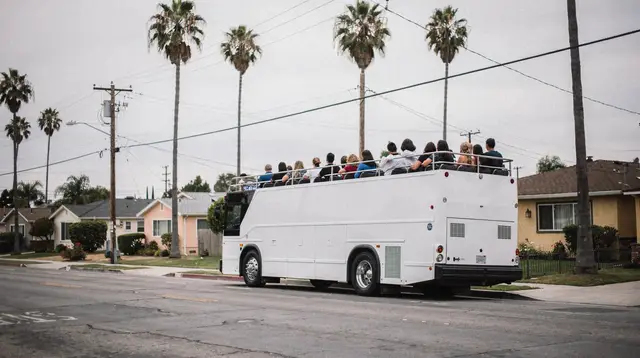
What a guided route through the area can offer is context — pointing out notable properties from the road, explaining the history of a particular stretch of coastline, and covering the geography of why this part of Southern California became a magnet for high-profile residents in the first place. For that kind of orientation, a route like the Los Angeles: Malibu Hollywood Tour combines a pass through Malibu with the wider Hollywood area in a single day, which suits visitors without a rental car.
A more beach-focused version departing from the Westside, the Santa Monica: Malibu Celebrity Homes Beaches Tour, leans further into the coastline itself alongside the real-estate narration, and the From Santa Monica Malibu Beaches Celebrity Homes Tour covers similar ground for visitors based in that part of the Westside. None of these promise sightings, and any operator claiming otherwise is overselling — the honest value is the coastline and the context, not the odds of spotting anyone famous.
Pairing Malibu with the rest of a trip
Because Malibu has no walkable center of its own, most visitors treat it as an extension of a day based elsewhere rather than a standalone overnight stop — though a night or two here, particularly for the northern beaches or the Santa Ynez direction, can work well for anyone prioritizing quiet and scenery over nightlife.
The most common pairing is with Santa Monica, given the short drive between them; a half-day loop covering the Santa Monica Pier in the morning and a Malibu beach in the afternoon is a workable structure, along lines similar to the three-day LA beaches itinerary.
Visitors continuing further up the coast toward Santa Barbara or the Santa Ynez Valley wine country often treat Malibu as the first leg of a longer coastal drive, which the five-day Pacific Coast Highway road trip and four-day Central Coast itinerary both build around.
Inland, Malibu Canyon and the Santa Monica Mountains offer hiking that contrasts with the coastal focus of the beaches themselves — worth a look for anyone drawn more to the region’s hiking and nature options than to sand. Whale-watching season along this stretch of coast also touches Malibu at certain times of year, though the more established departure points for that activity sit further south, covered in the Los Angeles whale-watching guide.
For visitors interested in getting on the water rather than just looking at it — paddleboarding, kayaking or surf lessons in the calmer coves — the Los Angeles water sports guide covers options along this part of the coast, and Malibu’s own things-to-do listings round up activity operators specific to the area.
Visitors orienting the LA basin as a whole may also want the broader celebrity homes guide or the Santa Monica-specific version for context on how Malibu fits into that wider narrative, and a quick pass through the Griffith Observatory insider tour if Hollywood-adjacent sights are also on the list for the same trip — a route covered directly by the LA Griffith Observatory Insider Tour for those staying closer to central LA.
Practical notes before you go
Because Malibu sits well outside the reach of LA Metro, it’s worth reading up on whether the Metro covers enough of the city and whether you actually need to rent a car in Los Angeles before assuming any part of a Malibu day can be done without one. If you’re weighing a rental against rideshare for the whole trip, the rental car versus rideshare comparison is a useful companion read, and general driving and parking guidance for Los Angeles applies doubly here, since parking availability is often the real constraint at any individual Malibu beach.
Seasonally, Malibu follows the same coastal pattern as the rest of the LA beaches: overcast mornings are common in late spring and early summer, a phenomenon explained in more depth in the May Gray and June Gloom guide, and the best time to visit by zone breaks down how the coast differs from inland areas across the year.
Late August through October tends to bring the clearest skies and warmest water along this stretch, though “warm” is relative — the Pacific here stays cool year-round and this is not a tropical swimming destination. Anyone deciding where to base themselves for a trip that includes Malibu may also find the neighborhood safety overview and the Santa Monica versus Venice Beach comparison useful for weighing where to actually sleep, since Malibu itself has comparatively few hotel options relative to its neighbors closer to the city.
Budget-wise, a day here runs on beach parking (commonly in the $10-20 range at the larger lots), a meal or two, and any activity add-ons like a surf lesson or a guided tour; there’s no single ticketed “Malibu experience,” which keeps costs more variable and generally lower than a day built around one of the region’s theme parks.
Malibu FAQ: planning a visit
Do I need a car to visit Malibu?
Yes, in practice. Malibu has no Metro rail line and limited bus service, and its beaches, trails and restaurants are spread across dozens of kilometres of coastline. A rental car or a pre-arranged ride is the realistic way to see more than one spot in a day.
How long does it take to get to Malibu from Los Angeles?
From Downtown LA or Hollywood, expect roughly 45 minutes to over an hour depending on the time of day and conditions on the Pacific Coast Highway (PCH). From Santa Monica, central Malibu is typically 20-30 minutes.
Are Malibu’s beaches private?
No. California law keeps the sand below the mean high-tide line public along the entire coast, including in Malibu, even where private homes line the road above. What varies is legal access and parking at each individual beach, not ownership of the sand itself.
Will I see celebrities in Malibu?
Don’t count on it. Malibu is home to many well-known residents, but that does not translate into visible celebrity spotting for typical visitors — homes are set back from the road and often gated, and daily life there is largely private.
Is the Pacific Coast Highway through Malibu ever closed?
It can be. The PCH runs along an active coastal bluff and has been closed at times for landslides, storm damage or wildfire activity, particularly after heavy rain or during fire season. Check current conditions before a trip rather than assuming the road is fully open.
Which Malibu beach should I visit?
It depends on what you want. Zuma is the largest and most family-friendly with full facilities; El Matador is smaller, dramatic and photogenic but has a steep staircase and limited parking; Malibu Lagoon and Surfrider Beach suit walking and surf-watching near the pier. Match the beach to your priorities rather than picking one at random.
Is Malibu good for swimming?
The Pacific Ocean here is cold year-round, similar to the rest of the Los Angeles coastline, so swimming is more of a bracing dip than a warm-water experience even in summer. Surfing, tide-pooling and walking are just as much the point as swimming.