May Gray and June Gloom: What LA's Coastal Overcast Really Means for Your Trip
What are May Gray and June Gloom in Los Angeles?
They're the local nicknames for a marine layer of low cloud and fog that often covers the LA coastline on mornings in late spring and early summer, usually burning off later in the day. It's most noticeable in beach towns like Santa Monica, Venice and Long Beach, and much less of a factor a few miles inland in Downtown or Hollywood.
The morning that made me stop trusting the sky
My first trip to Los Angeles, I woke up early, drove out to Santa Monica, and found the pier and the sand sitting under a flat, grey sky that looked like it was about to rain. It didn’t rain. By early afternoon the sun had burned through and the beach looked like a postcard. I’d never heard the terms “May Gray” or “June Gloom” before that trip, and I remember being genuinely confused — I’d checked the forecast for “Los Angeles” the night before and it had said sun.
What I hadn’t understood yet is that “Los Angeles weather” isn’t really one thing. A forecast for the metro area can be technically accurate and still miss what’s actually happening a few miles inland versus right on the coast.
What’s actually going on
May Gray and June Gloom are the local shorthand for a marine layer: a band of cool, moist air that sits over the Pacific and pushes onto the coastline, especially overnight and in the early morning. It shows up most reliably in that stretch from roughly late spring into early summer, though I’ve seen versions of it creep earlier or linger later depending on the year. The mechanics are ordinary and not dramatic — it’s cool air trapped under a layer of warmer air above it, not a storm front — but the visual effect is a flat, low, sometimes drizzly-looking sky that can sit over Venice Beach, Malibu and Long Beach for hours.
What surprised me most is how sharply it can cut off. Drive inland from the coast toward Downtown LA or Hollywood on one of these mornings and it’s common to watch the sky visibly brighten within a matter of minutes as you leave the immediate coastal strip. I’ve stood on the sand in Santa Monica under grey cloud and known that a friend hiking near Griffith Observatory that same morning was almost certainly looking at blue sky.
What I won’t promise you
I’m not going to give you a date range for when this starts or ends, because I don’t think anyone honestly can. Some years the coastal cloud is noticeable well before May; other years it barely shows up until deeper into June, and plenty of mornings inside that general window are perfectly clear from sunrise. I also won’t tell you it “always burns off by noon” or any other fixed hour — I’ve had it clear before 10am and I’ve had it hang on well past lunch. Treat it as a real tendency worth planning around, not a schedule you can set your watch to.
How I actually plan around it now
The single biggest change I made after that first confused morning was to stop booking anything beach-and-sun-dependent for early in the day during this period. If I want a swim, a long stretch of sunbathing, or beach photos with clear light, I now aim for early-to-mid afternoon rather than 8 or 9am. Mornings in that window are better spent somewhere the marine layer matters less — an inland museum visit, a walk around Downtown LA, or, on the clearer mornings, a hike toward the Hollywood Sign before the day heats up.
The other habit is packing layers, every single day, regardless of what the forecast icon says. A t-shirt under a light jacket or hoodie has covered me on every version of this: cool and grey at 8am, warm and clear by 2pm. It’s a small thing, but it’s saved me from either shivering on the pier or lugging around a jacket I didn’t need.
Where it’s worth going anyway
None of this has ever made me skip the coast during this stretch of the year — I just shift the order of my day. A morning in Santa Monica or Venice Beach under a soft grey sky is honestly its own kind of pleasant, quieter and cooler than a blazing August afternoon, and it’s a good window for a walk on the pier or a coffee before the crowds and the sun both arrive. I’ve also used grey mornings as an excuse to explore inland neighborhoods I might otherwise have skipped, since they’re usually clear and sometimes warmer than the coast on the exact same day.
a guided morning hike up toward the Hollywood Sign, which tends to sit above the coastal cloud has become one of my go-to options for grey coastal mornings, since the trailheads sit inland and are rarely affected the same way. On the days I’d rather stay low-key and let a guide handle the route and the pacing, a half-day highlights tour through the city’s main districts is an easy way to fill a grey morning with sights that don’t depend on sunshine.
If I’ve got a full day and want to cover a lot of ground while the coast clears up, an open-air bus tour through Hollywood and Beverly Hills works well as a morning activity, and I save the beach itself for afternoon. For anyone building a longer trip around this pattern, a week-long tour that ranges beyond the immediate coastline naturally spends plenty of time inland, which sidesteps the issue almost entirely.
A few practical notes
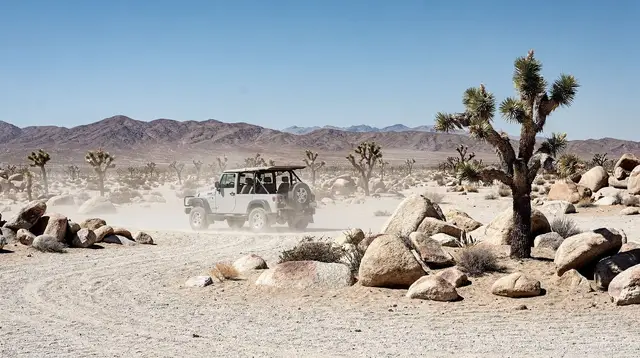
If you’re weighing where to stay, it’s worth knowing that a hotel a mile or two inland can wake up to sunshine while a beachfront hotel is still under cloud — something I now factor into where I book for this time of year. It’s also worth remembering that the desert side of the region runs the opposite pattern entirely: Palm Springs and Joshua Tree are typically hot, dry and cloud-free during this same stretch, so a same-day contrast between a grey coastal morning and a scorching desert afternoon is entirely possible if your itinerary covers both.
I’d also point you toward a broader look at the best time to visit by zone if you’re mapping out a longer trip, since this page is deliberately narrow — it’s about one coastal phenomenon in one stretch of the year, not the region’s climate as a whole. If you’re deciding how to get between the coast and inland spots on grey mornings, it’s also worth reading whether LA Metro covers enough of the city for your plans, and if beaches are a big part of your trip, a three-day LA beaches itinerary is a reasonable template to adapt around morning cloud.
The bottom line
May Gray and June Gloom aren’t something to fear or to build your whole trip around avoiding — they’re just a coastal habit of the local climate that’s worth knowing about before you land. Pack a layer, don’t schedule your one big beach morning for sunrise during this window, and treat a grey sky over Malibu or Long Beach as temporary rather than a verdict on the whole day.
Questions I get about May Gray and June Gloom
What exactly are May Gray and June Gloom?
They’re informal names Southern Californians use for a recurring weather pattern: a layer of low, grey cloud and mist that sits over the coast, especially in the mornings, during a stretch of late spring and early summer. It isn’t a storm system, just cool marine air trapped under a warmer layer above it.
Does it happen every single day during that period?
No. Some mornings are clear from sunrise, others stay grey well into the afternoon, and the pattern varies year to year. I’ve learned to treat it as a strong tendency for that stretch of the calendar rather than a guarantee for any specific day.
Which parts of LA are most affected?
The immediate coastline feels it most: Santa Monica, Venice, Malibu and Long Beach are the classic examples. A few miles inland, in areas like Downtown LA or Hollywood, the cloud is usually thinner or absent, and it’s often sunny there while the beach is still grey.
When does the cloud usually clear up?
In my experience it tends to burn off as the day goes on, often by early-to-mid afternoon, but I’ve had mornings clear by 10am and others that stayed dull past lunch. I don’t plan around a specific clearing time, and I’d be wary of anyone who promises one.
Should I skip the beach entirely during this period?
Not at all — I still spend plenty of beach days at Santa Monica and Venice Beach during this stretch. I just don’t schedule the swimming or sunbathing part of the day first thing in the morning, and I keep a layer on hand until the sky actually clears.
What should I pack for this kind of morning?
Something you can layer and shed easily: a light jacket or hoodie over a t-shirt works well, since the same afternoon that starts grey and cool at the coast can turn warm and clear a few hours later.
Is this the same as the desert being cooler too?
No, it’s the opposite pattern. Places like Palm Springs and Joshua Tree sit well inland and are generally hot and dry at this time of year, with none of the coastal cloud — the temperature gap between the marine-layer coast and the inland desert can be wide on the same day.
Does this affect the whole year, or just a specific window?
It’s specifically a late-spring-into-early-summer pattern along the coast, not a year-round one. For a fuller picture of what the weather is doing across different months and different parts of the region, I’d look at a broader seasonal guide rather than treat this page as the whole picture.
Seasonal Los Angeles tours
Verified deep-linked GetYourGuide tours. Book through these links and we earn a small commission at no cost to you.
GetYourGuide does not provide a product photo for this activity — the image shows the meeting point, photographed by us.