Santa Barbara and the Central Coast: A Season-by-Season Guide
What is the best time of year to visit Santa Barbara and the Central Coast?
Spring (April-May) and fall (September-October) offer the most reliable mix of sun and mild temperatures for wine tasting and outdoor activities. Summer is dry but mornings are often overcast near the coast, while winter brings most of the region's rain.
A different climate from the rest of Southern California
It is easy to lump the Central Coast in with Los Angeles or with the desert resorts further east, but Santa Barbara, the Santa Ynez Valley, Solvang, Ojai and San Luis Obispo run on their own seasonal rhythm. This stretch of coastline sits close enough to the Pacific to be shaped by it every day, and the hills inland are planted with vineyards rather than covered in city streets or desert scrub.
The result is a climate that is neither the sprawling urban warmth of Los Angeles nor the dry heat of Palm Springs and Joshua Tree. Understanding that distinction matters more than it might seem, because a plan built around desert weather patterns — or around a Los Angeles summer — will not describe a morning in Santa Barbara particularly well.
This guide is about how the seasons play out specifically here: on the beaches and harbor of Santa Barbara itself, in the tasting rooms of the Santa Ynez Valley and Solvang, and along the quieter coastline toward Ojai and San Luis Obispo.
Summer: dry, but not simply sunny
Summer in Santa Barbara is reliably dry — rain during these months is rare — but “dry” and “sunny all day” are not the same thing here. Along the coast, mornings frequently start under a blanket of low cloud and fog that locals call May Gray in late spring and June Gloom as the pattern continues into early summer. This marine layer rolls in off the cool Pacific overnight and typically hangs over the coastline until it burns off, often by late morning or early afternoon, at which point the sky clears and temperatures rise.
This has a practical effect on how a summer day should be planned. A morning spent expecting bright beach weather in Santa Barbara itself can instead deliver grey skies and a noticeably cool breeze, while inland spots in the Santa Ynez Valley may already be warming up under clearer conditions. Visitors who build outdoor plans around a fixed image of Southern California sunshine sometimes find the reality more variable than expected, particularly in the first half of the day.
By afternoon, most summer days do open up, and the combination of dry conditions and eventual sun makes summer a workable season for time on the water, in the Funk Zone or out among the vines — it just is not the guaranteed, all-day blue-sky stretch that summer sometimes implies elsewhere.
Winter: the region’s rainy season
Winter flips the pattern. Most of the Central Coast’s modest annual rainfall arrives between roughly November and March, with the wettest weeks usually falling in the heart of that window. Totals are not dramatic compared with much wetter parts of the country, but rain here is concentrated rather than spread evenly across the year, so a winter visit carries a real chance of at least one rainy day, and sometimes several in a row during an active storm pattern.
That has consequences for outdoor plans in particular. Kayaking along the Gaviota Coast becomes less predictable in winter, since storm swells and wet conditions can make paddling both less comfortable and less consistently available. Wine country visits are still very much possible in winter — many tasting rooms operate year-round — but the outdoor components of a vineyard day, from walking the rows to sitting on a patio, are more exposed to the weather than they would be in a drier month.
Winter does bring an upside: clearer air after storms, greener hillsides in the Santa Ynez Valley, and noticeably fewer crowds than in the busiest summer weeks. It rewards visitors who build in flexibility rather than a schedule that depends on a dry morning.
Spring and fall: the two shoulder seasons
Spring and fall are widely considered the most dependable stretch for combining outdoor time with wine country visits, and for good reason. By April and May, the worst of the winter rain has usually passed, but the marine layer of May Gray has often not yet settled in as persistently as it can later in the season — though some grey mornings are still possible, since the name itself points to May as part of the pattern. September and October, after summer’s gloom has usually eased and before winter rain arrives, tend to offer a similar balance: warm, mostly clear days without the intensity of high summer heat inland.
These shoulder months tend to suit wine tasting in the Santa Ynez Valley and Solvang particularly well, since inland temperatures are milder than in peak summer, and outdoor seating and vineyard walks are more comfortable without the risk of a rained-out afternoon. They also tend to suit kayaking and other water-based activities along the coast, without the wetter, swell-driven unpredictability of winter.
| Season | Rain | Coastal mornings | Typical for wine country | Typical for kayaking |
|---|---|---|---|---|
| Spring (Mar-May) | Tapering off | Sometimes grey (May Gray beginning) | Good, improving through the season | Generally good |
| Summer (Jun-Aug) | Rare | Often overcast until midday (June Gloom) | Good once cleared, warm inland | Good once cleared |
| Fall (Sep-Nov) | Increasing later in season | Usually clear | Very good | Good |
| Winter (Dec-Feb) | Concentrated here | Variable, storm-dependent | Possible, weather-dependent | Less predictable |
What this means for the Funk Zone and the Santa Ynez Valley
The Funk Zone, Santa Barbara’s cluster of tasting rooms and casual dining near the waterfront, is walkable in almost any season, but a rainy winter afternoon changes the experience from strolling between spots outdoors to ducking quickly from door to door. The Santa Ynez Valley, further inland and warmer than the coast itself, is less affected by the marine layer that troubles Santa Barbara mornings, but it is more exposed to both summer heat on its hottest afternoons and to the direct effects of winter rain on vineyard grounds and outdoor tasting patios.
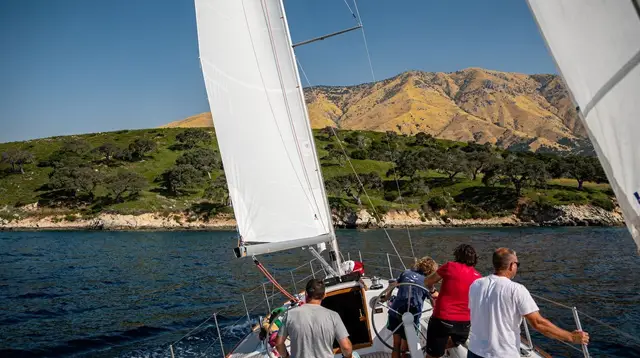
A taco tour through the Funk Zone or a craft beer walking tour works comfortably across spring, summer and fall, and remains possible in winter with the understanding that an unlucky day could bring rain between stops. For a slower, more scenic way to take in the coastline itself, a yacht cruise along the Santa Barbara coast is generally at its best once the morning marine layer has cleared, which points toward afternoon departures in summer and toward the more consistently clear days of spring and fall.
Planning around the two-hour drive from Los Angeles
Santa Barbara sits roughly two hours from Los Angeles by car, close enough for a long day trip but far enough that many visitors choose to stay overnight to avoid rushing. The seasonal patterns described here matter for that decision. A single summer day trip that lands in the middle of a lingering morning marine layer can lose several hours of the visit to grey skies before the sun breaks through, while a spring or fall day trip is more likely to deliver clear conditions from earlier in the morning.
For visitors extending a Los Angeles-based trip, it is worth noting that Santa Barbara’s climate does not track Los Angeles day for day: a warm, clear morning in the city does not guarantee the same in Santa Barbara, since the coastal marine layer here can behave differently from conditions closer to the LA basin. Checking a same-day forecast for Santa Barbara specifically, rather than assuming it will match Los Angeles, avoids surprises.
Getting out on the water, whatever the season
A short kayak tour around the Santa Barbara harbor is one of the more weather-sensitive activities on this coast, since it depends on calm water and reasonable visibility. It tends to run most reliably from spring through fall, and less predictably during winter’s storm-driven swells. For a broader look at conditions along the Gaviota Coast further west, the same seasonal logic applies: expect the most consistent paddling conditions outside the winter rains.
Those who prefer to stay on land but still cover ground can look at a bike tour through Santa Barbara’s highlights, which is comfortable in most seasons apart from an actively rainy day, and benefits from the cooler, overcast summer mornings that some visitors find easier for cycling than full midday heat.
Choosing a season for Santa Ynez Valley wine tasting
Wine country weather deserves its own look, since the Santa Ynez Valley sits far enough inland to run warmer and drier than the Santa Barbara coast on the very same day. Spring and fall are generally the easiest months for tasting rooms with outdoor patios or vineyard walks, since the valley has usually shed the worst of winter’s mud by April and has not yet reached the hottest stretch of a summer afternoon.
A Santa Ynez Wine Country Tour that moves between several tasting rooms in a single outing tends to work comfortably across most of the year, though a midsummer afternoon booking is often more pleasant than a midday one, simply because the inland heat has more time to build as the day goes on. Visitors who prefer to combine the outdoors with tasting can also look at a horseback riding and wine tasting tour, which is more comfortable in the cooler months on either side of summer, when neither the horses nor the riders are working through peak inland heat.
For a broader sense of what the valley and its neighboring towns offer beyond wine, the Santa Ynez Valley and Solvang destination pages are useful starting points, and a dedicated look at wine and drinks options around Santa Barbara covers tasting-room specifics that sit outside the scope of a seasonal guide.
Solvang’s own wine and drinks guide and the wine scene further north around San Luis Obispo follow broadly similar seasonal logic, since all three sit inland enough to be shaped more by summer heat and winter rain than by the coastal marine layer that governs Santa Barbara itself.
Hiking, the outdoors and adventure sports by season
Away from the water and the vineyards, the hills above Santa Barbara offer hiking that changes considerably with the seasons. Spring is usually the standout window, when winter rain has greened the hillsides without yet drying them into the brown, dusty ground that is more typical by late summer. Trails that climb away from the coast can also run warmer and clearer than the beach itself on a June Gloom morning, which makes an inland hike a reasonable backup plan when the marine layer is stubborn near the water.
The hiking and nature guide for Santa Barbara and the broader adventure sports guide go into more detail on specific trails and outfitters, while Ojai, a short drive inland, offers a similar spring and fall advantage for anyone extending the trip that direction.
Winter hiking is possible here in a way it usually is not in the desert regions further east, since the Central Coast lacks the extreme summer heat that makes places like Joshua Tree or Palm Springs more forgiving in cooler months. The tradeoff is mud and the occasional washed-out trail after a heavy storm, so checking conditions after a wet week is worth the extra few minutes before setting out.
Families and accessibility across the seasons
Traveling with children or with accessibility needs adds another layer to the seasonal picture. A cool, overcast summer morning can actually work in a family’s favor, since it delays the point in the day when young children overheat on the beach or on a walking tour, while a clear spring or fall day offers more flexibility to spend a full afternoon outdoors without retreating from the heat. The family travel guide for Santa Barbara covers pacing and activity choices in more depth, and the accessibility guide is worth checking regardless of season, since some of the region’s more scenic outdoor spots involve uneven ground that a wet winter can make more difficult.
Extending the trip along the Central Coast
Santa Barbara rarely stands entirely alone on an itinerary. Many visitors treat it as one stop along a longer run up the coast, and the seasonal patterns described above matter just as much for that wider trip as they do for a single day in town. The four-day Central Coast itinerary is built around exactly this kind of pacing, mixing Santa Barbara, Solvang and the Santa Ynez Valley across several days rather than compressing everything into one.
For anyone deciding whether to continue north or south along the shoreline, the broader question of Pacific Coast Highway timing is worth reading before finalizing a route, and the wider zone-by-zone breakdown of the best time to visit greater Los Angeles helps place the Central Coast’s climate in context against the beaches, the desert and the city itself.
Common mistakes when planning around the weather
A few assumptions trip up visitors more than others. Expecting Santa Barbara to be sunny simply because the wider region has a reputation for good weather overlooks how often the coastal morning here is grey rather than bright, especially between roughly May and July.
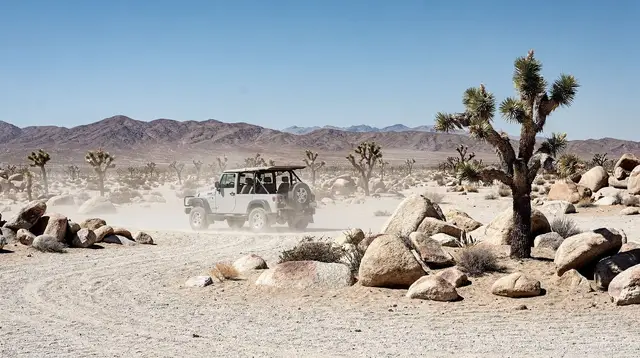
Assuming that Santa Barbara’s climate mirrors the desert resorts further east is a separate and equally common mistake — Palm Springs and Joshua Tree run hotter and drier, with a completely different rain pattern, and packing or planning for one region based on the other’s forecast rarely works well. Finally, treating any single day as guaranteed sunshine, in any season, ignores how quickly a marine layer morning or an unexpected winter shower can change plans along this coast.
Santa Barbara seasons: frequently asked questions
What is the best time of year to visit Santa Barbara and the Central Coast?
Spring (April-May) and fall (September-October) offer the most reliable mix of sun and mild temperatures for wine tasting and outdoor activities. Summer is dry but mornings are often overcast near the coast, while winter brings most of the region’s rain.
Is Santa Barbara sunny all year round?
No. Summer mornings along the coast are frequently overcast due to a marine layer, and winter brings the bulk of the region’s annual rainfall. Sun is far from guaranteed on any single day.
Does Santa Barbara have the same climate as Palm Springs or Joshua Tree?
No. Santa Barbara has a coastal climate moderated by the Pacific Ocean, while Palm Springs and Joshua Tree sit in the desert with much hotter summers and cooler, drier winters. The two regions should be planned for separately.
What is May Gray and June Gloom?
They are local names for a marine layer of low cloud and fog that often blankets the Santa Barbara coast in the morning during late spring and early summer, typically clearing to sunshine by early or mid afternoon.
When is the rainy season in Santa Barbara?
Most of the region’s modest annual rainfall falls between roughly November and March, with the wettest stretch usually in the winter months.
Is it better to visit the Santa Ynez Valley wineries in summer or fall?
Fall and spring are generally considered more comfortable for wine tasting, since summer afternoons inland can run hot and the coastal morning marine layer can delay clear skies near Santa Barbara itself.
Can Santa Barbara be a day trip from Los Angeles?
Yes, it is roughly two hours’ drive from Los Angeles, which makes it workable as a long day trip, though many visitors prefer an overnight stay to fit in the coast, the Funk Zone and a vineyard visit without rushing.
Is kayaking on the Gaviota Coast affected by the season?
Yes. Winter’s stronger swells and rain make conditions less predictable, so spring, summer and fall are generally more reliable for kayaking along this stretch of coastline.
Seasonal Los Angeles tours
Verified deep-linked GetYourGuide tours. Book through these links and we earn a small commission at no cost to you.
GetYourGuide does not provide a product photo for this activity — the image shows the meeting point, photographed by us.