A mountain valley, not a beach town
Ojai often gets lumped in with the rest of California’s Central Coast, and on a map it looks close enough to Santa Barbara to seem like an extension of the same coastline. It isn’t. Ojai sits inland, tucked into a narrow east-west valley ringed by the Topatopa Mountains, with no ocean frontage at all. The nearest sand is a separate drive away, down toward Ventura. What Ojai actually offers is something the beach towns along this stretch of coast don’t: quiet, trail-laced nature, small-town streets built for walking, and a wellness culture that has drawn visitors here for close to a century.
That distinction matters when you’re deciding where a Central Coast itinerary should include Ojai. This is not a stop for tide pools or pier photos. It’s a stop for hiking trailheads, citrus and avocado orchards, art galleries, and the kind of slow pace that a coastal resort town rarely manages. Pair it with Santa Barbara for the coast, Solvang or the Santa Ynez Valley for wine, and Ojai for the inland, outdoors half of the region.
Getting to Ojai
There’s no direct freeway into Ojai, and that’s part of what keeps it feeling separate from the coast. The standard route from Los Angeles runs north on the 101 past Ventura, then cuts inland on State Route 33, a two-lane mountain road that climbs and winds its way into the valley. Budget roughly 1.5 to 2 hours from central LA in normal traffic, more from the Westside or during a Friday afternoon exodus. There’s no meaningful public transit option that makes sense for a day trip — a rental car is close to essential here, in keeping with how most of this region works; see do you need to rent a car in Los Angeles for the wider picture.
Coming from Santa Barbara, the drive is shorter, roughly 45 minutes to an hour via Highway 150 through the hills above Lake Casitas, itself a scenic stretch worth slowing down for. Either way, treat the approach itself as part of the experience: State Route 33 through the mountains is genuinely pretty, with citrus groves giving way to chaparral-covered slopes as the road climbs.
Once you’re in the valley, Ojai itself is easy to get around without a car. Downtown is small enough to park once and walk everywhere — the shops, cafés and galleries along the main arcade sit within a few blocks of each other — and the flat Ojai Valley Trail is walkable or bikeable directly from town without needing to drive to a trailhead first. It’s really the drive in and out of the valley, not getting around once you’ve arrived, that requires the rental car.
What the climate actually does here
Being inland changes Ojai’s weather in a way that surprises people expecting Santa Barbara-style coastal mildness. The valley traps heat, and summer days regularly push into the low-to-mid 90s Fahrenheit (mid-30s Celsius), noticeably hotter than the coast just a short drive away. Where beach towns along this part of California get the marine layer’s cooling fog through late spring, Ojai mostly doesn’t — it sits far enough inland that “May Gray” and “June Gloom” rarely reach it the way they blanket Santa Monica or Malibu mornings.
That makes spring and autumn the more comfortable windows for hiking, generally March through May and September through November, when daytime highs sit in a friendlier range and trails aren’t a heat risk. Summer visits are still possible, but plan hikes for early morning and treat midday as pool or shade time. Like the rest of Southern California’s interior, Ojai can also see dry offshore Santa Ana wind conditions in autumn, which raise wildfire risk in the surrounding hills — worth a quick check of conditions before a hiking-focused trip in that season.
Hiking and nature: the main reason to come
Trails are Ojai’s real draw, and there’s a workable route for most fitness levels. The valley floor and surrounding foothills are threaded with paths, from the flat, paved Ojai Valley Trail — a former rail line now open to walkers and cyclists — to steeper backcountry routes climbing into the Los Padres National Forest that rings the valley. Shelf Road, a dirt fire road above town, is one of the better-known routes for valley views without a full day’s commitment, and it’s the kind of terrain covered by a guided option:
a private guided hike along Ojai’s Shelf Road, with a local guide explaining the valley’s geology and history along the way — a useful option for visitors who want context on the landscape rather than just a trailhead map, or who’d rather not navigate an unfamiliar dirt road solo.
For a broader look at how Ojai’s trail network compares with hiking elsewhere in the region, see hiking and nature guides for Los Angeles and the equivalent Santa Barbara hiking and nature guide, which covers the coastal trails a valley like Ojai’s inland routes contrast with.
Beyond hiking proper, the valley’s citrus and avocado orchards make for pleasant, low-effort walking or cycling on the flat sections of the Ojai Valley Trail, and Lake Casitas, on the road toward Santa Barbara, adds fishing and lake-adjacent trails to the mix for visitors staying more than a day.
Visitors coming from the Los Angeles side who want to compare Ojai’s trails against the city’s own hiking scene — Griffith Park, the trails around the Hollywood Sign, or the canyons above the Westside — can use the Los Angeles hiking and nature guide as a starting point before deciding how much of a trip to build around trail time versus a single valley hike near Ojai itself. The two aren’t really substitutes for each other: LA’s trails are urban-adjacent and easy to combine with a city day, while Ojai’s are the main event of a trip on their own.
Wellness culture, not resort spectacle
Ojai has been a wellness and retreat destination since well before the word became a marketing category, and that history still shapes the town. Spas, yoga studios, and small retreat centers are common here in a way that’s out of proportion to the town’s size, and several draw visitors from across Southern California specifically for a day or weekend of deliberate slowing down. This is a different kind of “relaxation” trip than a beach day — it’s built around quiet, mineral soaks, and unhurried mornings rather than surf and sand.
Downtown Ojai itself is compact and walkable, centered on a single main arcade of shops, galleries and cafés that’s easy to cover on foot in an afternoon. It’s a good complement to a morning hike: trail in the cooler hours, then a slow lunch and a browse through downtown once the day heats up.
That same slower pace shows up in how locals talk about the valley’s food and small businesses: farm stands selling the citrus and avocados grown in the surrounding orchards, independent bookshops, and cafés built around long mornings rather than turnover. None of it is flashy in the way a Los Angeles or Santa Barbara dining scene can be, and that’s largely the point — Ojai’s appeal is the absence of spectacle as much as any single attraction.
What Ojai is not
It’s worth being direct about the things Ojai doesn’t offer, since the name sometimes gets confused with its coastal neighbors. There’s no beach in Ojai itself — swimming and surfing mean a separate trip down to Ventura or further along the coast. It’s also not a wine destination in the way Solvang and the Santa Ynez Valley are; those tasting rooms and vineyard tours sit in a different valley, roughly an hour or more away, and shouldn’t be assumed to be a short detour from Ojai.
Ojai also isn’t a place to show up without a room booked and expect it to sort itself out. The valley has far fewer hotels, inns and vacation rentals than Santa Barbara or the coastal towns nearby, and popular weekends — especially in the cooler, high-demand spring and autumn months — can sell out well in advance. Book accommodation before you arrive rather than counting on same-day availability once you’re already on Route 33.
A day or two in Ojai
A single day works reasonably well: arrive by mid-morning after the drive from Los Angeles or Santa Barbara, hike one of the valley or foothill trails before the day’s heat builds, then spend the afternoon downtown among the shops and galleries before heading back. Visitors who add a second night get more out of it — an early-morning trail when the light is best, a slower wellness-focused afternoon, and the chance to catch Ojai’s famous “Pink Moment,” the pink-orange alpenglow that settles over the Topatopa Mountains at sunset, a phenomenon locals plan evenings around.
If Ojai is one stop on a longer Central Coast loop, it fits naturally alongside Santa Barbara’s coastline and the Santa Ynez wine country — see the four-day Central Coast and Santa Barbara itinerary for how the pieces can be sequenced, and north or south on the Pacific Coast Highway for how a coastal drive can be combined with the inland detour to Ojai.
Nearby options if you’re basing elsewhere
Not every visitor stays in Ojai itself, and the valley works well as a day trip from a base in Santa Barbara or even, for the more ambitious, Los Angeles. From Santa Barbara, several outdoor and adventure operators cover ground that complements an Ojai hike — an adventure-course option like a high ropes adventure course near Santa Barbara for a different kind of outdoor challenge pairs well with a quieter Ojai hiking day if you’re splitting time between the two.
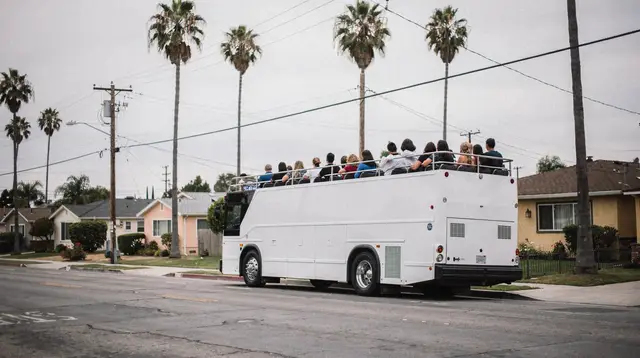
For visitors who’d rather see Santa Barbara’s own streets and coastline on wheels before or after an Ojai side trip, there’s also a narrated trolley tour around Santa Barbara covering the city’s landmarks and waterfront.
Further afield, travelers extending north toward San Luis Obispo will find a similar nature-first ethos in the hills above that town, where a guided Hummer tour through the Santa Lucia mountains near San Luis Obispo offers a comparable inland-nature counterpoint to that town’s own coastline.
Where Ojai fits in a wider Southern California trip
For visitors building a trip around Los Angeles itself, Ojai works best as a deliberate day trip or overnight detour rather than a stop squeezed in en route to somewhere else — the mountain road access means it rewards unhurried time rather than a quick pass-through.
It complements a coastal-and-wine loop through Santa Barbara, Solvang and the Santa Ynez Valley nicely, giving that itinerary a change of pace: trails and quiet instead of tasting rooms and beach towns. It’s less well suited to a first, single day in the region — see how many days in Los Angeles for help weighing an inland detour like this against time on the coast or in the city itself.
For general trip planning across the region, the best time to visit tool and interactive map can help place Ojai relative to the rest of a Central Coast route, and the things to do in the Santa Ynez Valley wine country and things to do in Santa Barbara pages round out what else sits nearby.
Who Ojai suits, and who it doesn’t
Ojai rewards a specific kind of traveler and disappoints another. It works well for hikers who want a real trail without a long backcountry commitment, for couples looking for a quiet counterpoint to a busier Los Angeles or Santa Barbara stretch of a trip, and for anyone drawn to the wellness side of the valley — the spas, yoga studios and slower mornings that have defined the town for decades. Photographers chasing the “Pink Moment” light over the Topatopa Mountains are another natural fit, since that sunset glow is very much a valley-specific phenomenon shaped by the surrounding mountain walls.
It suits less well the traveler who wants beaches, nightlife or a dense concentration of things to do within walking distance of a hotel. Families traveling with very young children may also find the town’s pace and its trail-heavy attractions a harder sell than a beach day in Santa Monica or a day at one of the Orange County theme parks. Anyone weighing Ojai against a beach-and-wine loop should think of it as a deliberate change of pace rather than a like-for-like alternative to either.
Ojai FAQ: hiking, access and wellness in the valley
Is Ojai on the coast?
No. Ojai sits inland in a mountain-ringed valley, reached from the 101 via a winding mountain road (State Route 33). The nearest beaches are a separate drive away, near Ventura.
How far is Ojai from Los Angeles?
Roughly 1.5 to 2 hours by car in normal traffic, longer during peak periods. There’s no practical public transit route, so a rental car is effectively required.
How far is Ojai from Santa Barbara?
About 45 minutes to an hour via Highway 150, a scenic route past Lake Casitas.
What is Ojai known for?
Hiking and outdoor trails, a long-standing wellness and retreat culture, a walkable small-town center, and the “Pink Moment” sunset light over the surrounding mountains.
Is Ojai hotter than Santa Barbara?
Yes, generally. Being inland, Ojai misses much of the coastal marine layer that keeps Santa Barbara mornings cool in late spring, and summer daytime temperatures in the valley are noticeably higher than on the coast nearby.
Does Ojai have wineries like Santa Ynez Valley?
Not in the same way. Ojai’s focus is hiking, nature and wellness rather than wine; the Santa Ynez Valley and Solvang, roughly an hour or more away, are the region’s wine-tasting destinations.
Is it easy to find a hotel room in Ojai on short notice?
Not reliably. Ojai has far fewer accommodation options than Santa Barbara, and rooms can sell out on popular spring and autumn weekends. Book ahead rather than counting on same-day availability.
How many days should I spend in Ojai?
One day covers a hike and a walk through downtown; two days allows for an early-morning trail, a slower wellness-focused afternoon, and time to catch the sunset “Pink Moment” over the mountains.
Do I need a car to get around Ojai once I’m there?
Not within the town itself. Downtown Ojai is compact and walkable, and the flat Ojai Valley Trail can be reached on foot or by bike from the main arcade. A car is mainly needed for the drive in and out of the valley, since there’s no practical public transit connection from Los Angeles or Santa Barbara.
Is Ojai a good fit for families with young children?
It can work for a short visit, but Ojai’s main draws — hiking trails, wellness culture and a quiet small-town pace — suit older kids, teens and adults better than very young children. Families prioritizing a beach day or theme park will likely get more out of time spent in Santa Monica or Orange County instead.