Solvang sits inland from the Central Coast, in a valley where the ocean fog rarely reaches and the hills run gold-brown for most of the year. What draws visitors is not a beach or a landmark but a village centre built to look, in large part, like something out of Denmark: half-timbered facades, working windmills, storks perched on rooflines, and bakery windows stacked with pastries. It photographs well and it is genuinely pleasant to walk around, but it helps to know what it actually is before arriving.
What Solvang actually is, and what it isn’t
Solvang was founded in 1911 by a small group of Danish-American settlers who came from the Midwest looking for a place to build a folk school and a farming community. That founding is real. What most visitors see today, however, is largely a later addition: from the 1940s onward, the village leaned hard into a Danish architectural theme, adding the half-timbering, the windmills and the Old World signage that now define its look.
The result is a village that presents itself as Danish far more thoroughly than its current population actually is — most residents today are not of Danish descent, and the streetscape is best understood as a themed environment built for tourism rather than the unbroken continuation of a Danish settlement. That doesn’t make it fake exactly, but it does mean the “authenticity” on offer is architectural and culinary rather than a living, continuous heritage. Go for the pastries, the walkability and the atmosphere, not expecting a slice of contemporary Denmark.
This distinction also separates Solvang from its surroundings editorially. The Santa Ynez Valley around it is wine country proper — tasting rooms, vineyard tours and rural roads. Solvang is the walkable village at its centre, where the appeal is strolling between shops and bakeries rather than driving between estates. The two pair naturally in a single trip, but they are different kinds of days.
Getting there from Los Angeles
The drive from central Los Angeles to Solvang takes roughly two and a half to three hours, and it happens in two distinct stages. The first stretch runs up the coast on US-101, past Ventura and along the edge of the ocean toward Santa Barbara — scenic, generally free-flowing outside of rush hour, and a reasonable warm-up for the day. The second stage turns inland, climbing over a low mountain pass (via State Route 154 through the San Marcos Pass, or SR-246 further north) into the Santa Ynez Valley itself.
That inland turn matters: it’s the point where the trip stops being a coastal drive and becomes a mountain-and-valley one, and it’s also where the climate shifts (more on that below). There is no practical public transit route for a day trip from LA, so a rental car — or a tour bus that handles the drive for you — is the realistic way in. Some of the Los Angeles wine and drinks tours bundle the transport with the tasting itinerary, which removes the driving question entirely.
Because the round trip alone eats five to six hours of a single day, this is not a casual half-day outing. Most visitors either commit to a full day, leaving Los Angeles early, or fold Solvang into a longer Central Coast trip that also covers Santa Barbara or continues further north toward San Luis Obispo.
Walking the village
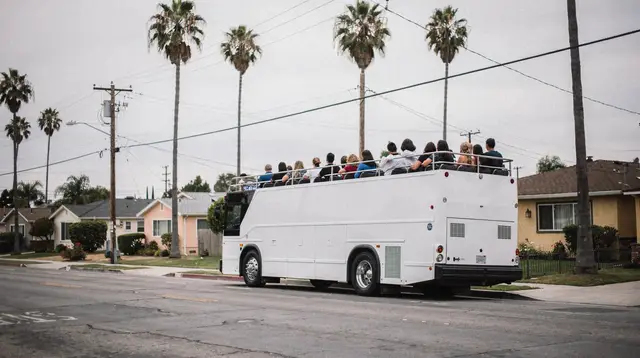
Solvang’s centre is compact and genuinely walkable — most of what matters fits within a few blocks. A guided electric cruiser tour of the village is a low-effort way to get oriented on arrival, covering the architecture, the windmills and the layout without needing to find parking more than once.
For a visit built around eating rather than sightseeing, a guided food and wine culture tour through the village’s bakeries and tasting spots hits the bakery counters, sausage shops and small tasting rooms that are easy to walk past otherwise. Danish pastries — particularly aebleskiver, the round, doughnut-like treat sold at several bakeries — are the village’s signature food and worth planning a stop around, especially on a weekend morning before the crowds build.
For a more active pace, cycling routes link the village to the surrounding vineyards, and a combined cycling and wine tasting tour through Solvang and the Santa Ynez Valley is a practical way to cover more ground than walking allows while still avoiding a full day behind the wheel between tasting rooms. It’s a reasonable middle ground between a village-only day and a full wine-country itinerary.
Evening and themed tours
Solvang’s small-town streets and older buildings have generated a local sideline in themed evening tours — part history, part local legend, entirely built as entertainment rather than investigation. A wine and true-crime walking tour with drinks included pairs local stories with tastings along the route, while operators running themed ghost tours of the village after dark lean into folklore and atmosphere rather than anything that should be taken as evidence of the supernatural.
These tours are worth booking if the format appeals — an easy, sociable way to see the village lit up at night — but they should be understood as storytelling and local color, not paranormal investigation or verified history. Bookings for the evening tours, in particular, fill up on weekends, so reserving ahead rather than showing up and hoping for a spot is the safer plan.
Wine tasting in the Santa Ynez Valley
Solvang’s village centre is the walkable core, but the vineyards that make this valley a wine destination in their own right sit just outside it, spread across the surrounding hills. A single-day Santa Ynez wine country tour is the simplest way to see several tasting rooms without worrying about driving between them, and it removes the one real logistical headache of the valley: designated-driver planning between estates that are a genuine drive apart, not a stroll.
For a more structured stop-by-stop itinerary, a three-winery tour with a picnic lunch and tasting fees included bundles the tastings with a midday break, which suits a full day that also includes time in the village itself.
Travellers who prefer to set their own pace, or who are visiting as a couple rather than joining a group, can book a private wine tour of the Santa Ynez Valley instead — the itinerary and timing flex around the group rather than a fixed schedule, at a higher cost per person than a shared tour. For visitors who’d rather stay based in the village and pair a short valley excursion with a sit-down meal, a Santa Ynez Valley wine tour with lunch tastings keeps the day anchored around Solvang while still reaching the vineyards.
None of these require any wine expertise going in; tasting-room staff generally walk visitors through what’s being poured. For a broader look at how this valley compares to other wine regions accessible from Los Angeles, the Los Angeles wine and drinks guide and the Santa Barbara wine and drinks guide both cover options beyond Solvang itself.
Photographing the village
Solvang’s half-timbered facades, windmills and flower-lined streets make it one of the more photogenic stops on the Central Coast, and the light in the early morning and late afternoon — before or after the midday tour buses arrive — tends to produce the cleanest shots of the storybook streetscape.
Rather than working it out alone, a guided food photo tour of Solvang pairs a local photographer’s knowledge of the best angles and bakery interiors with the food stops most visitors want to make anyway, so the pastry stop and the photo stop end up being the same stop. It’s a reasonable add-on for visitors who want better photos than a phone snapshot between errands, without carrying a tripod around all day.
Practical tips for visiting Solvang
Parking in the village centre is mostly street parking and a handful of small public lots, tightest on weekend mornings when day-trippers and tour buses arrive together; arriving before mid-morning or after the early lunch rush makes finding a spot considerably easier. Most shops, bakeries and tour operators accept cards, though carrying some cash is still useful for smaller bakery counters and tip jars. Because the village is compact, comfortable walking shoes matter more than any other packing decision — the appeal here is covering a lot of ground on foot between bakeries, shops and tasting rooms, not driving between stops the way the surrounding wine country requires.
Families should note that the pace suits an easy, low-key day rather than a checklist of major attractions: there is no single must-see sight, and the appeal is cumulative — a bakery here, a windmill photo there, a short tour in between. Travellers weighing Solvang against a more attraction-driven family day elsewhere in the region can compare it with the options in the Los Angeles family travel guide.
Climate: warmer and drier than the coast
Because Solvang sits inland, past the mountain pass, it runs noticeably hotter and drier than Santa Barbara or the Los Angeles beaches on the same day — often by a meaningful margin, especially in summer afternoons. The coastal marine layer that keeps beach towns cool and hazy in late spring rarely makes it this far inland, so a foggy, mild morning on the coast can mean full sun and considerably warmer temperatures by the time you’ve driven over the pass into the valley. Pack for a warmer day than wherever you’re coming from on the coast, and plan any walking-heavy tours for morning or early evening in peak summer.
Comparing Solvang to its neighbors
| Destination | Character | Distance from LA | Best for |
|---|---|---|---|
| Solvang | Danish-themed walkable village | ~2.5-3 hours | Strolling, bakeries, themed tours |
| Santa Ynez Valley | Rural wine country, vineyard estates | ~2.5-3 hours | Wine tasting by car |
| Santa Barbara | Coastal city, Spanish colonial architecture | ~2 hours | Beaches, old town, day trip ease |
| San Luis Obispo | College town, gateway to the Central Coast | ~3.5-4 hours | Longer Central Coast itineraries |
A rough day in Solvang
| Time | Activity |
|---|---|
| Morning | Drive up US-101, arrive by late morning; walk the village centre |
| Midday | Bakery stop for pastries; guided village or food tour |
| Afternoon | Cycling or wine tasting in the surrounding valley |
| Evening | Themed walking tour, dinner in the village, drive back or stay overnight |
Rough budget for a day in Solvang
Expect to spend somewhere in the region of $80-180 per person for a day trip, before the cost of the drive itself. Pastries and light bites at the bakeries are inexpensive, typically a few dollars each; a guided walking or cruiser tour tends to run in the same broad range as similar city tours elsewhere on the Central Coast; wine tastings at individual rooms in the surrounding valley are usually charged per person and add up quickly if you visit several.
As with the rest of California, sales tax is added at the till rather than shown in the listed price, and a tip is expected at any sit-down meal. For current, itemized cost planning across a longer trip, the budget planning tool is a better reference than any single day’s estimate here.
Pairing Solvang with the rest of the Central Coast
Solvang rarely works as a destination entirely on its own from Los Angeles — the drive is long enough that most visitors fold it into a broader Central Coast day or a short multi-day loop. Common pairings include a stop in Santa Barbara on the way up or back, a detour into Ojai for a quieter inland stop, or continuing north toward San Luis Obispo for a longer Central Coast trip. Wine-focused travellers sometimes compare Solvang’s valley to Temecula wine country south of LA, which is closer but has a different, more suburban feel.
For a structured itinerary that builds a full trip around this stretch of coast, the four-day Central Coast and Santa Barbara itinerary and the longer five-day Pacific Coast Highway road trip both route through Solvang or its immediate area.
If you’re deciding whether to drive the coast heading north or south first, the Pacific Coast Highway direction guide is a useful companion, and the best time to visit by zone breakdown is worth checking before locking in dates, since inland valleys like this one run on a different seasonal rhythm than the beaches.
Back in Los Angeles, travellers weighing whether a Central Coast detour fits their trip at all can start from the Los Angeles hub or browse wine and drinks experiences and ghost and true-crime tours across the region for comparison, alongside the village-specific things to do in Solvang listing and the best time to visit tool for seasonal planning.
Where Santa Barbara fits in
Because most drives to Solvang pass directly through or near Santa Barbara, it’s worth treating the two as a natural single-day pairing rather than separate trips. A trolley tour through Santa Barbara on the way up or back is an easy way to see the coastal city without adding much extra driving, and for a change of pace after a day of village strolling and wine tasting, a high ropes adventure course near Santa Barbara gives an active alternative for travellers who want to break up a trip that would otherwise be entirely food, wine and walking.