Why Temecula is not a beach day or a theme-park day
Most day trips out of Los Angeles point toward the coast or toward a theme park. Temecula does neither. It sits inland, roughly halfway between Los Angeles and San Diego, in a valley where the terrain and the climate are noticeably different from both those cities: warmer, drier, and shaped by rolling hills of vineyards rather than palm-lined boulevards or boardwalks. If the plan for the trip already includes Carlsbad for Legoland or a stretch of the coast around San Diego, Temecula is a genuinely different kind of day, not a variation on either.
The valley’s reputation rests on three things that rarely appear together elsewhere in Southern California: a working wine region with dozens of producing wineries, a sunrise hot-air balloon scene that has grown into one of the region’s signature experiences, and Old Town Temecula’s surprisingly active ghost-tour and paranormal-investigation circuit. This page treats Temecula on its own terms, as an inland wine and only-in-Temecula-experiences destination, not as an extension of a San Diego itinerary.
Where Temecula sits, and why the climate matters
Temecula Valley is inland, away from the marine layer and the cooler air that keeps the coast mild in summer. Daytime temperatures here regularly run several degrees warmer than Santa Monica or San Diego on the same day, and summer afternoons can be genuinely hot. That inland heat is part of what makes the valley good for growing wine grapes, but it also means visitors dressed for a beach day will want to rethink the wardrobe: sun protection, water, and a hat matter more here than on the coast.
The same inland position explains the balloon flights. Mornings in the valley are typically calm before the day heats up and thermal winds pick up, which is the narrow window balloon operators depend on. By late morning, conditions that were fine at sunrise can already be too windy to fly.
Wine tasting across the valley
Temecula’s wineries range from small family operations to larger estates with restaurants and event spaces, spread across rolling hills along a stretch of De Portola Road and Rancho California Road. Most offer flights of several pours for a tasting fee, with some waiving or crediting it toward a bottle purchase. Because the wineries are spread across the valley rather than clustered in a single walkable strip, a multi-winery day works best with a designated driver, a rideshare arranged in advance, or a booked tour that handles the driving between stops.
For a first visit, a guided outing that stops at a handful of wineries and takes care of transportation removes the main logistical headache of the day. A shared morning wine tour groups visitors together for a half-day loop through several wineries, while a three-winery tour that includes tastings and lunch builds the meal into the day so nobody needs to plan a separate restaurant stop between pours.
Travelers coming up from the south can also book a private winery tour departing from San Diego, which is a useful option for those based there rather than in LA. None of these tours can seat minors at the tasting bar or serve alcohol without valid ID and a completed reservation; every winery in the valley requires proof of age at the counter regardless of how the day was booked.
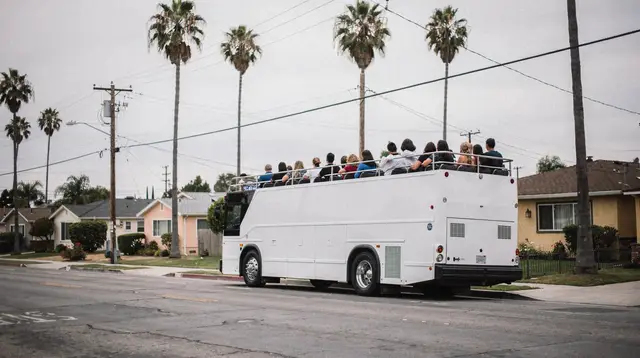
Visitors who would rather not choose between a shared and a private tour have a couple of middle options. A wine-tasting trolley tour stopping at three wineries keeps the shared-group format but swaps a van for an open-air trolley, which some travelers find makes the ride between stops part of the experience rather than just transport.
For visitors who want more context poured alongside the wine itself, a winery and Old Town tour led by a certified sommelier pairs the tasting stops with a guide who can explain what’s actually in the glass, plus a stop in Old Town so the day covers both of the valley’s identities.
| Way to taste | What it involves | Booking note |
|---|---|---|
| Self-drive, one or two wineries | Most flexible, least planning | Needs a sober driver for the return |
| Shared multi-winery tour | Transport handled, meet other travelers | Book at least a few days ahead |
| Private winery tour | Custom pace and stop list | Higher cost, most flexible schedule |
| Winery with lunch included | One stop covers tasting and a meal | Reserve the lunch seating in advance |
Sunrise hot-air balloon flights
A hot-air balloon ride over the vineyards at sunrise is the experience most associated with Temecula outside the wine itself, and it depends entirely on the weather. Balloon operators fly only when winds are light and steady, which in Temecula usually means before the day’s heat builds. Flights are typically scheduled for very early morning, often requiring check-in well before sunrise, and cancellations for wind are common enough that operators build flexible rebooking policies around them.
No operator can guarantee a flight will go up on a specific chosen date regardless of conditions; wind, not the calendar, decides. Visitors planning around a single fixed date, such as an anniversary or the only free morning of a trip, should treat the flight as a hoped-for bonus rather than a certainty and have a backup plan for that morning.
For travelers who want an aerial view of the vineyards without the early wake-up call or the weather dependency of a balloon, a paramotor trike flight over the wine country offers a different kind of flying experience above the same valley, typically with more flexible scheduling than a sunrise-only balloon window.
For those set on the classic version of the experience, a sunrise hot-air balloon ride with champagne is the standard format most operators fly: an early check-in, a flight over the vineyards while the light is low, and a champagne toast on landing.
Couples marking an anniversary or a proposal sometimes look specifically for a private hot-air balloon ride for two, with champagne, which keeps the basket to a single party rather than sharing it with other passengers. The same weather caveat applies to every version of this flight: private or shared, champagne included or not, no operator can override the wind on the morning itself.
Old Town Temecula’s ghost-tour scene
Old Town Temecula, the historic commercial strip at the heart of the valley, has built a reputation that has nothing to do with wine: a cluster of buildings tied to reported hauntings, and a small industry of ghost walks and paranormal investigations built around them. This is a genuine second identity for the destination, distinct enough from the vineyards that visitors who come only for wine sometimes miss it entirely, and it is worth planning for on purpose rather than stumbling into by accident.
A themed ghost walk through Old Town’s reportedly haunted sites runs as an evening walking tour past saloons, hotels, and storefronts with local lore attached to each stop. For a more hands-on evening, an Old Town ghost hunt led by a paranormal investigator hands participants basic investigation equipment inside a reportedly active building rather than keeping the group on the sidewalk. Both run as evening activities and pair naturally with an afternoon of wine tasting earlier the same day, turning one trip into two very different halves.
Beyond wine and ghosts: a few off-theme options
Not every visitor to Temecula wants wine or a haunted storefront, and the valley has picked up a small handful of experiences that fit neither category. A rage room experience with music hands participants safety gear and something breakable and lets them smash it to a soundtrack, which works as a change of pace for a group that has already spent the morning at a slow tasting pace.
Along similar lines, a splatter-paint room experience is a messier, more visual version of the same idea, throwing paint at a canvas or wall in a room set up for exactly that. Neither requires any wine knowledge or interest in the paranormal, and both run short enough to slot into an afternoon that already has a winery stop or two booked around them.
A one-day plan
A single day in Temecula generally works best split into a wine-focused stretch of late morning through mid-afternoon, then either a departure back toward LA or San Diego before evening traffic, or a switch to Old Town for dinner and a ghost tour if staying overnight. Fitting in a balloon flight means starting the day before sunrise instead, which usually rules out combining it with a full wine-tasting circuit on the same morning; most visitors choose one or the other for a single day and save the second for a return trip or an overnight stay.
| Time | Activity |
|---|---|
| Before sunrise | Balloon check-in, if flying (weather permitting) |
| Late morning | Winery tastings begin |
| Midday | Lunch at or near a winery |
| Afternoon | Additional winery stops, or drive back |
| Evening | Old Town dinner and a ghost tour, if staying overnight |
Getting to Temecula
Temecula is reached by car from either Los Angeles or San Diego; there is no LA Metro rail or bus service that reaches the valley, and no direct train connection either. From LA, the drive typically runs 90 minutes to two hours depending on the route and time of day, with traffic on the connecting freeways adding real variability; from San Diego it is generally closer to an hour. Visitors without a car should plan around a booked tour that includes pickup, since rideshare coverage this far outside the urban core is thinner and considerably more expensive than within the city.
Comparing Temecula to nearby day-trip options
Temecula is easy to confuse with other inland-adjacent or Orange County day trips from LA, so it helps to be clear on what separates it from the alternatives most often cross-shopped against it.
| Destination | Character | Distinct from Temecula because |
|---|---|---|
| Carlsbad | Coastal, theme-park focused (Legoland) | Beach town with a family theme park, not a wine region |
| San Diego | Urban, coastal city | City and harbor destination, not vineyards |
| Santa Ynez Valley | Wine region near Santa Barbara | A separate wine region north of LA, not the same valley |
| Solvang | Danish-themed village near wine country | Village character rather than vineyard-and-balloon focus |
| Palm Springs | Desert resort town | Desert climate and resort pools, no wineries |
Combining Temecula with a longer trip
Temecula works best as a stand-alone day, but it also sits within reach of a handful of other inland destinations, which matters for anyone building a multi-day loop rather than a single LA-based day trip. Palm Springs and Joshua Tree both lie further east, and travelers already planning a desert-focused stretch of a trip sometimes route through Temecula’s valley on the way rather than backtracking to the coast first; the four-day desert itinerary covering Palm Springs, Joshua Tree, and Death Valley is built around that same general direction, even though it does not include Temecula itself.
Closer to LA, Big Bear Lake offers a mountain contrast rather than a desert one, for travelers weighing an inland day trip against an inland overnight in the San Bernardino mountains.
For a narrower focus once in the valley, the dedicated Temecula wine and drinks guide lists tasting-focused options in more depth than fits on this page, while the Temecula ghost and true-crime guide does the same for Old Town’s paranormal circuit; readers planning to focus on one side of the valley more than the other may prefer to start there instead. Anyone still deciding between Temecula and a coastal day such as San Diego might also find the broader Los Angeles versus San Diego comparison useful before committing either day of a trip to one region.
Practical notes
Reservations matter more in Temecula than the region’s laid-back image suggests. Multi-winery tours, lunch seatings at popular wineries, and balloon flights all tend to sell out ahead of weekends, and balloon operators often keep waitlists specifically for weather-related rebookings. Booking the wine tour and any evening ghost tour before the trip, rather than on arrival, avoids the most common disappointment: showing up to find the day’s slots already gone.
Dress for heat rather than beach weather; the valley runs warmer and drier than the coast, and there is little shade between winery stops. A driver who is not tasting, a booked tour, or a rideshare arranged well in advance are the three realistic ways to manage a multi-winery day responsibly.
Frequently asked questions about visiting Temecula wine country
Is Temecula part of San Diego or Los Angeles?
Neither. Temecula is an inland valley roughly between the two, in Riverside County, reached by car from either city; it is not a neighborhood of San Diego and not a coastal Los Angeles suburb.
Can I get to Temecula without a car?
Not easily. There is no LA Metro line or dedicated train service to Temecula, and rideshare coverage that far out is limited and costly. A booked tour with pickup, or a private car, is the realistic alternative to self-driving.
Will my hot-air balloon flight definitely go up on my scheduled morning?
No operator can promise that. Flights depend on wind and weather conditions checked on the morning itself, and cancellations for wind are common; most operators offer rebooking rather than a guaranteed flight on a fixed date.
Can minors join a winery tasting?
No. Wineries require valid ID and only serve tastings to visitors of legal drinking age; this applies whether tasting independently or as part of a booked tour, and it cannot be waived by advance booking.
How many wineries can realistically be visited in one day?
Most multi-winery tours plan for two to four stops in a day, allowing time to taste, talk with staff, and eat lunch without rushing. Trying to fit more usually means shorter, less enjoyable stops.
Is Old Town Temecula worth visiting if I don’t care about ghost tours?
Yes. It has restaurants, shops, and historic architecture independent of the paranormal angle, though the ghost-tour scene is what gives it a distinct identity beyond a generic historic main street.
What’s the best season to visit Temecula?
Spring and fall generally offer the most comfortable daytime temperatures for both wine touring and ballooning; summer afternoons can be quite hot, and winter brings the region’s rainier stretch, which can also ground balloon flights.
Is Temecula a good day trip for someone who has already done Carlsbad or San Diego?
Yes, precisely because it offers something those trips don’t: an inland wine region with balloon flights and a ghost-tour scene, rather than more beach or more theme park.
Are there non-wine activities in Temecula for people who don’t drink?
Yes. Beyond the ghost tours, the valley has added off-theme options such as rage rooms and splatter-paint experiences that have nothing to do with tasting, and Old Town’s shops and restaurants are worth a visit on their own regardless of wine plans.
Can Temecula be combined with Palm Springs or Joshua Tree in one trip?
They are not adjacent, but travelers building a longer inland or desert-focused itinerary sometimes route through the valley rather than backtracking to the coast between stops. It works better as an added day on a multi-day loop than as a same-day pairing with either desert destination.