Los Angeles by Season: When Weather Shapes Your Plans
Does the time of year really change a Los Angeles trip?
Yes. Summer is reliably dry and warm across the city but coastal mornings are often overcast into early summer, winter brings most of the region's modest rainfall and can disrupt outdoor or boat plans, and the desert areas near Los Angeles swing from dangerously hot in summer to mild from roughly November to April.
Why the calendar matters more than it looks
Los Angeles has a reputation for year-round sunshine, and in broad terms that reputation is fair: the city sits under a mediterranean climate, with dry summers and a wetter winter concentrated in a few months. But “sunny” is a citywide average, not a guarantee for a specific morning, a specific beach, or a specific hour above the coastline in a helicopter.
For anything planned outdoors, on the water, or in the air over Los Angeles, the season and even the time of day can shape how the experience actually turns out. This page is deliberately narrow: it is not about how many days to spend in the city (that’s covered in the planning guide) or how Los Angeles compares to other destinations (covered separately) — it is only about how the weather clock affects what you can reasonably expect to see and do.
Three kinds of activities are especially sensitive to season and time of day: aerial tours over the city and coastline, boat trips and harbor cruises around Long Beach and the wider coast, and anything involving an open-air vehicle or extended time outdoors, including scenic drives. Each of these depends on visibility, wind and precipitation in ways that a museum visit or an indoor tour simply does not.
Summer: dry heat in the city, real heat in the desert
From roughly June through September, Los Angeles itself settles into its driest, warmest stretch of the year. Rain is rare, humidity is generally low, and afternoons are reliably clear once the morning cloud (more on that below) has burned off. This is the season most associated with the city’s outdoor image: rooftop views, beach afternoons, and clear skies for sightseeing.
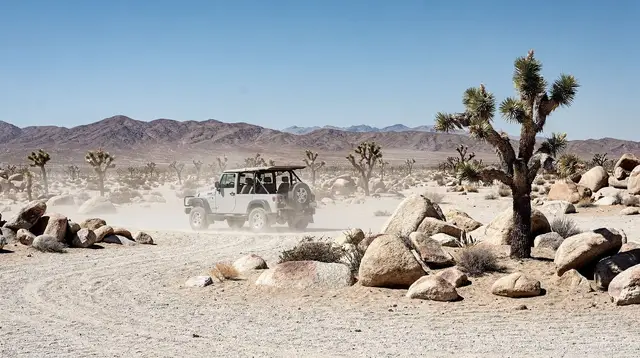
The caveat sits inland. Desert areas within reach of a Los Angeles trip, including Palm Springs and Joshua Tree, run significantly hotter than the coast in summer — often by a wide margin on the same day. Hiking, driving with the top down, or spending extended time outdoors in these areas during peak summer carries real heat risk, and it would be inaccurate to call summer the best season for visiting the desert near Los Angeles. If a desert side trip is part of the plan, it deserves its own seasonal check rather than being folded into a general “LA is sunny in summer” assumption — see the desert summer guide for more on that distinction.
Late spring and early summer: May Gray and June Gloom
One of the most commonly misunderstood patterns in the Los Angeles climate is the marine layer — a band of low cloud and fog that regularly rolls in off the Pacific and sits over the coast in the morning, particularly from roughly May through July. Locally this is known as “May Gray” in spring and “June Gloom” once it settles into early summer. It typically clears by early-to-mid afternoon, and inland neighborhoods can be sunny at the same time the coast is still overcast.
This matters directly for two of the activities this page focuses on. A helicopter flight booked for an early morning slot during this window may find coastal views, the shoreline, and even parts of the skyline softened or obscured by cloud until the layer lifts — a very different experience from the same route on a clear afternoon.
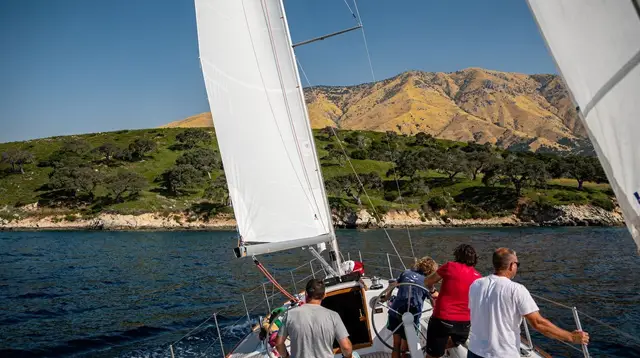
A boat cruise departing early from Santa Monica or the harbor can likewise start in flat grey light rather than the postcard blue sky many visitors picture. Neither of these outcomes is a malfunction or a booking mistake — it’s simply how the coastal atmosphere behaves in that window — but it is worth knowing about before choosing a time slot, and worth checking the short-range forecast rather than assuming clear skies by default.
Winter: the region’s rain window
Winter, broadly November through March, is when Los Angeles receives most of its modest annual rainfall. Many days remain dry even in this window, and the region as a whole is far from a wet climate by most standards, but storm systems do pass through, and when they do, they can affect outdoor sightseeing, open-air driving, and especially marine activities. A boat cruise or harbor tour scheduled during an active storm may be adjusted, shortened or postponed, and choppy conditions can make for an uncomfortable ride even without a full cancellation. Coastal drives along routes like the Pacific Coast Highway are still very doable in winter, but wet roads and reduced visibility call for a more cautious pace than a dry summer afternoon would.
Winter is also, notably, one of the more comfortable periods for the desert side of a trip, which sits at the opposite end of the seasonal calendar from the coastal city.
Autumn: Santa Ana winds and wildfire season
In autumn, dry offshore winds known as Santa Ana winds can move through Southern California, pushing temperatures up sharply — sometimes well beyond what the calendar date would suggest — and raising wildfire risk, particularly inland and in the hills around the basin. This is a genuine seasonal consideration for a Los Angeles trip, not a rare event, and it’s worth a quick check of conditions and any local air-quality or fire advisories if a visit falls in this window, especially for hiking or time in the hillside areas.
A rough month-by-month read
The table below is a general guide, not a forecast — conditions vary year to year, and any of these patterns can shift by a week or two in either direction.
| Period | Coastal LA | Desert (Palm Springs / Joshua Tree) | What to watch for |
|---|---|---|---|
| Winter (Nov–Mar) | Mild, this is the main rain window | Comfortable, often the best desert window | Storms can affect boat trips and outdoor plans |
| Spring (Apr–May) | Warming, marine layer building by May | Warming, still comfortable | “May Gray” mornings on the coast |
| Early summer (Jun) | Dry but often overcast mornings | Getting hot | “June Gloom” can affect early aerial and coastal views |
| Peak summer (Jul–Sep) | Dry, warm, generally clear afternoons | Very hot, real heat risk | Best coastal weather, worst desert timing |
| Autumn (Oct–early Nov) | Warm, drying out | Cooling from summer peak | Santa Ana winds, elevated wildfire risk |
How this affects specific activities
Helicopter flights. Clear, calm conditions produce the widest, sharpest views of the coastline, the basin and landmarks like the Hollywood Sign area. Morning departures in the May-through-July window are the most exposed to the marine layer described above; afternoon slots, once the layer has typically lifted, tend to offer a more reliable view, though this is a general pattern rather than a fixed rule for any given day.
Wind and storm conditions can also affect whether a flight operates at all, at any time of year. If a clear-sky view is the priority, it’s worth checking recent conditions before locking in a time, and pairing the flight with a broader look at Los Angeles’s helicopter options.
Boat cruises and harbor tours. Around Long Beach, Malibu and the wider coastline, calm summer conditions generally make for the smoothest rides, while winter storm activity is the main seasonal disruption to watch for. Coastal fog in late spring and early summer can also soften views on a scenic cruise even when seas are calm. More detail on route options is in the boat cruises guide, and whale-watching specifically has its own seasonal migration windows covered in the whale-watching guide.
Open-air and sports car driving. Dry, mild stretches outside the winter rain window and outside the thickest stretch of coastal morning cloud tend to suit a top-down drive along the coast best. Summer afternoons are usually reliable in the city itself, but a desert-bound drive in peak summer heat is a different consideration entirely from a coastal cruise, given how much hotter inland routes run.
What to actually do about it
None of this means a Los Angeles trip needs to be built entirely around the weather calendar — most visitors have a great time regardless of the month they arrive. What it does mean is that for anything outdoor, marine or aerial, a short-range weather and conditions check shortly before the activity is more useful than picking a “safe” month months in advance.
Operators for helicopter flights, boat cruises and similar outdoor experiences manage their own schedules around conditions, and it is normal — not exceptional — for a weather-dependent activity to be adjusted, delayed or rescheduled if conditions warrant it; no operator can honestly promise that an outdoor or aerial activity is guaranteed to run exactly as booked regardless of weather.
A practical approach: keep outdoor and aerial bookings a little flexible where possible, check the forecast a day or two ahead rather than trusting the seasonal average alone, and treat a foggy morning or a rainy afternoon as a normal part of a coastal, mediterranean climate rather than a sign something has gone wrong.
a helicopter flight over Los Angeles landmarks, and afternoon slots outside the late-spring marine-layer window tend to give the clearest views. Ground-based sightseeing is far less weather-sensitive: a guided city tour or a broader tour covering multiple neighborhoods can run comfortably in most conditions short of a storm. For a schedule built entirely around your own timing and pace, a private tour of the city makes it easier to shift plans around a cloudy morning or an unexpected shower.
For a wider look at pacing a trip around weather and crowds together, the seasonal timing overview and the dedicated June Gloom explainer go deeper into specific windows, and the five-day Pacific Coast Highway itinerary shows how a longer coastal drive can be paced around these same seasonal patterns.
If the desert is part of the plan, hiking and outdoor guidance for the region and Santa Barbara’s own seasonal patterns are useful points of comparison, since coastal Santa Barbara and the desert interior behave quite differently through the year even though both sit within a day’s drive of central Los Angeles.
Los Angeles Seasons: Frequently Asked Questions
What is June Gloom and does it ruin a trip?
It’s a marine layer of low cloud and fog that often keeps the Los Angeles coast overcast in the morning during late spring and early summer, even when inland areas are sunny. It usually burns off by afternoon, but it can affect early morning coastal or aerial views, so it’s worth checking conditions before booking a sunrise activity.
Is summer the best time to visit Los Angeles?
Summer offers the most consistently dry, warm weather in the city itself, which suits many outdoor plans well. It is not automatically the best time for every part of a trip, though, since nearby desert areas can become dangerously hot and coastal mornings can still be overcast.
When does it rain in Los Angeles?
Most of the region’s limited annual rainfall falls between roughly November and March, with the rest of the year typically dry. Winter storms can affect visibility and comfort for outdoor sightseeing, boat trips and open-air driving.
Is it too hot to visit Palm Springs or Joshua Tree in summer?
Summer temperatures in these desert areas run well above those in coastal Los Angeles and can pose real heat risks for hiking or extended time outdoors. Many visitors find the period from roughly November to April more comfortable for exploring the desert.
Can weather cancel a helicopter tour or boat cruise?
Weather conditions such as fog, wind or storms can affect visibility and safety for aerial and marine activities, and operators may adjust, delay or cancel departures accordingly. This is a normal part of booking outdoor or airborne activities and is not something any operator can promise around.
Does the ocean warm up in summer?
The Pacific Ocean off Los Angeles stays cool year-round and does not turn into a warm swimming sea even in the height of summer. Visitors expecting Mediterranean-style water temperatures are often surprised by how cold it feels.
What season is best for open-top or convertible driving along the coast?
Dry, mild stretches away from the winter rain window and away from the thickest morning marine layer tend to suit open-air driving best, though conditions vary by week rather than by a fixed calendar date. Checking a short-range forecast before the day is more reliable than picking a season alone.
Seasonal Los Angeles tours
Verified deep-linked GetYourGuide tours. Book through these links and we earn a small commission at no cost to you.
GetYourGuide does not provide a product photo for this activity — the image shows the meeting point, photographed by us.