Accessibility in Santa Barbara and the Central Coast
Is Santa Barbara and the Central Coast accessible for visitors with mobility needs?
Santa Barbara's downtown and waterfront are reasonably walkable and many boat tours are accessible, but the wider Central Coast has no structured public transit, so a rental car is the only practical way to get around. Always confirm accessibility directly with a specific tour or venue before booking, since physical demands vary a lot between activities like a harbor cruise and a Gaviota Coast kayak trip.
Getting around without a transit network
Accessibility planning for the Central Coast starts from a different baseline than a visit to Los Angeles. LA has real gaps in its own transit coverage, covered separately in the guide to accessibility in Los Angeles, but at least the LA Metro rail and bus system reaches Downtown, Hollywood, Pasadena, Santa Monica and Long Beach with lift-equipped vehicles. The Central Coast has nothing structurally equivalent.
Santa Barbara runs its own local bus network with accessible vehicles, and it is genuinely useful within the city itself, but it stops at the city limits. There is no train, no regional bus system and no rideshare-dense corridor linking Santa Barbara to Solvang, the Santa Ynez Valley, Ojai or San Luis Obispo on any kind of reliable schedule.
For a visitor with mobility needs, this changes the practical question from “which transit line gets me there” to “how do I structure driving so it does not become the hardest part of the trip.” A rental car is not one option among several here — it is the only realistic way to move between these towns, and the guide to renting a car versus rideshare in Los Angeles is worth reading even though it is written with the LA basin in mind, since the underlying logic (rideshare works within a town, not between distant ones) applies just as strongly on the Central Coast, only more so.
A private driver or an accessible van rental can substitute for self-driving on longer days, but neither removes the basic fact that no public transit option currently connects these towns to each other.
Within Santa Barbara itself, the situation is more favorable. The downtown core along State Street and the waterfront promenade near Stearns Wharf are flat, paved and manageable for most visitors on foot or with mobility aids, and this is where a large share of the accessible activity in the region concentrates. Once an itinerary moves out toward the wine country roads of the Santa Ynez Valley or the coastal bluffs west of the city, distances and terrain both become more demanding, and planning shifts back toward the car.
A wide range of physical demands within one catalog
The tours and activities available around Santa Barbara span a genuinely wide range of physical requirements, and lumping them together as “accessible” or “not accessible” would understate how different they actually are. It helps to think in three rough tiers.
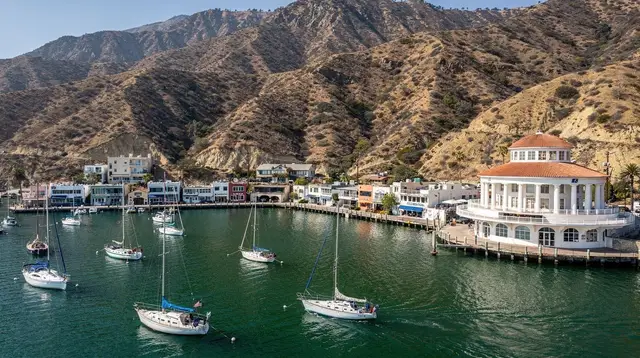
At the accessible end, a harbor or coastal cruise — such as the Santa Barbara yacht cruise along the coastline — typically boards from a fixed dock onto a stable, larger vessel, and involves sitting or standing on a level deck rather than physical exertion.
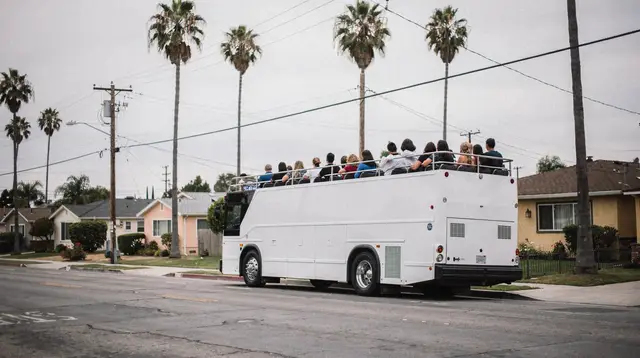
This kind of outing is accessible to most visitors, including many who could not manage a strenuous hike or a kayak launch. A narrated open-air trolley tour of Santa Barbara sits in a similar category: passengers board a vehicle and remain seated for most of the route, with the main physical requirement being the step up into the trolley itself.
At the more demanding end, a short harbor kayak excursion or a longer paddling trip along the Gaviota Coast requires climbing into a low, narrow kayak, often from a beach or a floating dock, then paddling continuously for an extended period, and getting back out again at the end.
This demands a meaningful level of upper-body strength, balance and general physical condition. It would be inaccurate to describe Gaviota Coast kayaking as suitable for any physical condition, and this page does not make that claim — it is a genuinely strenuous activity, and visitors with any doubt about their own fitness or balance should treat it as such rather than assuming an operator will simply adapt the trip around them.
In between, a Funk Zone walking tour built around ice cream stops and similar food or drink itineraries in the Funk Zone fall somewhere in the middle. These tours move on foot between several separate addresses — tasting rooms, cafés, small producers — over a few blocks of mostly flat, paved urban terrain.
The ground itself is not the obstacle; the obstacle is the cumulative walking and standing across a two-to-three-hour route with multiple stops. For a visitor who can walk a few hundred metres at a time with rest breaks, this is usually manageable; for a visitor who cannot, it is worth asking the operator directly whether shorter transfers or seated pauses are possible, since the standard route is not built around that.
A city highlights bike tour of Santa Barbara is a further variant worth flagging on its own: it requires the ability to ride a bicycle (including e-bike options on some routes) for an extended period on city streets and paths, which is a different physical requirement again from walking, boating or kayaking, and not automatically interchangeable with any of them.
| Activity type | Typical physical demand | Boarding / access notes |
|---|---|---|
| Harbor or coastal boat cruise | Low — mostly seated or standing on a stable deck | Fixed dock, larger vessel, minimal step |
| Guided trolley tour | Low — seated for most of the route | Step up into an open-air vehicle |
| Funk Zone walking / tasting tour | Moderate — sustained walking and standing between stops | Flat urban sidewalks, several separate venues |
| City bike tour | Moderate to high — requires riding a bicycle for an extended route | Standard or e-bike, city streets |
| Gaviota Coast kayak tour | High — paddling, balance, boarding from beach or dock | Low, narrow craft; getting in and out unassisted |
Why direct confirmation matters more than assumptions
None of the categories above should be treated as a guarantee. A single listing described as a “walking tour” can mean gently paced strolling with frequent seated breaks at one operator, and a brisk two-hour circuit with no scheduled stops at another. A “boat cruise” can mean a large, stable catamaran with a ramp, or a smaller vessel boarded by stepping down onto a narrow deck. The only reliable way to know which applies to a specific booking is to ask the operator directly, before paying, rather than inferring it from a tour’s general category or its marketing photos.
Useful questions to put to an operator in Santa Barbara or elsewhere on the Central Coast include: how passengers board (a level gangway versus a step down into a hull), how much continuous walking or standing the route involves, whether there are seated rest points, whether restrooms are available along the route, and whether staff have experience assisting visitors with mobility aids, mobility scooters or wheelchairs.
Many smaller, family-run outfits — common throughout the Funk Zone and the wine country around Solvang — can accommodate specific needs on request even when their standard listing does not spell this out, but only if asked in advance rather than discovered on arrival.
This same logic extends to lodging and dining choices across the region, not just tours. A boutique inn in Ojai or a tasting room in the Santa Ynez Valley may occupy a historic building with steps, narrow doorways or gravel paths that are not obvious from photographs. Calling ahead to confirm entry, restroom and parking arrangements takes a few minutes and avoids arriving somewhere that turns out to be unworkable.
Planning a realistic day
Because a rental car underpins nearly every itinerary here, accessibility planning is inseparable from ordinary trip logistics: parking proximity, drop-off points and driving distances between stops. Downtown Santa Barbara and the waterfront near Stearns Wharf cluster enough accessible activity — the harbor, State Street, the Funk Zone — that a full day can be built there with minimal driving, which is the simplest option for a visitor prioritizing ease of movement.
A day that also includes Solvang or the wine country of the Santa Ynez Valley adds 45 minutes to an hour of driving each way, plus whatever walking a specific winery or tasting room requires once there, and it is worth checking best-time and planning notes alongside individual venue policies before committing to a longer loop.
As with the rest of Southern California, displayed prices for tours and admissions exclude sales tax, and tipping is customary on guided experiences — background covered in the Los Angeles tipping and taxes guide, which applies to the Central Coast as much as to LA itself. None of that changes the accessibility picture, but it is worth building into the same planning conversation with an operator, alongside the access questions above.
For anyone assembling a broader Central Coast plan, the general Santa Barbara planning guide and the Santa Barbara walking tours overview are useful starting points before narrowing down to activities that fit a specific mobility situation, since pace and terrain vary tour by tour even within the same category. The most reliable rule throughout the region stays the same: read the description as a starting point, then confirm the details directly with whoever is running the activity.
Accessibility questions for the Central Coast
Does Santa Barbara have public transit for visitors with limited mobility?
Santa Barbara itself has a local bus network (MTD) with accessible, lift-equipped vehicles, but it only covers the city and immediate area. There is no equivalent of the LA Metro rail system connecting Santa Barbara to Solvang, Ojai or San Luis Obispo, so a rental car is the only realistic way to move between Central Coast towns.
Is a rental car really necessary for the Central Coast?
Yes, for almost any itinerary that goes beyond central Santa Barbara. Solvang, the Santa Ynez Valley, Ojai and San Luis Obispo are 30 minutes to over an hour apart by road, with no train or bus connecting them on a schedule most visitors could rely on.
Which Santa Barbara boat tours are accessible to most visitors?
A harbor or coastal cruise, such as a yacht tour around the Santa Barbara waterfront, generally involves boarding a stable, larger vessel from a fixed dock and requires comparatively little physical exertion, which makes it accessible to most visitors. Always confirm boarding arrangements with the operator in advance.
Is kayaking on the Gaviota Coast suitable for everyone?
No. Kayak trips along the Gaviota Coast require getting in and out of a small, low-sitting boat, often from a beach or a boat launch, and paddling for an extended period. This demands a reasonable level of mobility and physical condition, and it should not be assumed to suit every visitor or every physical situation.
Are the Funk Zone tasting tours walkable for someone with limited mobility?
Funk Zone food and wine walking tours move on foot between several separate tasting rooms and restaurants over a few blocks. The terrain is mostly flat urban sidewalk, but the format still involves sustained walking and standing, so it is worth checking the specific route and pace with the operator before booking.
Who should I contact to confirm accessibility before booking?
Contact the tour operator or venue directly, rather than relying on general marketing descriptions. Ask specifically about boarding or entry arrangements, walking distance, standing time, restroom access and whether staff can accommodate mobility aids, since these details are rarely spelled out in a standard listing.
Are Solvang and the Santa Ynez Valley walkable once you arrive?
Solvang’s compact downtown is flat and manageable on foot for short distances, but the surrounding Santa Ynez Valley wine country is spread across rural roads between individual wineries, which are not connected by any pedestrian or transit route. A car, or a private driver, is needed to move between them.
Does San Luis Obispo have better transit than Santa Barbara?
San Luis Obispo has a small local transit system covering the town itself, similar in scope to Santa Barbara’s, but it does not extend to the surrounding Central Coast towns or wine regions. As with the rest of the region, a car remains the practical default for a multi-stop visit.
Accessible tours
Verified deep-linked GetYourGuide tours. Book through these links and we earn a small commission at no cost to you.
GetYourGuide does not provide a product photo for this activity — the image shows the meeting point, photographed by us.