Santa Barbara Walking Tours: Old Town, Wine Country and the Central Coast
Can you explore Santa Barbara on foot from Los Angeles without a car?
The historic core of Santa Barbara is genuinely walkable once you arrive, but getting there and reaching the surrounding wine country still requires a car. There is no LA Metro service to Santa Barbara, and Santa Ynez Valley or Solvang cannot be reached on foot from downtown.
A city built for walking, on a coast built for driving
Santa Barbara sits about two hours up the coast from Los Angeles, close enough for a day trip and popular enough as a base for a longer stay on its own. The paradox that surprises a lot of first-time visitors is that the city itself rewards walking far more than Los Angeles does, while getting to it and getting around its wider region still runs on a car.
There is no LA Metro line reaching this far up the coast, no rideshare network dense enough to replace a car for a multi-stop day, and no train that drops you within walking distance of the vineyards inland. What changes once you actually arrive downtown is scale: the historic core is compact, flat in most places, and genuinely pleasant to cover on foot, which is exactly why dedicated walking tours of Santa Barbara work so well as a format.
This guide covers walking-style tours centred on Santa Barbara’s old town, plus a handful of related formats — trolley rides, bike tours, food-and-walking hybrids — that use the same downtown footprint with a different theme layered on top. It also sets the regional context: the Santa Ynez Valley, Solvang, Ojai and San Luis Obispo sit within range of a Santa Barbara base, but none of them are places you reach by walking from State Street.
What “walkable” actually means here
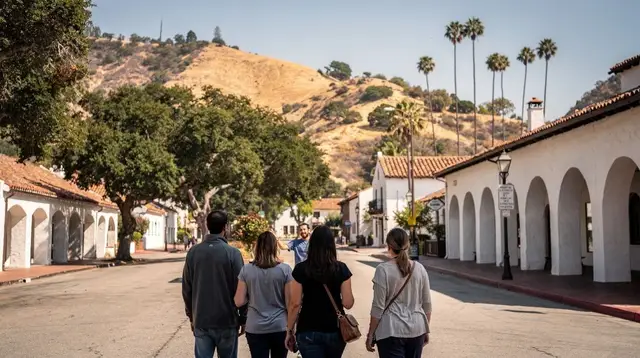
The area most visitors mean when they say “downtown Santa Barbara” runs roughly from the waterfront and Stearns Wharf up through the State Street shopping and dining corridor to the Spanish colonial-era Presidio and the Santa Barbara Courthouse. That whole stretch is a comfortable walk, mostly flat, and dense enough with things to see that a two- to three-hour guided walk covers a meaningful cross-section without anyone needing to drive between stops. This is the part of the “walkable” claim that is genuinely true, and it is the reason a walking tour makes more sense in Santa Barbara than it would in a lot of sprawling Southern California destinations.
What is not true is the wider claim that Santa Barbara as a whole, or its surrounding wine country, is a car-free destination. The city’s Spanish Mission sits on a hill above downtown and is a further walk or short drive depending on where you start. The Santa Ynez Valley and Solvang, both firmly part of the region’s identity and covered elsewhere on this site, are a separate drive inland — not a tram ride or an extended stroll from the courthouse. Treat “downtown is walkable” and “the region is walkable” as two different statements, because conflating them is the single most common planning mistake for this destination.
Getting to Santa Barbara in the first place
Because this matters before any walking tour is relevant: most visitors arrive by car, whether that’s a rental picked up in Los Angeles or a drive up the Pacific coast as part of a longer road trip. A direct train service also runs along the coast and drops passengers within walking distance of the waterfront and the lower end of State Street, which is a reasonable option if you don’t want to drive for this leg specifically.
What doesn’t exist is any LA Metro rail or bus coverage reaching Santa Barbara — the city sits well outside that network’s range, and rideshare pricing for a trip this long adds up quickly if used as a one-way substitute for a rental car. If your itinerary also includes wine-country stops in the Santa Ynez Valley or Solvang, plan on a car for that portion regardless of how you get to Santa Barbara itself, since those areas have no walking or transit link back to the coast.
The core walking tour: old town on foot
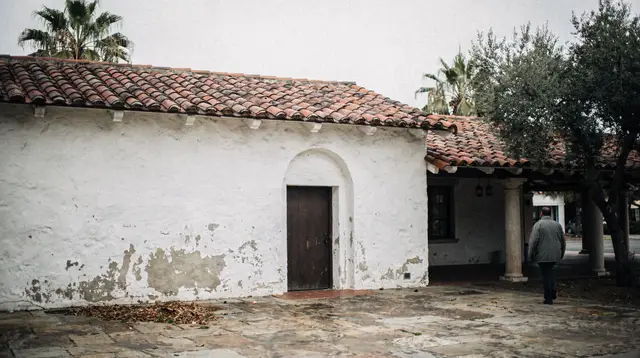
A standard historic walking tour threads through the Presidio district, the courthouse (worth a stop for the view from its tower, when open), the older adobe buildings that predate the American period, and the State Street corridor itself. Guides typically layer in the city’s Spanish and Mexican-era history alongside its more recent identity as a resort and university town, which gives the walk a throughline beyond just pointing at buildings. Because the route stays compact, this format works well as a first orientation on arrival — it’s a good way to get your bearings before deciding which neighbourhoods or day trips deserve more time later in a stay.
Food and walking, combined
Several operators run tours that pair the same compact downtown footprint with a food or drink theme, so you’re covering ground on foot while stopping at a sequence of small plates, tastings or treats along the way rather than a single sit-down meal. A comedian-led take on this format adds narration that leans into humour rather than straight history, which suits visitors who want the food stops to carry the tour rather than a lecture-style walk. For something lighter and shorter, an ice-cream-focused walking route covers a smaller loop with more frequent, smaller stops, which works well for families or anyone pairing it with an afternoon that still has other plans in it.
a comedian-led food and walking tour through the old town mixes several tasting stops with a running commentary that’s built around laughs rather than a formal history lesson, while a shorter ice cream walking tour keeps the pace lighter and the stops more frequent for a lower-commitment afternoon.
Beyond walking: trolley and bike alternatives
Not every visitor wants to cover the city entirely on foot, and Santa Barbara has reasonable alternatives that hit a lot of the same ground with less physical effort. A trolley tour is the obvious first alternative: it takes in a wider radius than a walk can manage in the same time, useful if you’re short on time or want the lay of the land before deciding where to come back on foot later. A guided bike tour splits the difference — more range than walking, more stopping flexibility than a trolley, and a reasonable option for visitors comfortable cycling on city streets.
a narrated trolley tour is a practical way to get an overview of the wider city on a first day, and a city highlights bike tour covers similar ground at a pace between walking and riding a trolley.
Wine, chocolate and history, still on foot in the city
Santa Barbara’s downtown also supports tasting-room walking routes that stay entirely within the city itself, distinct from an excursion out to the Santa Ynez Valley or Solvang. These city-based tastings pair local wine with chocolate and historical commentary in the same compact area covered by the standard walking tour, so they’re a reasonable substitute if the day’s plan doesn’t include driving out to the valley. It’s worth being clear with yourself about which of the two you’re booking: a walking tour that includes wine tastings in town is not the same trip as a day out among the vineyards themselves, and the second one needs a car.
a wine, chocolate and history walking tour keeps the tastings within the same walkable core rather than heading out to the valley.
The regional context: what’s around Santa Barbara, and how you reach it
Santa Barbara works well as a base for exploring a wider stretch of the Central Coast, but each of the other stops in that region has its own access requirements, and none of them extend the walkability of the old town outward.
| Area | Distance from Santa Barbara | How you get there |
|---|---|---|
| Santa Ynez Valley | Roughly 30-45 minutes inland | Car required; not walkable or transit-served |
| Solvang | Within the Santa Ynez Valley | Car required; walkable once you’re in town |
| Ojai | Under an hour south-east | Car required |
| San Luis Obispo | Roughly 1.5-2 hours north | Car, or a coastal train option |
Solvang itself is a useful example of the same pattern seen in Santa Barbara at a smaller scale: the town centre is walkable once you’re standing in it, but nothing links it to Santa Barbara’s downtown except a drive. If wine tasting in the Santa Ynez Valley is part of your plan, budget a full separate day with a car (or a booked wine-country transfer) rather than assuming it folds into a Santa Barbara city day on foot.
Climate notes that affect a walking day
Southern California’s dry summer pattern holds along this stretch of coast, but Santa Barbara and the Central Coast share the same marine-layer quirk that affects Los Angeles: a band of low cloud and morning fog locally nicknamed May gray in late spring and June gloom into early summer. A walking tour scheduled for a mid-morning start in that window can begin under grey skies that clear by early afternoon, so it’s worth checking a same-day forecast rather than assuming a uniformly sunny morning just because it’s July. Later in summer and into early autumn, the marine layer burns off earlier in the day and temperatures downtown stay comfortable for walking, generally milder than the inland valleys and the desert to the east.
Planning a Santa Barbara walking day
A sensible sequence for a single day built around walking is a morning historic walk through the Presidio and courthouse area, a midday break for lunch on or near State Street, and an afternoon that either continues on foot toward the waterfront or switches to a trolley or bike tour if you want to cover more ground before the day ends. Visitors staying longer often add a separate day for the Santa Ynez Valley or Solvang, treated explicitly as a driving day rather than folded into the walking itinerary. For a fuller multi-day plan that fits Santa Barbara into a wider Central Coast trip, see the four-day Central Coast and Santa Barbara itinerary.
If Santa Barbara is one stop on a longer coastal drive rather than the whole trip, it’s also worth reading up on the Pacific Coast Highway routing question and, if you’re coming from Los Angeles, whether you actually need a rental car for the legs on either side of it.
Where this fits with other Santa Barbara guides
Walking tours are one slice of what Santa Barbara offers on a visit. If food is the main draw rather than the walk itself, the dedicated Santa Barbara food tours guide covers formats built entirely around eating rather than sightseeing. For tastings out in the valley rather than downtown, Santa Barbara wine and drinks covers that separately, since it requires the car trip discussed above.
Visitors who want a broader overview beyond walking routes can check Santa Barbara sightseeing tours, and anyone drawn more to the outdoors than the old town should look at Santa Barbara hiking and nature, since the hills above the city offer a different kind of walking entirely. Elsewhere in the region covered by this site, Carlsbad’s walking tours follow a comparable downtown format further south, useful for comparison if your trip includes both stops. For the practical basics of the area, things to do in Santa Barbara rounds out the options beyond walking.
Santa Barbara walking tours: frequently asked questions
Do I need a car to visit Santa Barbara from Los Angeles?
Yes. Santa Barbara sits roughly two hours up the coast from Los Angeles and is not served by LA Metro rail or bus lines. A rental car, a scheduled coach service, or a train are the realistic ways to get there; once you arrive, the old town itself is compact and walkable.
Is downtown Santa Barbara walkable once you’re there?
Yes, the historic core around State Street, the Presidio and the waterfront is compact and pleasant on foot, which is why dedicated walking tours of the city centre work well. This is separate from the question of how you arrive.
Can I walk to the wine country from downtown Santa Barbara?
No. The Santa Ynez Valley and Solvang are a further drive inland from the city, not a walkable extension of downtown. Tasting-focused excursions in that area assume a car or an organised transfer, not a walk from the old town.
What kinds of walking tours are available in Santa Barbara?
Beyond straightforward historic walking routes, local operators run food-and-walking combinations, ice cream walking tours, and other guided formats that cover the same compact downtown area on foot with a different theme layered on top.
Are there walking-style options outside the city itself?
The comparable format at other Central Coast and Southern California stops, such as Carlsbad, is treated as a separate destination with its own walking tour, since Santa Barbara’s downtown routes do not extend that far.
Does Santa Barbara have the same coastal morning fog as Los Angeles?
Yes. The Central Coast shares the same marine layer pattern known locally as May gray and June gloom, so mornings in late spring and early summer can start overcast even on days that turn sunny and dry by afternoon.
Is a trolley tour a substitute for a walking tour?
It’s a different format rather than a substitute: a trolley tour covers more ground with less effort, which suits a first orientation lap, while a walking tour goes slower through a smaller area with more detail. Many visitors do both on the same trip.
Walking Tours
Verified deep-linked GetYourGuide tours. Book through these links and we earn a small commission at no cost to you.
GetYourGuide does not provide a product photo for this activity — the image shows the meeting point, photographed by us.