Tipping and Taxes in Los Angeles: Why the Price on the Menu Isn't the Price You Pay
Does the price on a menu or price tag in Los Angeles include everything I'll pay?
No. Sales tax is added at the till on top of most displayed prices, and at sit-down restaurants and bars a tip is expected on top of the bill as well. Budget extra beyond the number you see, rather than treating it as the final total.
I still remember the first time I sat down for dinner in Los Angeles years ago, added up the numbers on the menu in my head, and then blinked at the bill that landed in front of me at the end. It wasn’t a mistake. It wasn’t a scam. It’s just how eating out, and a lot of shopping, works in the United States — and it caught me off guard in a way I didn’t expect for a city I’d visited before.
The two additions nobody warns you about
There are two separate things stacking on top of the price you first see in Los Angeles, and it’s worth keeping them straight in your head because they behave differently.
The first is sales tax. It gets added at the till on most purchases — meals, retail items, plenty of paid activities — and it isn’t folded into the number printed on the shelf, the menu, or the ticket page. The exact rate shifts depending on which specific city within the county you’re standing in, since local add-ons stack on top of the state rate, so I’ve stopped trying to memorize a single figure and instead just assume the final total will be a bit higher than what I read.
The second is tipping, and this one is about people, not city boundaries. At a sit-down restaurant or a bar, a tip on top of the bill is expected, not a reward you dole out only for standout service. That took some getting used to on my first few trips, coming from a place where a tip is a nice gesture rather than an assumed part of someone’s income.
Why I stopped trusting the printed number
What changed my habits wasn’t a single bad surprise — it was noticing the pattern repeat across an entire trip. A coffee, a quick lunch, a nicer dinner with friends, a souvenir from a shop near Hollywood Boulevard: every single time, what I actually paid was higher than what I’d budgeted based on the menu or the price tag alone. Eventually I just built a mental habit — whatever number I see, I assume the real cost is meaningfully more, and I stopped being annoyed by it because I stopped being surprised by it.
I want to be careful here, because I’m not going to hand you a fixed percentage for tipping or a single tax rate for the region, and if anyone does, be skeptical — both genuinely vary by venue, by city within the county, and by year. What I can tell you with confidence is the shape of it: tax gets added to most things you buy, tipping gets added on top of restaurant and bar bills, and neither is optional in the way a traveler from a tax-inclusive, no-tipping culture might assume.
Where this actually shows up on a trip
It’s easiest to notice at restaurants, because the bill arrives and you add the tip yourself, often choosing from suggested amounts on the card reader at the table. But it isn’t limited to meals. Paid attractions, guided experiences, and plenty of retail purchases around town can carry the same “add tax at checkout” pattern, so I’ve learned to treat any displayed price — whether it’s for a museum ticket in Downtown LA, a souvenir in Santa Monica, or a meal near Venice Beach — as a starting point rather than a final figure.
| Situation | What you see | What actually happens |
|---|---|---|
| Sit-down restaurant or bar | Menu prices, subtotal on the bill | Tax added at checkout, tip added on top by you |
| Counter service / takeout | Price on the board | Tax usually added; tip generally not expected |
| Retail shop or souvenir stand | Price tag | Sales tax added at the register |
| Paid attraction or activity | Ticket price online or at the gate | Sales tax may apply before you finalize checkout |
| Hotel stay | Nightly rate shown when booking | Local taxes, sometimes a separate fee, added to the total |
How I actually budget for it now
I’ve settled on a simple habit rather than a precise formula: whatever the displayed price is, I mentally pad it before deciding whether something fits my budget for the day. It’s a rougher, less satisfying approach than a neat percentage, but it’s honest about the fact that both tax rates and tipping norms can shift over time and by location — a fixed number I gave you today could easily be wrong by the time you’re standing at the counter.
This is different from working out your overall trip budget, which is its own exercise covering flights, hotels, car rental, activities and everything else. Here I’m only flagging these two specific, very American habits — tax on top, tip on top — because they’re the ones that most reliably throw off a first-time visitor’s math at the till, not because they’re the only costs worth planning for.
It hasn’t stopped me from enjoying meals out across the city, from a casual taco spot to a proper dinner after a day exploring Beverly Hills. If anything, once I stopped expecting the menu price to be the final price, the surprise disappeared and I could just enjoy the meal.
A few places where I’ve felt it most
Some of my favorite Los Angeles days involve a mix of paid activities where this same pattern quietly repeats. A morning hike toward the sign is a good example — I’d suggest the guided hike up to the Hollywood Sign if you want the story and context along the way, and it’s worth checking the final checkout total rather than just the headline price when you book. The same goes for a half-day around town: I’ve taken the guided highlights tour of the city and appreciated having a local explain not just the sights but little practical things like this.
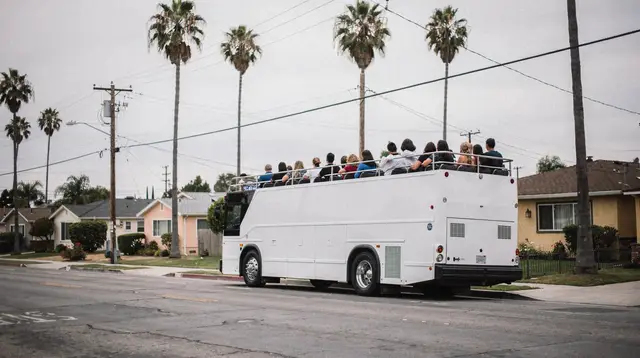
If you’d rather move at your own pace, an open-air bus tour through Hollywood and Beverly Hills is an easy way to cover ground without worrying about parking, and for a splurge day, a helicopter tour over the city’s landmark neighborhoods is one of those bookings where I’d genuinely recommend reading the final price breakdown before confirming.
For planning the bigger picture of your visit, our guide to Los Angeles trip planning and the overview of passes and tickets are good next stops, especially if you’re weighing how many paid activities to fit into a two-day first-timer itinerary or a longer three-day classics itinerary. If you’re traveling with kids, our family-focused guide covers how this same tax-and-tip pattern shows up at theme parks and family restaurants too.
Tipping and taxes in Los Angeles: your questions answered
Is tipping really expected in Los Angeles, or is it optional like in some other countries?
In Los Angeles, as in the rest of the United States, tipping at sit-down restaurants and bars is a firm social expectation, not a bonus for exceptional service. Servers’ base pay assumes tips as part of their income, so leaving nothing is read as a complaint about the service, not as declining an optional extra.
Is the tip already included in the bill I get handed?
Usually not, unless you’re in a large group where an automatic gratuity may already be added — the bill will say so clearly if that’s the case. Otherwise the amount printed is before tip, and you add it yourself, often by choosing from suggested options on a card reader or writing it on the receipt.
Does sales tax apply to everything I buy in Los Angeles?
It applies very broadly — meals, retail purchases, most paid attractions and more — but the exact rate depends on the specific city you’re in within the county, since local district add-ons vary from one place to the next. Treat the shelf or menu price as a starting point, not the final figure.
Do hotels add anything else on top of the room rate?
Hotels commonly add their own local taxes and sometimes a separate resort or destination fee on top of the nightly rate you see when browsing. These are usually disclosed before you pay, but they’re easy to miss if you only glance at the headline price, so it’s worth checking the full breakdown before booking.
Do I need to tip for takeout or a coffee order at the counter?
Counter service, fast food and takeout generally don’t require a tip the way a sit-down meal does, even though a card reader may still prompt you with suggested amounts. Many visitors tip a little for good service anyway, but it isn’t the same firm expectation as at a table with waitstaff.
Should I just carry extra cash to cover tips and tax?
Cards work almost everywhere in Los Angeles and handle both tax and tipping smoothly through the payment terminal, so you don’t need to carry large amounts of cash. A little cash is still handy for smaller, more personal tips — a hotel bellhop or valet, for instance — where handing over a few dollars directly is the norm.
Does this affect paid attractions and tours as well as restaurants?
Sales tax can apply to paid admissions and activities in addition to meals and shopping, so the ticket price you see while planning may not be the exact amount charged at checkout. Tipping norms for guides and drivers are more of a personal judgment call than a fixed rule, but a little extra for a guide who clearly went out of their way is common and appreciated.
tours.Budget
Verified deep-linked GetYourGuide tours. Book through these links and we earn a small commission at no cost to you.
GetYourGuide does not provide a product photo for this activity — the image shows the meeting point, photographed by us.