Water Sports in Los Angeles: Windsurfing, Jet Ski and Surf Beyond the City Beaches
Where can you windsurf or jet ski near Los Angeles, away from the main city beaches?
Cabrillo Beach, near San Pedro in Los Angeles County, is a known windsurfing spot thanks to its sheltered bay and steady afternoon breeze, while Long Beach further east offers jet ski rental and some surf breaks along its stretch of coast. Both are 30-60+ minutes by car from Downtown or Hollywood, with no Metro rail connection, and conditions depend on the day's wind and swell rather than a fixed schedule.
Windsurfing and jet skiing on the harbor side of Los Angeles
When people picture water sports in Los Angeles, they usually picture Santa Monica or Venice: a surfboard, a beach break, a lesson right off the sand. That’s a real and popular option, but it’s only one slice of a much larger coastline. Los Angeles County stretches roughly 120 kilometres of Pacific frontage, and further south and east, past the city’s better-known beaches, the coast changes character.
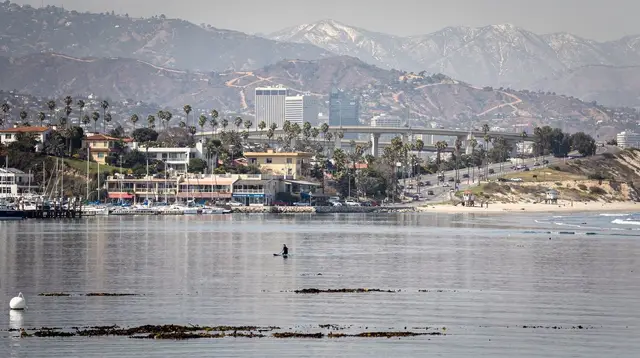
Around San Pedro and the harbor, sheltered bays and steadier winds create conditions that suit windsurfing rather than surfing, and further along toward Long Beach, the calmer, more built-up waterfront supports jet ski rental and a different, more low-key surf scene than the beach breaks further north.
This page is about that harbor-side stretch — Cabrillo Beach and the waters around Long Beach — rather than the beginner surf-lesson beaches closer to central LA. If you’re specifically after a first surf lesson on soft sand with easy access from Hollywood, the Santa Monica water sports guide or a lesson booked directly in that area is the more direct fit. If you want kayaking on calmer water further north along the coast, Santa Barbara leans that way instead. Here, the focus is windsurfing, jet ski and the more harbor-oriented side of Los Angeles water sports.
Cabrillo Beach: why windsurfers go there
Cabrillo Beach sits near San Pedro, on the harbor side of the Palos Verdes Peninsula, at the southern edge of Los Angeles County. Unlike the open, west-facing beaches of Santa Monica or Venice, Cabrillo Beach has a bay-facing side that’s naturally more sheltered from big ocean swell, which is part of why it has built a local reputation among windsurfers over the years. The bay setup tends to produce a steadier, more manageable wind pattern for the sport than fully exposed stretches of coast, which is useful for anyone learning or refining technique rather than chasing the biggest possible conditions.
That said, “sheltered” doesn’t mean “guaranteed.” Wind at Cabrillo Beach, like anywhere on this coast, depends on the day — the season, the time of day, and the broader weather pattern all play a role, and afternoons often bring more consistent breeze than early mornings. Nobody booking a windsurfing session here should expect a fixed, predictable wind window; it’s worth checking conditions close to the day and staying flexible about timing, especially outside the more reliably breezy months.
Long Beach: jet ski and a different kind of surf
Long Beach, further east along the coast and technically outside the city of Los Angeles’ own boundaries but very much part of the same metropolitan region, offers a different mix. Its calmer, more protected waterfront — shaped by the breakwater and the port — makes it a practical base for jet ski rental, where operators can offer relatively controlled conditions compared with fully open ocean. There’s also surf along parts of the Long Beach coast, though it tends to be a smaller, more local scene than the beach-break surf culture of Venice or Santa Monica, and it’s shaped by the same variable swell and wind that affects the whole region.
Because Long Beach combines a working port, a cruise terminal, beaches and a genuine downtown, it rewards a bit of planning: decide whether you’re there purely for water sports or combining it with other things — the Queen Mary, the aquarium, a walk along the waterfront — and build your timing around that, rather than assuming everything sits within a short walk of wherever you park.
The distance problem: this is not a Hollywood day trip on a whim
It’s worth being blunt about geography here, because it trips up a lot of first-time visitors. Los Angeles is not a compact city with everything a short walk or a quick Metro ride apart — it’s a sprawling metropolitan region, and Cabrillo Beach and Long Beach sit well south of the areas most visitors associate with “LA,” like Hollywood or Downtown LA.
By car, in light traffic, the drive from Downtown LA to Long Beach is commonly in the range of 30 to 45 minutes, and from Hollywood it can stretch past an hour once you factor in getting onto and through the freeway network. During weekday rush hour — roughly the morning commute and the late afternoon into early evening — that same drive can easily take noticeably longer, so if you’re planning a specific booking time, it pays to build in a buffer rather than cutting it close.
LA Metro rail does reach Long Beach’s downtown area on the Metro A Line, which is useful if you’re already staying somewhere the line serves and just want to explore the city itself. But the specific harbor-adjacent water sports locations — Cabrillo Beach in particular — are not really practical by rail; you’d still be looking at a taxi, rideshare or a fair amount of walking from the nearest stop. For a same-day water sports outing, a rental car or a rideshare booked with the return trip in mind is the realistic plan, not an assumption that transit will get you there.
What to actually expect: lessons vs free rental
Whether you’re windsurfing at Cabrillo Beach or jet skiing off Long Beach, the practical choice is usually between a guided lesson and unsupervised equipment rental, and the right one depends on experience.
If you’ve never windsurfed or jet skied before, a lesson with an instructor is the sensible starting point. Instructors can read the day’s actual wind and water conditions, match the session to what’s realistic, and handle the basics of balance, safety and equipment that are hard to pick up by trial and error alone. Most operators in the region are used to complete beginners and structure a first session around getting comfortable rather than covering ground.
If you already have experience, straight equipment rental without a lesson attached is often available, particularly for jet skis, though most operators still require some proof of prior experience or a short safety briefing before handing over the keys. Rental blocks are typically sold in fixed time increments — commonly somewhere in the range of 30 minutes to a couple of hours — and pricing scales with duration and, for jet skis, sometimes with the number of riders or watercraft.
Either way, nobody can promise you a specific sea state or wind speed on a specific date months in advance. Wind for windsurfing and sea conditions for jet skiing are inherently day-of variables; a good operator will be upfront that conditions on the day determine what’s actually safe and worthwhile, and may reschedule or adjust a session rather than run it in unsuitable weather.
The Pacific is cold — plan your gear accordingly
One thing that surprises a lot of visitors, especially those coming from Mediterranean or tropical climates: the Pacific Ocean off Los Angeles is genuinely cold, and that doesn’t change much between winter and summer. Water temperatures here don’t warm up the way they might along, say, the French Riviera or the Caribbean. For any of these activities — windsurfing, jet ski, or the harbor-side surf around Long Beach — expect to be in a wetsuit, or to be provided with one as part of a lesson or rental package. This isn’t a “swim in your board shorts” kind of coast, even on a hot inland day.
Booking ahead — useful, not essential, and never a fixed hour
In the busier months, particularly summer weekends, popular time slots for jet ski rental and windsurfing lessons can fill up, so booking a few days or weeks ahead is a reasonable precaution if you have a specific date in mind. That said, treat any advance booking as reserving your place in the day’s schedule rather than locking in an exact hour of guaranteed conditions — operators generally confirm the practical details (meeting point, exact start time, what to bring) closer to the date, once they have a clearer read on the forecast.
If your travel dates are flexible, building in a spare day or a loose window around your planned water sports session gives you room to shift if the wind or swell isn’t cooperating on the original day — a small buffer that can save an otherwise wasted booking.
Comparing the options along the coast
| Location | Best suited for | Distance from Downtown LA | Access |
|---|---|---|---|
| Cabrillo Beach (San Pedro) | Windsurfing, sheltered bay conditions | Roughly 30-45 minutes by car | Car or rideshare; no direct rail |
| Long Beach | Jet ski rental, low-key surf | Roughly 30-45 minutes by car | Metro A Line to downtown Long Beach, car/rideshare for the water sports areas |
| Santa Monica / Venice | Beginner surf lessons, beach culture | Roughly 20-40 minutes from central LA | Metro rail plus some walking |
| Huntington Beach (Orange County) | Surf-focused, broader beach scene | Roughly 45-60+ minutes by car | Car generally required |
Treat the drive times as rough guides tied to light-traffic conditions; peak-hour driving on the 405, the 710 or the 110 corridors can push any of these well past the low end of the range.
Beyond Cabrillo Beach and Long Beach
If windsurfing or jet ski don’t quite match what you’re after, the wider LA coast has other water-focused options worth knowing about. Huntington Beach and Newport Beach in Orange County lean more toward classic surf culture and broader beach amenities, while Catalina Island — reachable only by ferry, not by road — adds snorkeling, diving and calmer-water options around Avalon. Further south, Dana Point is better known for seasonal whale watching than for jet ski or windsurfing.
For a first surf lesson closer to central Los Angeles, a session in Venice Beach or Santa Monica is a more accessible starting point than the harbor side of the county — worth booking directly if that’s the experience you’re after:
a first surf lesson right on Venice Beach is a practical way to try surfing without the longer drive south, and it’s a useful comparison point if you’re deciding between a Venice-based lesson and the more harbor-focused options further along the coast. For a more one-on-one pace, a private surf lesson in the Los Angeles area gives an instructor’s full attention rather than a group format, which can matter if you’re nervous in the water or want faster progress. A slightly longer version, a two-hour private surfing lesson, suits someone who wants more time in the water than a standard first session allows, without committing to a multi-day course.
Fitting water sports into a wider LA trip
Because Cabrillo Beach and Long Beach sit apart from the city’s main tourist circuit, it’s worth thinking about how a water sports session fits into your broader itinerary rather than treating it as a quick add-on between Hollywood and the museums. A three-day LA beaches itinerary can reasonably build in a half-day for Long Beach or San Pedro alongside Santa Monica and Venice, especially if you’re already planning to explore things to do in Long Beach more broadly — the aquarium, the waterfront, the Queen Mary — around the same outing.
If you’re deciding whether you need to rent a car in Los Angeles at all, a Cabrillo Beach or Long Beach water sports day is one of the clearer arguments in favor: the LA Metro doesn’t cover these harbor-side spots in a practical way, and a rental car versus rideshare comparison tends to favor a car if you’re combining water sports with other stops the same day, simply because a return rideshare from a beach parking lot at an unpredictable end time can be slow or expensive.
For a broader sense of what else the region offers on and near the water, the things to do in Los Angeles hub and the dedicated water sports category page cover the full spread — from Venice’s beginner surf scene to Catalina’s snorkeling — so you can see how Cabrillo Beach and Long Beach fit into the wider picture before settling on where to spend your water sports day.
Getting the timing right
A last practical note: because both windsurfing conditions at Cabrillo Beach and jet ski conditions off Long Beach depend on the day’s actual wind and swell, the single best thing you can do is stay flexible. If your trip allows it, avoid scheduling your only water sports session on your last full day with no buffer — a windless morning or an unexpectedly choppy afternoon can mean a shorter session or a reschedule, and having a spare day in your itinerary turns that from a disappointment into a minor adjustment.
Cabrillo Beach and Long Beach water sports — frequently asked questions
Can you reach Cabrillo Beach or Long Beach by LA Metro?
Not directly for water sports purposes. LA Metro rail covers Downtown, Hollywood, Pasadena and Long Beach’s downtown core reasonably well, but the specific harbor-adjacent stretches used for windsurfing and jet ski rental are not served by rail, and the final approach typically needs a car, taxi or rideshare.
Is Cabrillo Beach good for beginners?
Its sheltered, bay-facing setting makes it more forgiving than open-ocean spots for windsurfing, which is why it has a local reputation among the sport’s community, but conditions still vary day to day and a first-timer is generally better off booking a lesson than renting gear outright.
Do you need a reservation for jet ski rental in Long Beach?
Booking ahead is sensible in the warmer months and on weekends, when slots can fill, but operators generally confirm the exact time and conditions closer to the day rather than guaranteeing a fixed hour weeks in advance, since sea state and wind can change the schedule.
How far is Long Beach from Hollywood or Downtown LA?
Long Beach is roughly 30 to 45 minutes from Downtown LA by car in light traffic, and often 60 minutes or more from Hollywood during peak periods; there is no fast rail shortcut for the harbor and beach areas specifically used for water sports.
Is the water in San Pedro and Long Beach warm enough to swim or surf comfortably?
No — like the rest of the Los Angeles coastline, the Pacific here stays cool year-round, including in summer, so a wetsuit is standard for anyone spending real time in the water rather than a quick dip.
What’s the difference between this area and Santa Monica or Venice for water sports?
Santa Monica and Venice are closer to central LA and geared toward beginner-friendly surf lessons right off the sand, while Cabrillo Beach and Long Beach sit further south along the harbor coast and lean more toward windsurfing and jet ski rental, with a longer drive from Hollywood or Downtown.
Can you guarantee calm water for jet skiing or good wind for windsurfing on a specific day?
No. Both activities depend on that day’s actual wind and sea conditions, which can shift with the season and even hour to hour; operators and instructors adjust or reschedule around what the ocean is actually doing rather than around a promised forecast.
Water Sports
Verified deep-linked GetYourGuide tours. Book through these links and we earn a small commission at no cost to you.
GetYourGuide does not provide a product photo for this activity — the image shows the meeting point, photographed by us.