Surfing and Kayaking Along Laguna Beach's Coves
What water sports work best at Laguna Beach?
Laguna Beach's rocky coves suit beginner-friendly surf breaks and coastal kayaking rather than long flat-sand swimming days. Surf lessons and guided kayak trips both run from the town's small beaches, with conditions shifting by season rather than by time of day.
What makes Laguna’s coastline different
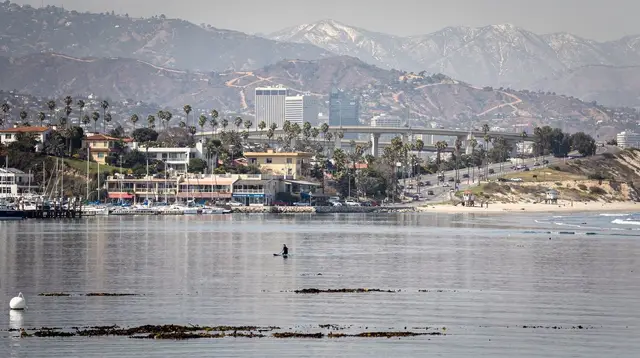
Most of the water-sports guides in this region — for Catalina Island, Newport Beach or Carlsbad — describe wide, flat stretches of sand or a ferry crossing to an island. Laguna Beach is a different shape of coastline entirely. Instead of one long beach, the town sits along a series of small, rocky coves separated by bluffs and headlands, each with its own patch of sand and its own personality in the water. That geography is the whole reason to write about Laguna’s water sports on their own terms rather than folding them into the broader Orange County picture.
The coves matter for two practical reasons. First, they create semi-sheltered pockets of water where beginner-friendly waves can form even when the open coast further along is choppier — which is part of why Laguna has a long-standing reputation as a place to learn to surf rather than only to watch experienced surfers. Second, the same rocky points and small caves that shelter the coves make for interesting close-to-shore sea kayaking, following the coastline past rock formations rather than paddling straight out into open water. Surfing and kayaking here are really two different ways of using the same broken-up shoreline.
This page focuses specifically on that: what surfing and kayaking actually look like at Laguna Beach, how the coves compare to each other, how the seasons change what’s sensible to book, and how to get here from Los Angeles. For the wider region’s other water activities — electric boat rentals in Newport Beach, kayak rentals in Huntington Beach, or the ferry-based options on Catalina Island — see those dedicated pages instead.
Getting to Laguna Beach from Los Angeles
Laguna Beach sits roughly one to one and a half hours south of central Los Angeles by car, depending heavily on traffic on the coastal freeways — the same route that serves Long Beach, Newport Beach and the rest of Orange County. There is no direct LA Metro line reaching Laguna Beach, so this is a drive (or rideshare) rather than a rail trip. Visitors staying near Santa Monica or Downtown LA should treat the drive time as a real planning constraint, not an afterthought — arriving mid-morning after a late start can eat a meaningful chunk of a half-day surf or kayak booking.
Because of the drive, many visitors pair Laguna Beach with a wider loop rather than a single-purpose trip. It fits naturally into itineraries that also touch Newport Beach or Dana Point, both a short further drive south, or into a longer three-day LA beaches itinerary. If a full day trip from LA to Orange County’s coast is the plan, the Orange County and Catalina two-day itinerary gives a sense of how the pieces fit together.
Surfing Laguna’s coves
Laguna’s surf breaks are spread across its various coves rather than concentrated on one long beach, and each cove behaves a little differently depending on swell direction, sandbar shape and time of year. That variation is exactly why local surf schools tend to pick a specific cove for a given lesson rather than always using the same spot — an instructor reading the day’s conditions will choose whichever break looks most manageable that morning.
For a first lesson, a guided session removes the guesswork of picking a cove and reading the water. A Laguna Beach: California Surf Lesson run through a local surf lesson in one of Laguna’s coves pairs a beginner with an instructor who already knows which break is working that day, rather than leaving a first-timer to guess.
A few practical points worth setting expectations on:
| Factor | What to expect |
|---|---|
| Best conditions for beginners | Generally calmer and more consistent in the warmer months, roughly late spring through early autumn |
| Off-season | Larger swell and stronger wind are more common, which can suit more experienced surfers but is tougher for a first lesson |
| Crowds | Busiest surf spots get crowded on summer weekends; weekday mornings are typically quieter |
| Equipment | Lessons normally include board and wetsuit; renting on your own without guidance is possible but less useful for a first try |
No lesson or rental can promise flat, easy conditions — the ocean here changes day to day, and even in the calmer months a particular cove can be having a rougher morning than usual. Booking with an instructor improves the odds of a manageable, well-supervised session, but it isn’t a guarantee of gentle waves.
Kayaking the coastline, not crossing to an island
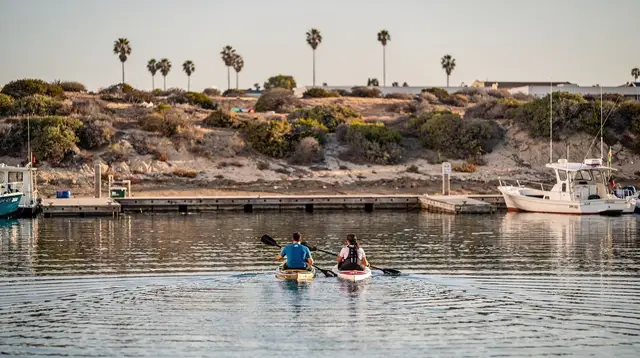
Kayaking at Laguna Beach is a coastal activity — paddling along the shoreline past coves, rock outcrops and small sea caves — rather than a crossing to open water or to another landmass. That’s a useful distinction from Catalina Island, where kayaking happens after a ferry ride to Avalon, or from the broader open-water paddling that suits the flatter shoreline around Newport Beach.
A guided option, such as the Laguna Beach: Ocean Kayak Private Tour with Guide booked through a private guided kayak tour along Laguna’s coves, is worth considering for visitors who want the coastline explained as they go — which caves and points are worth lingering near, and how to read the water close to the rocks. A guide also helps manage the practical side: reading swell and current near rock formations takes more judgment than paddling on flat, open water.
For visitors who’d rather rent equipment and go at their own pace, or who are staying further along the coast, a Huntington Beach: Kayak Rental via a self-guided kayak rental further north along the coast is a comparable option outside Laguna’s own coves — useful context for anyone weighing Laguna against its neighboring beach towns rather than assuming they’re interchangeable.
Marine life — dolphins, seals, occasionally other species — is sometimes visible from a kayak along this stretch of coast, and it’s one of the appeals people mention afterward. But it isn’t something any operator can promise for a specific outing; sightings depend on what happens to be offshore that day, and a session with no wildlife at all is a completely normal outcome, not a failed one.
How the seasons change the choice
Laguna Beach’s water is warmer and its coves busier in summer, roughly from late spring through early autumn, which is also when conditions tend to be calmest and most forgiving for first-time surfers and less experienced kayakers. Outside that window, expect cooler water, more wind, and larger, less predictable swell — the kind of conditions that can turn a relaxed beginner cove into something better suited to a confident surfer, or that can make a coastal kayak route feel choppier and less comfortable.
This seasonal shift is also why it’s worth deciding in advance which activity fits the trip dates rather than assuming both are equally good year-round. A family trip planned for a January weekend, for instance, may find surf lessons harder to arrange comfortably than the same trip in July, while a kayak tour timed for a calm autumn morning can still work well if the swell happens to be low that day. There’s no fixed rule beyond checking conditions closer to the date and being willing to let the season steer the choice between surf and kayak.
Booking ahead in high season
Laguna Beach’s surf schools and kayak operators run with limited daily capacity — a handful of lesson slots or a fixed number of kayaks — and in the busiest summer weeks those slots book out. Reserving a lesson or a guided kayak trip a reasonable distance ahead of a summer visit lowers the risk of a wasted trip to the coast to find sessions full for the day. Outside peak season, walking up with less notice is more realistic, though a booked slot still removes one variable from the day.
This is also where the town’s other water-related bookings sit alongside surf and kayak: a Los Angeles: Laguna Beach Full Day Small Group SUV Tour via a full-day small-group tour that takes in Laguna Beach from Los Angeles can work well for visitors without a car who still want to see the coves, even if they aren’t planning to get in the water themselves that day.
Nearby options for a fuller day
Laguna Beach’s coves are the focus of this page, but the surrounding stretch of coast offers activities that don’t fit a rocky-cove profile. South along the coast, Dana Point is the region’s better-known base for whale watching, including trips such as the Dana Point: Dolphin Whale Watching with Underwater Viewing booked through a whale and dolphin watching boat trip with underwater viewing from Dana Point — a different kind of water activity from surfing or kayaking, built around a boat rather than the shoreline itself.
Which whale species turns up depends heavily on the time of year, so this is worth pairing with the whale watching guide for the wider area rather than assuming any given month works equally well.
For a broader look at the town beyond the water, Laguna Beach’s food scene and its slightly odd, well-documented history of local hauntings covered in the Laguna Lanterns Laments Ghost Tour both give a sense of what fills the hours around a surf lesson or kayak trip. And for travelers still deciding where to base a coastal day between Laguna, Newport and points further south, the things-to-do overview for Laguna Beach and the wider day trips hub are useful starting points before narrowing down bookings.
Laguna Beach compared with its neighbors for water sports
| Destination | What it’s known for in the water | How to get there from LA |
|---|---|---|
| Laguna Beach | Rocky coves, beginner-friendly surf, coastal kayaking past sea caves | Car, roughly 1–1.5 hours, no direct Metro |
| Newport Beach | Flatter, more open water; boat and electric boat rentals | Car, similar drive time to Laguna |
| Huntington Beach | Long open beach, established surf culture, kayak rentals | Car, generally shorter drive than Laguna |
| Catalina Island | Snorkeling and kayaking around Avalon after a ferry crossing | Ferry from the mainland (for example from Newport Beach), not a drive |
Treat this table as a starting point for choosing a base, not a ranking — Laguna’s coves suit a particular kind of morning that Newport’s open water doesn’t replicate, and neither substitutes for the ferry-based experience of Catalina.
Contextualized FAQ: surfing and kayaking at Laguna Beach
How do I get to Laguna Beach from Los Angeles?
By car along the coastal freeways, in roughly one to one and a half hours depending on traffic. There is no direct LA Metro line to Laguna Beach, so a rental car or rideshare is the practical option for most visitors coming from Los Angeles.
Is Laguna Beach good for beginner surfers?
Several of Laguna’s coves have gentler, more sheltered breaks than the open beaches further north and south in Orange County, which is why local surf schools focus their beginner lessons here. Conditions still vary by cove and by day, so a lesson with an instructor is the safer starting point.
What is the difference between surfing and kayaking here?
Surfing at Laguna works the beach breaks inside the coves, while sea kayaking follows the outside edge of the rocky coastline past coves, small caves and headlands. They use different stretches of the same shoreline and are usually booked as separate activities.
Do I need to book surf or kayak sessions in advance?
In the busy summer months, yes — lesson slots and kayak rentals at Laguna Beach fill up, so booking ahead is worth doing. Outside peak season, availability is generally easier, though it still helps to reserve rather than turn up and hope.
Will I see dolphins or sea life on a Laguna Beach kayak trip?
Dolphins, seals and other marine life are sometimes seen from a kayak along this coastline, but no operator can guarantee a sighting on a given day — it depends on what happens to be offshore at the time. Whale sightings are more associated with dedicated boat trips further south.
Is Laguna Beach the same as Newport Beach or Catalina Island for water sports?
No. Laguna’s coves suit surfing and coastal kayaking; Newport Beach’s flatter, more open water suits boat rentals and calmer paddling; and Catalina Island is a separate destination reached by ferry, with its own snorkeling and kayaking scene around Avalon.
What is the water temperature like at Laguna Beach?
The Pacific along this stretch of coast stays cool year-round rather than tropical-warm. Water is milder and the beach busier in summer, while autumn and winter bring cooler water, more wind and larger swell, which changes which activities make sense on a given day.
Water Sports
Verified deep-linked GetYourGuide tours. Book through these links and we earn a small commission at no cost to you.
GetYourGuide does not provide a product photo for this activity — the image shows the meeting point, photographed by us.