Why Koreatown Deserves Its Own Visit
Most first-time visitors to Los Angeles build their itinerary around a familiar list: the Hollywood Sign, Beverly Hills, a studio tour, maybe a stop at Downtown LA. Koreatown rarely makes that list, and that is exactly what makes it worth a detour. This is not a district built around film-industry landmarks or postcard views — it is a dense, functioning neighborhood where the main attraction is daily life itself: restaurants that stay busy past midnight, cafes designed for lingering, karaoke rooms, dessert shops and some of the best-value Korean spas outside Seoul.
Geographically, Koreatown sits in a useful spot: close enough to Downtown LA and Hollywood: Inside the Myth of the Movies to fit naturally into a day that also touches those areas, but distinct enough in character that it never feels like an extension of either. Where Hollywood trades on cinema history and Beverly Hills on retail and celebrity real estate, Koreatown trades on food, community and round-the-clock energy. If your idea of a good afternoon in Los Angeles is eating well, wandering a walkable strip of storefronts and maybe finishing at a spa, this is the neighborhood that delivers it.
A Neighborhood Built Around Food and Cafe Culture
The single most useful fact about Koreatown for a visiting traveler is that it is dense and walkable by Los Angeles standards. Unlike much of the wider region, where attractions are spread across long drives, Koreatown packs an extraordinary concentration of restaurants, cafes, bakeries and bars into a compact grid, roughly centered on Wilshire Boulevard, Olympic Boulevard and Western Avenue. A single block can hold a dozen options, from Korean barbecue houses with tabletop grills to late-night soup and stew (tang) spots to noodle bars.
Korean barbecue is the obvious starting point for first-time visitors — thinly sliced beef, pork belly and marinated short rib grilled tableside — but it is far from the only reason to come. Look beyond it and you will find:
- Korean fried chicken, double-fried and glazed, often eaten with beer as a late-evening meal in itself.
- Soondubu (soft tofu stew) houses, where bubbling stone pots arrive still cooking at the table.
- Naengmyeon (cold buckwheat noodles), a genuinely refreshing option on a hot Los Angeles afternoon.
- Korean-style cafes, ranging from minimalist specialty coffee bars to elaborately themed dessert cafes serving shaved ice (bingsu) piled with fruit, condensed milk and red bean.
- Korean bakeries, turning out cream-filled pastries, injeolmi toast and soft milk bread that has become popular well beyond the Korean-American community.
This concentration of small, specific, well-executed food businesses is the actual draw of Koreatown, and it rewards an unhurried approach — wandering a few blocks, picking somewhere that looks busy, and treating the neighborhood as a place to graze rather than a single sight to check off.
Transit, Traffic and Getting There
Koreatown occupies an unusual position in the Los Angeles region: it is one of the relatively small number of neighborhoods genuinely well served by LA Metro. The Metro D Line runs directly through the area, with several stations inside or bordering the neighborhood, connecting it eastward to Downtown LA and westward, via an extension, toward the Westside. For visitors staying near a D Line station, or planning a day that mixes Downtown sights with a Koreatown dinner, this makes the trip considerably simpler than reaching, say, Malibu or the desert.
That said, it would be a mistake to treat Koreatown as proof that a car is unnecessary everywhere in the city — see Do You Need to Rent a Car in Los Angeles? for the wider picture, and Does the LA Metro Cover Enough of the City? for how far its coverage actually extends. Koreatown, Hollywood, Downtown, Pasadena, Santa Monica and Long Beach form the practical core of what the Metro reaches well; the beaches beyond Santa Monica, the desert and Orange County remain car (or rideshare) territory.
Driving into Koreatown from Downtown or Hollywood is straightforward outside peak hours, typically 15-25 minutes, but the same trip can stretch noticeably during the weekday morning and evening rush. As with anywhere in the wider Los Angeles region, it is worth checking current drive-time estimates against the time of day rather than assuming a fixed number of minutes. Street parking exists but fills up in the evenings; many visitors find it simpler to arrive by Metro or rideshare, especially if the plan includes a few drinks with dinner.
When to Go — and When It’s Actually Busy
Koreatown does not run on a tourist schedule, and that is part of its appeal. The neighborhood is genuinely at its most energetic in the evening and over the weekend, when restaurants fill with a mix of local Korean-American families, downtown office workers and a broader cross-section of Angelenos who have made Koreatown a regular dinner destination. Visiting in the late afternoon or early evening, rather than the middle of a weekday, gives the most representative sense of the area’s atmosphere.
It would be a mistake, though, to assume every restaurant, cafe or spa is open late every night of the week — hours vary business to business, and some genuinely 24-hour spots sit alongside others that close by 10pm or take a weekly rest day. If a very late visit or a specific dish is the goal, it is worth checking a particular restaurant’s current hours before setting out rather than assuming a blanket rule.
Seasonally, Koreatown follows the same broad pattern as the rest of the Los Angeles basin: dry, warm summers and a cooler, wetter winter concentrated between roughly November and March. Because the appeal here is largely indoor — restaurants, cafes, spas — Koreatown is a genuinely good option on a day when coastal fog (see the region’s “May Gray” and “June Gloom” pattern) or an unusually hot inland day makes an outdoor-heavy itinerary less appealing elsewhere.
Spas and Wellness: A Different Kind of Los Angeles Experience
One of Koreatown’s most distinctive offerings, and one with no real equivalent in Hollywood or Beverly Hills, is its cluster of Korean spas, known as jjimjilbangs. These multi-story bathhouse-and-sauna complexes typically combine gender-separated hot and cold soaking pools with mixed-gender common areas — heated floors, themed sauna rooms, snack counters — and some stay open around the clock, making them a genuinely unusual late-night or early-morning option in a city where most attractions keep conventional hours.
For visitors unfamiliar with the format, a few basics help: bathing in the gender-separated pool areas is typically done nude, which differs from swimsuit-based spa culture elsewhere; many spas provide simple uniforms for the shared sauna floors; and a modest entry fee typically covers extended access to the facility for several hours. This is not a luxury hotel spa experience in the Beverly Hills sense — it is closer to a genuine slice of everyday Korean culture, adapted for a broad public, and several Koreatown locations are well set up for first-time visitors with no prior jjimjilbang experience.
Koreatown Compared to Los Angeles’s Other Core Districts
| District | Main draw | Car needed? | Evening character |
|---|---|---|---|
| Koreatown | Food, cafes, spas, nightlife | No — Metro-accessible | Busiest time of day |
| Hollywood | Film history, Walk of Fame, studios | Helpful, not essential | Tourist-heavy, mixed |
| Downtown LA | Museums, Union Station, Arts District | Helpful | Quieter after office hours |
| Beverly Hills | Shopping, celebrity homes | Yes, largely | Quiet, residential |
| West Hollywood | Nightlife, Sunset Strip | Helpful | Busy, bar-focused |
This table is a simplification, but it captures the practical difference: Koreatown is one of the few Los Angeles neighborhoods where an evening of walking between restaurants without a car is genuinely realistic, and where the crowd is a mix of residents and visitors rather than a primarily tourist-facing scene.
Pairing Koreatown With the Rest of a Los Angeles Trip
Koreatown’s location makes it easy to combine with a day built around other parts of the city rather than treating it as a stand-alone destination. A common and efficient pattern is to spend the daytime hours on sights near Downtown LA — the Arts District, Grand Central Market, a museum visit — then ride the Metro D Line into Koreatown for dinner as the neighborhood’s evening energy builds.
Alternatively, visitors basing themselves near Hollywood: Inside the Myth of the Movies or Griffith Observatory & Griffith Park for the afternoon can head south into Koreatown afterward for a dinner that feels distinctly different from the tourist corridors around Hollywood Boulevard.
If your overall Los Angeles plan is still taking shape, the Two Days in Los Angeles: A First-Timer’s Itinerary and Three Days in Los Angeles: The Classic Itinerary itineraries both leave room for an evening like this, and Koreatown slots naturally into either as a dinner stop rather than requiring its own dedicated day.
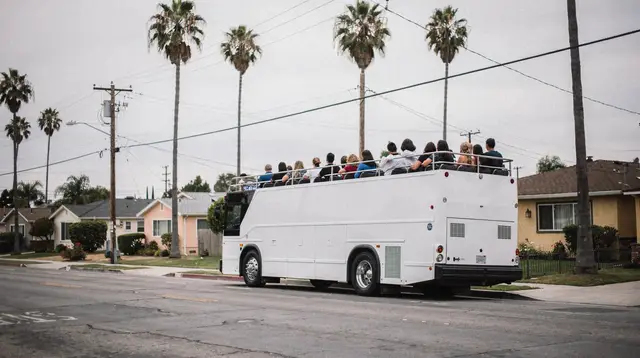
For travelers who want a guided introduction to the city’s landmark sights before or after a Koreatown evening, options like the Los Angeles city highlights tour with a guide or the open-air bus tour through Hollywood and Beverly Hills cover the more conventional sights efficiently, freeing up an evening for Koreatown’s restaurant scene.
For a different perspective on the city entirely — useful context on how Koreatown fits into the wider Los Angeles basin from above — the helicopter tour over Los Angeles landmarks gives a sense of scale that is hard to appreciate at street level, showing how compact districts like Koreatown sit within the much larger sprawl described elsewhere on this site.
And for visitors also planning to take in Griffith Park and its observatory, which sits a short drive north, the Griffith Observatory insider tour is a practical way to skip the parking uncertainty discussed on that destination’s own page.
What Koreatown Is Not
It is worth being direct about what Koreatown does not offer, since expectations set the tone for a good visit. This is not where you will find the Hollywood Sign, major museums, studio backlots or the kind of instantly recognizable landmarks that anchor a first-time visitor’s Los Angeles checklist — those remain concentrated in Hollywood: Inside the Myth of the Movies, Griffith Observatory & Griffith Park, Beverly Hills and Downtown LA.
Koreatown also is not a 24-hour neighborhood in the sense that everything is always open; treating every restaurant as available at 2am on a Tuesday will lead to disappointment. What it does offer — a walkable, Metro-connected concentration of genuinely excellent food, cafe culture and spas, distinct from anywhere else in the city — is reason enough to build in a few hours, even for visitors focused primarily on the more famous sights nearby.
Practical Tips for a Koreatown Visit
- Go hungry and go with a group if possible — Korean barbecue in particular is built around shared tabletop grilling, and portions are often designed for two or more people.
- Ride the Metro D Line when it works for your route — it removes the parking question entirely and drops you within walking distance of the neighborhood’s densest restaurant blocks.
- Check hours before a late-night plan — some spots run around the clock, many do not; do not assume either way.
- Pair a meal with a spa visit — a jjimjilbang afternoon or evening turns a single meal into a half-day plan, and several locations welcome first-time visitors.
- Combine it with a nearby district rather than a separate special trip — Koreatown’s location between Downtown and Hollywood makes it an efficient add-on to a day already built around either.
- Expect the same general climate as the rest of the region — warm, dry summers and a wetter winter, with little variation driven by the neighborhood itself.
For a broader sense of what a Los Angeles food-focused day can include beyond Koreatown, see Food Tours in Los Angeles: Downtown, Hollywood and Beyond; for landmark sights and museums to combine with it, Los Angeles Museums and Landmarks: A Scattered City’s Best Sites; and for a self-paced way to explore on foot, Walking Tours of Los Angeles: Downtown, Hollywood and Beyond. General trip-planning logistics for the wider region are covered in Planning Your Los Angeles Visit: Downtown, Hollywood and the Westside, and the full range of activities across the city sits at Los Angeles Travel Guide: How to Plan Your Visit.
Koreatown, Los Angeles: Frequently Asked Questions About Visiting
Is Koreatown worth visiting if I’ve already seen Hollywood and Downtown LA?
Yes. Koreatown is a different kind of experience: dense blocks of restaurants, cafes and 24-hour spas rather than film-industry sights. It complements a trip built around Hollywood: Inside the Myth of the Movies or Downtown LA rather than duplicating it.
Can I get to Koreatown without renting a car?
Yes, more easily than almost anywhere else in Los Angeles. The Metro D Line runs directly through the neighborhood, connecting it to Downtown LA and, further out, to the Westside extension.
Is Koreatown safe to walk around at night?
Koreatown is a busy, well-lit commercial district that is genuinely at its liveliest in the evening, when many restaurants and cafes fill up. As anywhere in a large city, standard urban precautions apply, but the neighborhood’s evening bustle is part of its character rather than a reason to avoid it.
Are Koreatown restaurants open late every night?
Some are, including a number of 24-hour spots, but this is not universal. Hours vary by restaurant and by day of the week, so it is worth checking a specific place before planning a very late visit rather than assuming every venue keeps late hours.
What is a Korean spa (jjimjilbang) and is it tourist-friendly?
A jjimjilbang is a Korean bathhouse and sauna complex, often with gender-separated bathing areas and mixed-gender lounge floors. Several in Koreatown are set up for visitors with no prior experience, though etiquette, such as bathing nude in gender-separated sections, differs from Western spa norms.
How does Koreatown compare to Downtown LA for a short visit?
Downtown LA centers on Union Station, the Arts District and museums; Koreatown centers on food, cafes and nightlife. They sit close together, roughly 15-25 minutes apart by car or Metro depending on traffic, and pair well as a single afternoon-to-evening loop.
Does Koreatown have things to do beyond eating?
Food is the main draw, but the neighborhood also has karaoke lounges, dessert cafes, Korean supermarkets, spas and a dense street life that rewards simply walking a few blocks. It is not built around a single landmark the way Griffith Observatory & Griffith Park or Hollywood: Inside the Myth of the Movies are.
Is Koreatown part of the city of Los Angeles?
Yes. Unlike incorporated cities such as Beverly Hills or Santa Monica, Koreatown is a neighborhood within the City of Los Angeles proper, roughly between Downtown and Hollywood.