Where to Stay in Los Angeles by Itinerary
Where should I stay in Los Angeles?
There is no single best base — it depends on your itinerary. Theme park trips work best near Anaheim or Universal City, beach-focused trips favor Santa Monica or Long Beach, and desert trips favor Palm Springs. A rental car is usually still necessary even when you pick well, since LA Metro only covers part of the region.
I used to plan LA trips the way I planned trips to most cities: find the “best neighborhood,” book a hotel there, and figure the rest out on foot or by transit. It took one exhausting week of driving forty minutes each way from a hotel near Hollywood to reach Legoland and back for me to realize that approach doesn’t work here. Los Angeles isn’t a city with a center you stay near. It’s a basin-sized patchwork of independent areas, and the “right” place to sleep depends entirely on what you actually came to do.
So instead of ranking neighborhoods, I’ve started planning lodging around the itinerary itself. If you tell me what your trip is built around, I can tell you where to sleep — but I can’t give you one neighborhood that works for everyone, because that neighborhood doesn’t exist.
Start with what your trip actually revolves around
Before booking anything, I ask myself which of these categories my trip falls into, because it changes everything downstream.
A theme-park-centered trip. If Disneyland and Universal Studios Hollywood are the anchor of your days, staying near Anaheim or Universal City saves you real time and money. Anaheim has a huge supply of hotels built specifically around the resort, many within walking distance of the gates, which matters after a twelve-hour park day when nobody wants a forty-minute drive back. If Universal is your main draw instead, Universal City and nearby Burbank keep you close without the Anaheim commute. I go into the tradeoffs between the two parks themselves in my Disneyland vs. Universal Studios Hollywood piece.
A beach-focused trip. If your days are built around Santa Monica, Venice or the South Bay, staying oceanside changes your whole rhythm — you can walk to the pier or the boardwalk in the morning before traffic builds. Santa Monica has the advantage of also sitting on the E line, LA Metro’s rail connection into Downtown, which is genuinely useful if you want an occasional car-free day. Long Beach works the same way at the other end of the region, on the A line, and tends to be cheaper while still putting you near the water and the Queen Mary.
A desert trip. If Palm Springs or Joshua Tree is a core part of your plans, don’t try to day-trip it from a Hollywood hotel — it’s a real drive each way, and doing it twice wastes a day you could spend in the desert. I’d rather stay a night or two actually in Palm Springs, resort pool and all, than commute.
A first-timer’s mix of everything. Most visitors don’t fit cleanly into one category, and that’s fine — it just means the “one perfect neighborhood” question is the wrong question from the start.
Why I stopped believing in a single best base
Los Angeles County has roughly 9.7 million people spread across a metro area that runs into the tens of thousands of square kilometres, with no single walkable core the way a European capital has an old town. Neighborhoods that look close together on a map — say, Downtown LA and Koreatown — can genuinely be twenty or thirty minutes apart in traffic, and the same drive can take twice as long at 5pm as it does at 10am. Picking “somewhere central” doesn’t buy you what it would in most cities, because there isn’t a center for it to be central to.
I’ve written separately about the Downtown LA vs. Hollywood question specifically, and that comparison is worth reading if those two are genuinely your shortlist. But it only answers that one matchup — it doesn’t help if your trip is actually built around Anaheim, the beaches or the desert, which is most of the itineraries I plan around these days.
The Metro covers less than people expect
LA Metro’s rail and bus network is real and useful, but it only reaches part of the region: Downtown, Hollywood, Koreatown, Pasadena, Santa Monica via the E line, and Long Beach via the A line. If your itinerary stays inside that footprint, you can genuinely get by with light car use, filling gaps with rideshare. I look at that question in more detail in do you need to rent a car in Los Angeles and does the LA Metro cover enough of the city.
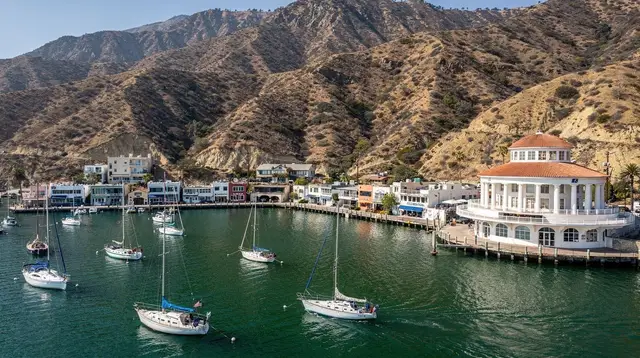
But Anaheim, Palm Springs, Malibu, Catalina’s ferry terminal and most of the beach towns south of Santa Monica sit outside that rail network entirely. I wouldn’t plan a theme-park-and-desert trip around transit at all — a rental car is the honest default there, even if you’ve picked your hotel well. My rental car vs. rideshare comparison walks through when each makes sense.
A rough way I split hotel nights on longer trips
On trips longer than four or five days, I rarely stay in just one place anymore. Splitting nights by itinerary segment has worked better than searching for one hotel that’s “reasonably close to everything,” which in LA usually means reasonably close to nothing.
| Trip segment | Where I’d base myself | Why |
|---|---|---|
| Parks (Disneyland, Knott’s) | Anaheim | Walk to gates, avoid the I-5 commute twice a day |
| Universal Studios | Universal City / Burbank | Minutes from the park, still near Hollywood |
| Beaches, boardwalk life | Santa Monica or Long Beach | Walkable oceanfront, Metro rail access |
| Desert (Palm Springs, Joshua Tree) | Palm Springs | Avoids a two-hour commute each way |
| Museums, Hollywood sights | Hollywood or Koreatown | Central to Griffith Park, studios, LACMA |
I’ve built full versions of this logic into itineraries like three days at the LA beaches, three days in Palm Springs and Joshua Tree, and five days built around the theme parks, plus a two-day budget version aimed at skipping the car if your plans genuinely stay inside the Metro footprint.
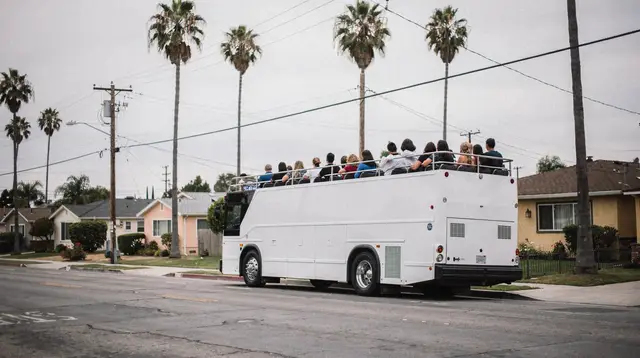
For a first orientation day wherever you land, I still like joining a guided overview — I did a half-day city highlights tour on my first LA trip and it helped me understand how the districts actually connect before I committed to a hotel strategy for the rest of the week. If your base ends up on the Westside, an open-air bus tour through Hollywood and Beverly Hills is a low-effort way to see several areas without adding driving of your own.
Common mistakes I see people make
- Booking one hotel near Hollywood and trying to make it work for a theme-park-heavy trip. It technically can, but you’ll spend a lot of evenings in traffic instead of at the pool.
- Assuming Downtown LA is the natural base because it has “Downtown” in the name. For most leisure itineraries, it isn’t the center of gravity the way a European city’s old town would be.
- Trusting the Metro map to mean you don’t need a car. It covers Downtown, Hollywood, Koreatown, Santa Monica and Long Beach reasonably well — and effectively nothing else on this list.
- Splitting nights too finely on a short trip. On anything under four days, I’d rather commit to one well-chosen base than lose half a day to repacking and checking in twice.
If your trip includes a wider loop — say, LA plus a few nights in Vegas — it’s worth reading about that separately in my from Los Angeles: LA and Las Vegas piece before you lock in lodging on either end, and for a longer Southern California loop a guided option like the seven-day Golden Experience tour handles a lot of the inter-city driving for you.
FAQ: Choosing Where to Stay in Los Angeles by Itinerary
Is there one neighborhood that works for every LA trip?
No. LA is too spread out for a single best base to exist. The right area depends on whether your trip centers on theme parks, beaches, the desert or a general first-time mix, and each of those points toward a different part of the region.
Can I rely on LA Metro instead of renting a car if I pick my hotel well?
Only partly. Metro rail reasonably covers Downtown, Hollywood, Koreatown, Pasadena, Santa Monica (E line) and Long Beach (A line). Anaheim, Palm Springs, Malibu and most beach towns south of Santa Monica sit outside that network, so a car is usually still necessary for a full itinerary.
Where should I stay for a Disneyland-focused trip?
Anaheim itself, within walking distance of the resort gates if possible. It avoids the drive from central LA in both directions and puts you close for early park entry and late closing times.
Where should I stay if my trip is mostly beaches?
Santa Monica or Long Beach both work well — both are walkable oceanfront areas and both sit on LA Metro rail lines, which gives you an easy car-free day option if you want one.
Is Downtown LA a good general base?
It can work for a Downtown- and Hollywood-focused trip, but it isn’t the automatic center of a visit the way an old town would be in a European city. I compare it directly against Hollywood in a separate piece if that’s genuinely your shortlist.
Should I split my hotel nights across multiple areas?
On trips of four or five nights or longer, yes — I usually base near whichever activity cluster (parks, beach, desert) each stretch of days is centered on rather than commuting long distances from one fixed hotel.
How far in advance should I book if my itinerary includes Palm Springs?
I’d book Palm Springs hotels separately from your LA-area stay, since demand and pricing swing seasonally with the desert heat and events like Coachella — treat it as its own leg of the trip rather than a day add-on.
Does staying centrally still mean short drive times in LA?
Not necessarily. Because of traffic patterns, the same distance can take twice as long at rush hour as off-peak, so “central” on a map doesn’t guarantee a short drive at the time you’re actually traveling.
Tours to help plan your Los Angeles trip
Verified deep-linked GetYourGuide tours. Book through these links and we earn a small commission at no cost to you.
GetYourGuide does not provide a product photo for this activity — the image shows the meeting point, photographed by us.