Downtown LA vs Hollywood: Where Should You Stay?
Should I stay in Downtown LA or Hollywood?
Stay in Downtown LA if you want a more urban, business-district base with easy Metro access to Koreatown and Union Station; stay in Hollywood if entertainment sights and nightlife matter more to your trip. Neither puts you close to everything in Los Angeles, and the drive or Metro ride between them runs roughly 20 to 45 minutes depending on traffic.
Two very different LA’s, twenty minutes apart
Before my first trip to Los Angeles, I assumed Downtown and Hollywood would basically function as one area — close enough on the map, both labelled “central” by half the hotel listings I scrolled through. They are not the same area, and treating them as interchangeable is probably the single most common planning mistake I see people make when they book a base for LA.
Downtown LA is the city’s financial and civic core: office towers, Union Station, the Arts District, Grand Central Market, a genuinely walkable grid once you’re inside it. Hollywood is something else entirely — a sprawling entertainment district built around Hollywood Boulevard, the studios, and the hills behind it where the Hollywood Sign sits. One feels like a working city. The other feels like the postcard version of LA that most first-time visitors actually came for. Neither is “the centre” of Los Angeles, because Los Angeles doesn’t really have one — it’s a basin-sized patchwork of districts, and wherever you sleep, you’ll still be driving to see most of what matters.
What actually separates them
The honest answer to “how far apart are they” is: it depends entirely on when you’re asking. I’ve made the drive between Downtown LA and Hollywood in under 20 minutes on a quiet Sunday morning, and I’ve sat in the same stretch of traffic for closer to 45 minutes on a weekday at 5pm. The LA Metro Red Line connects the two directly, and honestly the train is often the more reliable option precisely because it isn’t affected by freeway traffic — but it isn’t instant either, and you’re still looking at a real trip, not a stroll.
That inconsistency is the whole point of this comparison. I’m not going to tell you one drive time, because there isn’t one — only a range that depends on the clock.
| Downtown LA | Hollywood | |
|---|---|---|
| Character | Urban, business, food-hall energy | Touristy, entertainment-focused, busier at night |
| Walkability | Good within the core grid | Good along the Boulevard, patchy beyond it |
| Metro access | Strong — hub for several lines | Good — Red Line runs straight through |
| Best suited to | First-timers who want city buzz + easy transit | Visitors prioritising studios, the Sign, classic sights |
| Typical trade-off | Fewer “iconic” sights right outside the door | Less genuinely walkable beyond the tourist strip |
Why the Metro matters more than people expect
This is the detail that changed how I plan LA trips: the LA Metro rail network genuinely does connect Downtown and Hollywood, and it extends further than most visitors assume, reaching Koreatown and out to Santa Monica on the coast. If your itinerary leans on those four areas, basing yourself in either Downtown or Hollywood and using the train is a workable, car-free way to move around for a chunk of your trip.
Where that plan falls apart is everything the Metro simply doesn’t reach. Beverly Hills isn’t on the rail network. Neither are the South Bay beaches, Malibu, or most of Orange County. I’ve watched people base themselves in Hollywood specifically because the Metro sold them on car-free LA, then discover they still need a rental car or constant rideshare spend the moment their plans include Beverly Hills shopping or a beach day south of Santa Monica. The Metro is a genuine asset for a Downtown-or-Hollywood base — it just isn’t a substitute for a car if your trip reaches beyond the basin’s rail corridor.
Making the actual choice
I’d frame the decision around what you’re spending most of your days doing, not which neighbourhood photographs better.
Lean Downtown if: you want a more grown-up, less tourist-saturated base; you’re planning day trips that start at Union Station or lean on Metro connections to Koreatown; you’d rather eat at Grand Central Market than chase a studio tour every evening; and you don’t mind that the Hollywood Sign, Griffith Observatory and the Boulevard are a deliberate trip out rather than a walk from your hotel.
Lean Hollywood if: the entertainment-industry sights are the actual reason you booked this trip — Hollywood Boulevard, the studios, hikes up toward the Sign, Griffith Observatory; you want to be able to walk to dinner and nightlife without planning around it; and you’re comfortable that Downtown’s skyline and food scene will be a deliberate excursion rather than a five-minute stroll.
Neither choice gets you a hotel that’s genuinely close to everything worth seeing in the region — that’s not how this city is built, and I’d be doing you a disservice if I implied otherwise. A Downtown base still means a real drive or train ride out to the Sign. A Hollywood base still means a real trip down to the Arts District. That’s simply the shape of Los Angeles: choose your base by what you’ll do most, then budget honest travel time for the rest, checking traffic before you commit to a departure hour rather than assuming a fixed number of minutes either way.
If you’re staying in Hollywood and want a guided first taste of the wider city without renting a car on day one, I’ve used a guided highlights tour that loops through the major sights as a good way to get oriented before deciding where I actually want to return on foot.
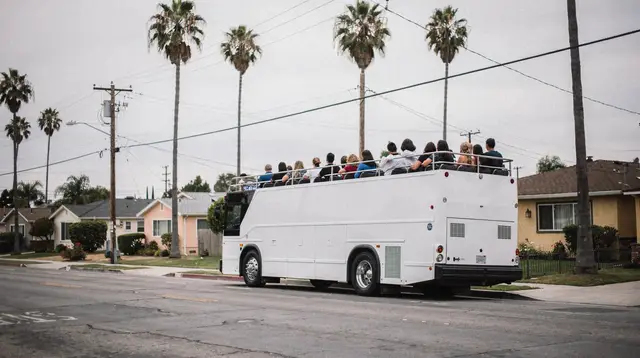
For a Downtown base with West Side ambitions, an open-air bus tour through Hollywood and Beverly Hills covers a lot of ground the Metro simply doesn’t reach. And if the Hollywood Sign is genuinely the point of your trip, I’d rather book a proper guided hike up to a Sign viewpoint than spend an afternoon hunting for the right angle on my own.
A quick note on Koreatown and Santa Monica
Both deserve a mention because they sit on the same Metro line and pull some visitors away from Downtown or Hollywood entirely. Koreatown has some of the best food in the city and is a genuine option as a quieter, more local base with strong rail access. Santa Monica trades city energy for beach mornings, at the cost of being further still from the Hollywood-district sights. Neither is “wrong” — they’re just a different bet on how you want to spend your evenings, and worth weighing against Downtown and Hollywood before you book, using our itinerary comparisons as a starting point.
FAQ: choosing between Downtown LA and Hollywood
Is Downtown LA or Hollywood better for first-time visitors?
Neither is objectively better — it depends on what pulls you to LA. Downtown suits visitors who want an urban, food-and-transit-forward base; Hollywood suits visitors prioritising entertainment sights like the Boulevard and the Sign.
How long does it take to get from Downtown LA to Hollywood?
It varies significantly by time of day — the Metro Red Line or a drive can take roughly 20 minutes off-peak, but the same trip can stretch toward 45 minutes during weekday rush hour. Always check current traffic before planning a tight schedule.
Can I get around without a car if I stay in Downtown or Hollywood?
To an extent. The Metro connects both districts with Koreatown and Santa Monica reasonably well, but it doesn’t reach Beverly Hills, most of the South Bay beaches, or Orange County, so a car or frequent rideshare is still needed for a fuller itinerary.
Is Hollywood within walking distance of the Hollywood Sign?
No. The Sign has no direct pedestrian access from the district; it’s viewed from marked overlooks and trails in Griffith Park, reached by a short drive, rideshare or a dedicated hike, not a walk from a Hollywood hotel.
Is Downtown LA safe to stay in?
Like most large US downtowns, it has areas that feel more or less comfortable depending on the block and time of day. Sticking to well-trafficked areas around the core, Union Station and the Arts District is the approach most visitors take.
Does staying in Downtown or Hollywood put me close to the beach?
Not really. Santa Monica and Venice are a real drive or Metro-plus-transfer trip from either district, generally 30 to 45 minutes depending on traffic, so budget that time rather than treating the coast as a quick add-on.
Which is better for nightlife, Downtown or Hollywood?
Both have real nightlife scenes but different in character — Downtown leans toward rooftop bars and a food-hall-adjacent crowd, while Hollywood’s Sunset Strip and Boulevard area lean louder and more tourist-heavy. Neither is a walkable hub for every style of night out.
Should I split my stay between Downtown and Hollywood?
It’s a reasonable option on a longer trip if your plans are genuinely split between both areas’ sights, since it avoids repeated long transfers — though it does mean packing and moving hotels partway through your trip.
Tours to help plan your Los Angeles trip
Verified deep-linked GetYourGuide tours. Book through these links and we earn a small commission at no cost to you.
GetYourGuide does not provide a product photo for this activity — the image shows the meeting point, photographed by us.