Two Days in Los Angeles Without a Car, on a Budget
Can you see Los Angeles in two days without renting a car?
Yes, but only a slice of it. The LA Metro rail network connects Hollywood, Downtown LA and, via a transfer, Santa Monica reasonably well, so a two-day no-car trip works if it stays inside those three areas. Venice Beach, Malibu, the Getty Center and most of the coastline are not realistically reachable this way.
Why This Itinerary Is the Exception, Not the Rule
Most Los Angeles itineraries on this site assume a rental car, because most of the region genuinely needs one — the beaches, the desert and the museums up in the hills simply are not on a rail line. This one is different on purpose: it is built for visitors who, for cost or preference, want to skip the car entirely. That trade-off only makes sense in one part of the region, so this itinerary stays inside it: Hollywood, Downtown LA and Santa Monica, connected by LA Metro rail with one transfer along the way.
If you want a wider first visit that includes Griffith Observatory and moves at a car’s pace, see two days for a first-time visit to Los Angeles instead — that version covers more ground because a car allows it. This one deliberately does not try to match that pace. Expect longer connection times than a car trip, plan around Metro service hours, and do not expect this route to reach Venice Beach, Malibu or the wider coastline — those areas are outside what rail transit here can practically deliver.
Skipping the car also changes the kind of trip this is, not just the areas it covers. Without a rental to fall back on, the itinerary has to be honest about what a Metro connection can and cannot do, rather than papering over the gaps with a rideshare “just this once.” That is a deliberate constraint, not an oversight: the value of this itinerary is in showing exactly where the no-car version of Los Angeles holds up and where it does not, so you can decide for yourself whether the trade-off is worth it before you arrive.
What the Metro Actually Connects Here
LA Metro’s rail network reaches Hollywood and Downtown LA directly, and reaches Santa Monica by transferring onto the E Line. That is the entire footprint this itinerary relies on. It does not extend to Venice Beach, Malibu, Beverly Hills or the South Bay, and walking between rail-connected areas and those places is not realistic given the distances involved in Los Angeles. Build your expectations around three areas, not the whole coastline, and check Metro’s posted service hours and weekend schedules before you plan your last connection of the day, since gaps between trains lengthen later in the evening.
Day 1: Hollywood in the Morning, Downtown LA in the Afternoon
Start in Hollywood, reachable directly by Metro rail, and spend the morning around Hollywood Boulevard and the surrounding blocks on foot — this is one of the few stretches of Los Angeles genuinely built for walking. A guided option that covers the district’s landmarks without extra transfers is the Hollywood Sign guided hike, useful if you want a closer view of the sign than the street-level vantage points allow, since there is no direct road or path to its base from Hollywood itself.
By early afternoon, take the Metro rail connection into Downtown LA. Union Station is the natural arrival point and a landmark in its own right; from there, the Arts District, Grand Central Market and the cluster of museums around Grand Avenue are within walking distance of each other, which makes Downtown the second area — after Hollywood — where this no-car plan works comfortably. A structured way to cover the district without guesswork is the Downtown LA tour, which strings together the main landmarks in one outing.
Plan your return or onward connection with the Metro’s evening schedule in mind — service intervals lengthen later in the day, so build in extra time rather than assuming a quick connection.
Day 1 at a Glance
| Time | Area | What to Expect |
|---|---|---|
| Morning | Hollywood | Walkable core, Hollywood Boulevard, sign viewpoints |
| Early afternoon | Metro transfer | Direct rail link, no additional transfer needed |
| Afternoon–evening | Downtown LA | Union Station, Arts District, museums, Grand Central Market |
Day 2: Santa Monica, With a Transfer to Plan For
Santa Monica is the one destination on this itinerary that requires a rail transfer rather than a direct line, so treat it as its own half-day rather than something to squeeze in around other stops. The connection lands you near Santa Monica itself, from which the pier and the beachfront promenade are walkable. This is also the point where the itinerary’s limits are clearest: Venice Beach and its canals are a further walk or a second local transfer away, and Malibu is well outside what this route can reach in a day — both are covered in the car-based itineraries on this site, not here.
A tour that pairs the pier area with a Hollywood Sign viewpoint in one outing, useful if you did not fit that view into Day 1, is the Santa Monica Pier and Hollywood Sign tour. For a slower afternoon that does not depend on any further transfers, a simple beachfront option is the Santa Monica beach picnic, which keeps the rest of the day within walking distance of the pier.
Head back toward your transfer point with enough margin for the return connection — the same rule as Day 1 applies: Metro’s later-day intervals are longer than midday ones, so do not plan a tight final connection.
Day 2 at a Glance
| Time | Area | What to Expect |
|---|---|---|
| Morning | Metro transfer to Santa Monica | One transfer, plan the connection window |
| Midday–afternoon | Santa Monica | Pier, promenade, walkable beachfront |
| Late afternoon | Return connection | Longer intervals later in the day |
What This Route Does Not Cover
Being honest about the gaps matters more here than in a car-based itinerary. This plan does not reach Venice Beach as a full stop, does not reach Malibu or the Pacific Coast Highway, and does not reach Griffith Observatory, Beverly Hills, West Hollywood or the South Bay beaches. None of those are on a rail line that connects cleanly to Hollywood, Downtown LA or Santa Monica within a reasonable transfer. If any of those places are a priority, either add a rideshare leg for that portion specifically or look at two days for a first-time visit or one day in Hollywood and Griffith, both of which assume a car and reach further.
For getting a broader sense of how much of the city transit actually covers before you commit to a no-car trip, see does the LA Metro cover enough of the city and do you need to rent a car in Los Angeles.
Keeping the Budget Side of This Trip Honest
The reason to go car-free in Los Angeles is almost always cost, not novelty, so it is worth naming what the trade-off actually buys. A rental car in Los Angeles comes with a daily rate, parking at or near hotels, museums and beach lots, and gas — costs that a Metro rail ticket does not carry. What you give up in exchange is coverage: this itinerary reaches three areas well, not the dozen or more that a car-based two-day plan can string together, such as the version outlined in two days for a first-time visit to Los Angeles.
If your priority is minimizing spend rather than maximizing ground covered, that trade generally favors the Metro. If your priority is seeing as much of the region as possible in two days, it does not, and a car-based itinerary or a rideshare budget for the gaps will serve you better. Either way, decide before you land rather than partway through Day 1, since switching strategy mid-trip usually costs more than picking one approach from the start.
Practical Notes for a No-Car Trip
Wear comfortable shoes — the walkable stretches within Hollywood, Downtown LA and Santa Monica are the parts of this plan that work well, and you will be on foot for most of each day once you arrive. Check Metro’s current rail map and service hours before you travel, since transfer points and evening frequency can shift. Build slack into your schedule around the Santa Monica transfer in particular, since it is the one connection in this itinerary that is not direct. If you are staying near Downtown LA or Hollywood, you are already close to a rail stop, which simplifies the whole two days.
For a wider look at planning a trip around the city’s layout, Los Angeles trip planning and things to do in Santa Monica are useful starting points beyond this specific itinerary.
FAQ: A Two-Day No-Car Los Angeles Itinerary
Is it realistic to see Los Angeles in two days without a car?
Only within a limited area. This itinerary works because Hollywood, Downtown LA and Santa Monica are the three areas the LA Metro rail network connects reasonably well, including one transfer to reach Santa Monica. Most of the wider region, including the desert, the Getty Center and much of the coastline, is not reachable this way.
Does the Metro reach Venice Beach or Malibu?
Not directly and not within this itinerary’s scope. Venice Beach requires a further walk or local transfer beyond the Santa Monica stop, and Malibu is well outside the rail network entirely. Both are covered in car-based itineraries elsewhere on this site.
How long does the transfer to Santa Monica take?
It depends on the connection and time of day, and it is longer than a direct rail ride — this itinerary treats Santa Monica as a dedicated half-day rather than a quick add-on for that reason. Always check current Metro schedules before you travel, since service intervals lengthen later in the day.
Will this itinerary take as long as the same route by car?
No. Rail transfers add time that a direct drive would not, and this plan deliberately does not promise car-equivalent travel times. It trades some speed and coverage for not needing a rental car.
What should I do if I want to reach Griffith Observatory or the beaches beyond Santa Monica?
Add a rideshare leg for that specific portion, or choose a car-based itinerary instead, such as two days for a first-time visit to Los Angeles, which includes Griffith Observatory.
Is Hollywood or Downtown LA more walkable once you arrive by Metro?
Both are walkable once you are there, which is part of why this itinerary works. Hollywood Boulevard and the surrounding blocks form a compact core, and Downtown LA’s Arts District, Grand Central Market and museum cluster sit within walking distance of Union Station.
Do I need to book tours in advance for this itinerary?
It is worth checking availability ahead of time for the guided options mentioned here, particularly around weekends, though this itinerary itself does not require any tour bookings — the Metro connections and walkable cores are the backbone of the two days.
Why doesn’t this site recommend going car-free everywhere in Los Angeles?
Because most of the region genuinely is not set up for it. This itinerary is presented as a deliberate exception, limited to the three areas the Metro rail network actually connects — it is not a template for the rest of a Los Angeles trip.
Tours to help plan your Los Angeles trip
Verified deep-linked GetYourGuide tours. Book through these links and we earn a small commission at no cost to you.
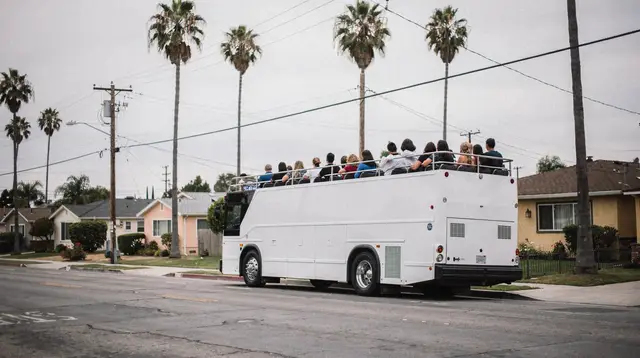
GetYourGuide does not provide a product photo for this activity — the image shows the meeting point, photographed by us.