Las Vegas from Los Angeles: Car or Plane?
Should I drive or fly from Los Angeles to Las Vegas?
Driving suits groups of two or more, longer stays, and anyone who wants to stop in the desert along the way, but the four-hour estimate can stretch well beyond that in Friday evening or Sunday afternoon traffic. Flying is faster door to door for a short solo or two-person trip once you add airport time, but it removes the flexibility of the drive and rarely comes out cheaper per person once bags and transfers are counted.
I have made the Los Angeles to Las Vegas run more times than I can count, by both car and plane, and I still don’t have a single answer for which is “better.” It genuinely depends on who is coming with you, how long you are staying, and whether you want the desert itself to be part of the trip rather than just the gap between two cities. This isn’t about what to do once you land in Las Vegas — for that, the Las Vegas from Los Angeles destination page covers the stay itself. This is purely about how to get there and back.
The drive: roughly four hours, until it isn’t
On a clear run, Los Angeles to Las Vegas is around four hours of driving, mostly on I-15 once you’re out past the Inland Empire. I want to be careful here: I can’t promise you four hours, and neither can anyone else. Leave the LA basin on a Friday afternoon and that same drive can turn into six or seven hours, bumper to bumper past Barstow, with everyone else in Southern California apparently making the same trip at the same time. Sunday afternoon back into LA is its own kind of slow. If your schedule is flexible, a weekday departure or a very early Saturday morning start avoids most of it.
What the drive gives you that flying never will is the ability to stop. Some of my favourite Vegas trips have included a detour into Joshua Tree National Park or a stretch through the wider desert adventures around the Mojave, turning a transit day into part of the holiday rather than dead time. If you’re driving anyway, it costs you almost nothing extra to leave an hour early and take the scenic detour.
The car also means you decide when you leave and when you come home, with no gate to make and no bag drop cutoff. For anyone road-tripping the wider desert and mountains region — Palm Springs, Big Bear Lake, the Mojave — a rental car you already have makes Vegas an easy add-on rather than a separate booking. If you haven’t decided yet whether a car makes sense for the Los Angeles part of the trip too, do you need to rent a car in Los Angeles is worth reading before you book anything, and our broader Los Angeles day trips guide covers other places this same rental can take you.
The flight: fast in the air, slower than it looks
The flight itself from LA to Las Vegas is short, under an hour in the air. But that number is misleading on its own. Add the drive to whichever airport you’re using, security, boarding, taxiing, and then the time to collect bags and get a cab, rideshare or shuttle from Harry Reid into the city, and a “one-hour flight” routinely eats three to four hours door to door — which puts it a lot closer to the driving time than the flight schedule suggests, especially once you’re going to a Strip hotel rather than the airport itself.
Where the flight does win is in a specific, if fairly common, scenario: one or two people, a short trip, no interest in stopping anywhere along I-15, and a preference for not spending a chunk of a short weekend behind the wheel. If that’s you, and especially if you’re staying central on the Strip and don’t plan to leave it, flying can make sense even once you count the airport time.
Which airport actually matters
This is the part people underestimate. Los Angeles has five realistic airports for this trip — LAX, Hollywood Burbank (BUR), Long Beach (LGB), John Wayne in Orange County (SNA), and Ontario (ONT) — and picking the right one changes your access time more than almost any other decision in this comparison. If you’re staying in the South Bay or west side, LAX is closest, but it’s also the biggest and slowest to navigate. If you’re based near Pasadena or the Valley, Burbank is usually a far calmer start to the trip.
Anyone coming from Orange County or the Inland Empire is often better off at John Wayne or Ontario than fighting traffic across the basin to LAX. Whichever airport you choose, build in real buffer for getting there — LA traffic doesn’t care that you have a flight. Our general Los Angeles transport guide has more on getting around the basin itself, and if you’re weighing a rideshare against a rental for the LA end of the trip, rental car vs. rideshare in Los Angeles walks through that separately from the Vegas question.
On the Las Vegas side, once you’ve landed or arrived, a private transfer to or from Las Vegas can smooth out exactly the door-to-door gap that makes flight times misleading in the first place, since it removes the rideshare-availability guesswork at Harry Reid.
Group size changes the maths
A rental car has a fixed cost whether one person is in it or four, which is exactly why it stops making sense to fly as a group grows. Two people can usually split a hotel room reasonably evenly between driving and flying once gas, tolls and parking are weighed against flights and airport transfers on both ends. Three or four people sharing one rental car is where driving pulls clearly ahead — you’re paying for one vehicle and one tank of gas rather than three or four separate plane tickets, and I won’t put an exact number on the gap because gas prices, flight fares and parking rates all move independently and change by season. What I can say is that the larger the group, the harder it is for flying to compete.
Solo travellers are the flip side. A solo flyer isn’t splitting a car with anyone, so the per-person cost of driving alone can end up close to, or even above, a one-way fare, depending on what’s on sale that week.
Length of stay matters as much as group size
For a quick overnight or a single night in Vegas, I lean toward flying if I’m not driving with anyone else, simply because I don’t want to spend a third of a very short trip in the car each way. For anything from three nights up, the maths shifts: the driving time becomes a smaller share of the total trip, and having your own car in Las Vegas — useful for a side trip to Red Rock Canyon or just not being dependent on rideshare pricing on the Strip — starts to matter more. If you’re stringing Las Vegas together with a longer look at the wider desert and mountains region, driving is close to essential rather than optional.
Turning the drive into a bigger desert loop
Because the I-15 corridor runs so close to some of the best desert scenery in the region, a Vegas trip by car doesn’t have to be a there-and-back. Our desert adventures around Las Vegas from LA guide covers options for building the drive itself into an experience, and the wider Joshua Tree National Park desert adventures and Palm Springs desert adventures guides work well if you’re detouring through either on the way.
Some travelers extend the loop further still to Death Valley, though that’s a bigger add-on than a quick stop and worth planning as its own leg rather than an afterthought.
If you’re deciding between Joshua Tree and Palm Springs as the detour, Palm Springs vs. Joshua Tree breaks down the difference in what each actually offers a road-tripper. And if Las Vegas is only one stop in a longer Southern California and desert itinerary, our seven-day Los Angeles and Las Vegas itinerary and the Grand Canyon, Las Vegas and desert itinerary both build the drive in as part of a bigger trip rather than a separate errand.
Booking the trip either way
If you’d rather not manage the logistics of either option yourself, a guided option removes the whole car-versus-plane decision: a three-day Las Vegas tour from Los Angeles with accommodation included handles transport, hotel and a chunk of the itinerary in one booking, which can be worth the premium if you’d rather not think about I-15 traffic at all.
For a longer combined trip that treats the whole region as one itinerary rather than a single there-and-back, a seven-day Golden Experience tour from Los Angeles strings together Vegas with other stops without you having to plan the driving or flying yourself. And if you’re only in LA for a short window before or after the Vegas leg, it’s worth pairing the trip with a full day covering the heart of Los Angeles so the city itself doesn’t get reduced to an airport layover.
How I’d actually decide
My rough rule after doing this both ways more times than I can count: two or more people and three or more nights, I drive, ideally leaving early on a weekday or Saturday morning rather than Friday evening. Solo or as a pair for a short one or two-night trip with no interest in the desert scenery, I fly, and I pick the airport based on where I’m starting from in LA rather than defaulting to LAX. Neither choice is objectively cheaper — it moves with gas prices, flight fares and parking costs too often for anyone to give you a fixed number — so I’d rather decide on time and flexibility than chase a cost comparison that will be out of date by the time you book.
FAQ: Driving vs. flying from Los Angeles to Las Vegas
How long does it actually take to drive from Los Angeles to Las Vegas?
Around four hours in free-flowing traffic, mostly on I-15. That figure can stretch significantly, sometimes to six or seven hours, during Friday evening or Sunday afternoon peak traffic, so departure timing matters more than the base distance.
Is flying to Las Vegas actually faster than driving?
The flight itself is under an hour, but once you add getting to the airport, security, boarding and then transport from Harry Reid into the city, door-to-door time is often only slightly shorter than driving, and sometimes about the same.
Which Los Angeles airport should I fly from for Las Vegas?
Whichever is closest to where you’re staying in the LA region: LAX, Hollywood Burbank, Long Beach, John Wayne in Orange County, or Ontario. The right choice depends more on your starting point than on which airport has the most flights.
Is it cheaper to drive or fly to Las Vegas?
It depends on group size, the season, and current gas and airfare prices, so there’s no fixed answer. As a rule of thumb, a shared rental car tends to work out better for groups of three or more, while solo travellers or pairs on short trips often find flying comparable or cheaper.
Can I stop somewhere on the way to Las Vegas if I drive?
Yes, and it’s one of the best reasons to drive rather than fly. The route runs near desert areas worth a detour, including Joshua Tree National Park, making it easy to turn the drive itself into part of the trip.
Does renting a car in Las Vegas make sense if I fly there?
It depends on your plans once you arrive. If you intend to stay on the Strip the whole time, you likely won’t need one; if you want to see Red Rock Canyon or the surrounding desert, having a car in Las Vegas adds real flexibility.
Is the drive from Los Angeles to Las Vegas safe to do in one go?
Most people drive it in one stretch without issue, but it crosses genuine desert with long gaps between services, so it’s worth checking fuel and water before setting off, particularly in summer heat.
What’s the best day and time to drive to avoid traffic?
Weekday departures or an early Saturday morning tend to be the calmest. Friday evenings and Sunday afternoons are consistently the worst, with traffic that can double the normal driving time.
tours.Comparison
Verified deep-linked GetYourGuide tours. Book through these links and we earn a small commission at no cost to you.
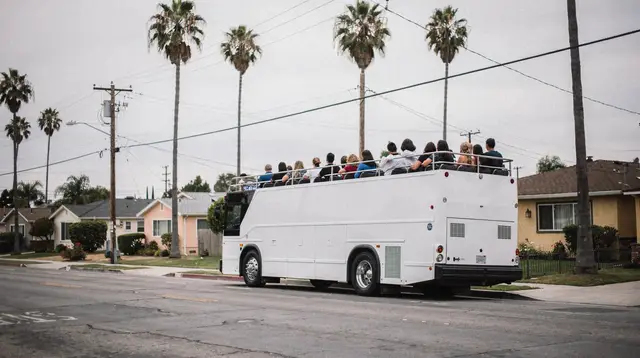
GetYourGuide does not provide a product photo for this activity — the image shows the meeting point, photographed by us.