Getting Around Los Angeles: Transfers and Transport Explained
What is the best way to get around the Los Angeles region?
A rental car is the practical default for most of the Los Angeles region, since LA Metro only reaches a handful of corridors. Private transfers or rideshare cover airport runs and one-off trips, and a private car with driver or a shuttle makes sense for a day trip to Las Vegas or a group outing.
Why transport planning matters more here than most cities
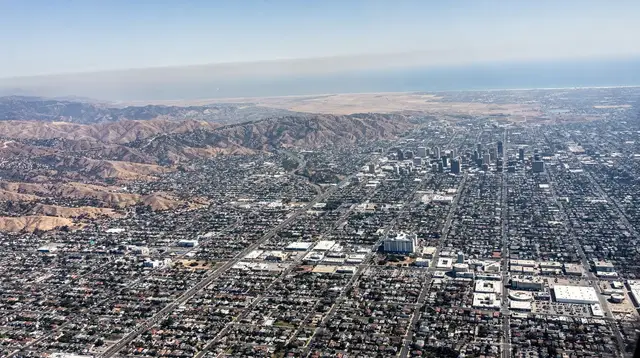
Most destinations have a centre a visitor can walk from. Los Angeles does not work that way. The region is a basin ringed by mountains, stretching from the coast to the desert, and the places worth seeing — Hollywood, the beaches, Downtown, the studios, Orange County, the desert resorts — sit tens of kilometres apart with freeways in between rather than a walkable core. Before any itinerary can make sense, it helps to settle how you will actually move between those pieces, because the answer is not the same for every visitor.
This page is about the logistics layer: which airport to land at, when a private transfer or chauffeured car earns its cost, what the Metro can and cannot do, and what it takes to reach Las Vegas or come in from Long Beach. It is deliberately not a list of things to do — for that, the things to do in Los Angeles hub and the destination pages cover the sights themselves.
Five airports, one region
Los Angeles is unusual in having a genuine choice of gateways rather than one obvious airport. LAX remains the main international hub and the default for long-haul arrivals, but it is also one of the more congested airports to clear and drive away from, particularly in the afternoon.
| Airport | Code | Best suited to |
|---|---|---|
| Los Angeles International | LAX | International flights, widest route choice |
| Hollywood Burbank | BUR | Staying in Hollywood, Downtown or the San Fernando Valley |
| Long Beach | LGB | Staying in Long Beach, the South Bay or Orange County’s north |
| John Wayne (Orange County) | SNA | Staying in Orange County, Newport Beach, Laguna Beach or near Disneyland Anaheim |
| Ontario | ONT | Staying in the Inland Empire or heading toward Palm Springs or the desert |
Choosing the right one depends entirely on where you plan to sleep for most of the trip. A visitor based in Orange County who flies into LAX can lose an hour or more each way compared with landing at John Wayne, simply because of the drive across the basin. The same logic applies in reverse for a Hollywood-based stay and Burbank.
a private transfer service covering both LAX and John Wayne in Orange County is one practical way to handle the arrival leg without needing to rent a car on day one, especially for a late-night landing.
Getting from the airport to your hotel
Once you land, the options at any of the five airports break down into roughly the same categories: rideshare (Uber or Lyft, usually from a designated pickup zone rather than the curb outside arrivals), a taxi rank, a pre-booked private transfer, or picking up a rental car on-site.
A private transfer is booked ahead of time, with a driver tracking your flight and waiting with a name board or meeting point rather than being hailed on arrival. This removes the uncertainty of finding rideshare pricing during a surge period, or queuing for a taxi with luggage after a long flight. It costs more than rideshare on an average day, but the price is fixed at the time of booking rather than fluctuating with demand.
a private luxury transfer specifically for LAX arrivals and departures works well for exactly that scenario — a fixed, pre-agreed cost with a driver who has already confirmed your flight time.
Rideshare remains the more flexible, generally cheaper option for a single traveller or a couple with light luggage, and it is available at every airport in the region. The trade-off is that pricing and wait times vary with demand, and pickup points are sometimes a shuttle-bus ride away from the terminal itself rather than immediately outside baggage claim.
Do you actually need a rental car?
For most itineraries covering more than Downtown LA, Hollywood and a couple of nearby neighbourhoods, the honest answer is yes. The region’s attractions — the Getty Center, Malibu, the desert resorts, most of Orange County — sit well beyond a reasonable rideshare radius from any one hotel, and doing several of them across a multi-day stay without a car usually means either long, repeated rideshare costs or accepting that some places simply stay off the itinerary.
That said, a car-free trip is realistic if your plans are deliberately narrow: a stay centred on Downtown, Hollywood, Koreatown, Santa Monica or Long Beach, moving between them on LA Metro rail and filling in the gaps with rideshare. It works better as a short city-focused visit than as a full regional tour.
| Scenario | Best fit |
|---|---|
| Downtown, Hollywood, Koreatown, Santa Monica, Long Beach only, short stay | Metro + rideshare, no car needed |
| Adding Malibu, the Westside hills, Pasadena or Orange County | Rental car or private transfers for those legs |
| Desert (Palm Springs, Joshua Tree) or Central Coast add-on | Rental car strongly recommended |
| One-off evening out, group of four or more | Chauffeured car or party bus rather than rideshare convoy |
For a deeper comparison of the car-versus-rideshare decision on its own, see rental car vs rideshare in Los Angeles and do you need to rent a car in Los Angeles.
What LA Metro actually covers
LA Metro’s rail network is a genuine option for parts of the basin, but it is limited by design rather than by any recent cutback — the region grew around freeways, and the rail lines fill in only some of it. The corridors that matter most for visitors are Downtown, Hollywood and Koreatown (served by several lines converging near Downtown), the E Line reaching Santa Monica, and the A Line reaching Long Beach.
What Metro does not do is connect to any of the five airports directly, reach Malibu, Beverly Hills, most of the Westside hills, Orange County or the desert. Anyone whose plans lean on those places will need a car, rideshare or a private transfer for at least part of the trip, no matter how the rest of the itinerary is arranged. For a closer look at where the coverage gaps actually fall, see does the LA Metro cover enough of the city.
Private cars, chauffeured tours and group transport
Beyond the airport run, a private car with a driver has a role for anyone who wants to see several spread-out sights in one day without worrying about parking at each stop, or a driver who already knows the freeways well enough to route around the worst of the traffic. This differs from an airport transfer in that it is booked by the hour or by the itinerary rather than for a single point-to-point trip.
A private, guided option built around the city’s landmark sights removes the driving and parking questions entirely for a full day. a guided tour covering the city’s landmark sights with a private guide is one way to see a curated route without self-navigating.
For evenings out with a larger group, a chauffeured vehicle sized for the whole party avoids splitting into multiple rideshare cars and losing each other between stops. a chauffeured party bus rental sized for a group night out suits a bar crawl, a birthday or a wedding party moving between several venues on a fixed schedule. On the more theatrical end of the same idea, a themed limo tour built around the city’s gangster-era history is a novelty option some visitors use as their one splashy transport experience of the trip rather than a practical necessity.
Traffic, timing and why no drive time is fixed
Every driving distance in this region is really a driving-time question, and driving time moves with the clock, not just the map. Weekday mornings and the late afternoon through early evening commute are the predictable peaks, and the same route between two points can genuinely take close to twice as long during those windows as it does in free-flowing traffic outside them.
This matters directly for transfers: a driver quoting an estimated pickup or drop-off time is giving a reasonable expectation based on typical conditions, not a guarantee that holds regardless of an accident, a Friday afternoon commute, or a holiday weekend. Building in a buffer before a flight, a show or a dinner reservation is the safer habit, especially for any transfer crossing the width of the basin rather than staying within one district. For more detail on how to think about this across an itinerary, see driving and parking in Los Angeles.
Reaching Las Vegas from Los Angeles
A trip to Las Vegas is a genuinely popular add-on from Los Angeles, and it sits at a distance where either driving or flying is a reasonable choice — roughly four hours of road time under normal conditions, though desert heat, holiday traffic and roadworks on the connecting highway can extend that noticeably. It is not a same-day round trip in practice; most visitors treat it as an overnight stay or longer.
a longer escorted tour from Los Angeles that includes a Las Vegas stop as part of a wider Southwest route is one way to fold the Las Vegas leg into a broader trip rather than arranging transport separately. For a direct comparison of driving versus flying for this specific route, see Las Vegas from Los Angeles: car or plane, and for a full week combining both cities, the seven-day Los Angeles and Las Vegas itinerary lays out a workable pace.
Coming in from Long Beach
Long Beach sits at the southern edge of the Los Angeles basin, close enough to Orange County that visitors staying there sometimes treat it as a base for both regions. It has its own airport (LGB), a Metro A Line connection running north into Downtown, and a straightforward freeway link for anyone driving or using a private transfer.
The choice between the Metro, a rideshare and a private transfer for the Long Beach-to-Downtown leg comes down to the same trade-offs as elsewhere in the region: the A Line is a reliable, low-cost option if your hotel and destination both sit near a station, while a private transfer or rideshare makes more sense with luggage, a tight schedule, or an origin and destination that fall between stations.
A rough transport decision guide
| Your situation | Reasonable choice |
|---|---|
| Arriving with luggage after a long flight, no car booked | Private airport transfer |
| Solo or couple, staying in one or two central districts | Metro + rideshare |
| Multi-day trip covering beaches, hills and Downtown | Rental car |
| Full-day sightseeing with a guide, no driving wanted | Chauffeured private tour |
| Group of six or more for one evening | Chauffeured van or party bus |
| Trip extension to Las Vegas | Escorted multi-day tour, or drive/fly separately |
| Based in Long Beach, day in Downtown | Metro A Line or private transfer |
For the wider question of how much time to budget across the whole region before worrying about any single transfer, how many days in Los Angeles and where to stay in Los Angeles by itinerary are useful starting points, and the two-day budget Los Angeles without a car itinerary shows what a car-free plan looks like end to end. The map tool and budget tool can help sanity-check both distances and costs before booking anything.
Los Angeles transfers and transport: frequently asked questions
Which airport should I fly into for Los Angeles?
LAX is the main international gateway, but Hollywood Burbank, Long Beach and John Wayne in Orange County are often faster to clear and can cut significant driving time depending on where you are staying. Ontario, further inland, is a fourth option for the eastern part of the region.
Can I get by without a rental car in Los Angeles?
It is possible if your trip stays close to Downtown, Hollywood, Koreatown, Santa Monica or Long Beach, where LA Metro rail lines run. Once your plans include Malibu, the desert, Orange County or most of the hillside sights, a car, a private transfer or rideshare becomes necessary.
Does the Metro connect to LAX or the other airports?
No. LA Metro does not run directly into any of the region’s airports. Reaching LAX, Burbank, Long Beach, John Wayne or Ontario from the rail network still requires a shuttle, rideshare, taxi or private transfer for at least the final leg.
How long does it take to drive from Los Angeles to Las Vegas?
A private transfer or self-driven trip to Las Vegas is on the order of four hours under normal conditions, though holiday weekends and desert traffic can add substantially to that. It is a long day-trip distance rather than a short hop, so most visitors treat it as an overnight or multi-day excursion.
Do private airport transfers need to be booked in advance?
Yes. Private transfers and shuttles are reserved ahead of time with a pickup window, not hailed on the spot, and drivers build in some flexibility for traffic and flight delays. Booking a return leg at the same time as the arrival transfer is usually simpler than arranging it later.
Is a chauffeured car or party bus worth it for a group?
For groups moving between several venues in one evening, a chauffeured vehicle removes the need to coordinate parking, rideshare pickups and designated drivers across multiple cars. It suits a fixed itinerary or a night out more than an open-ended day of sightseeing.
What is the transfer situation for Long Beach visitors heading into Los Angeles?
Long Beach sits south of Downtown LA and is connected by both the LA Metro A Line and by road, so a private transfer, rideshare or drive are all realistic options. Traffic on the connecting freeways varies enough by time of day that no fixed transfer time can be guaranteed.
Transfers and Transport
Verified deep-linked GetYourGuide tours. Book through these links and we earn a small commission at no cost to you.
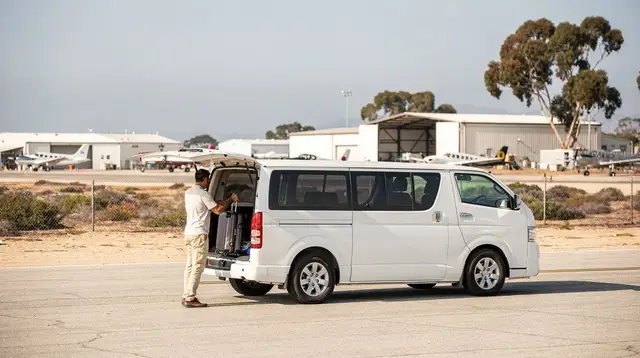
GetYourGuide does not provide a product photo for this activity — the image shows the meeting point, photographed by us.