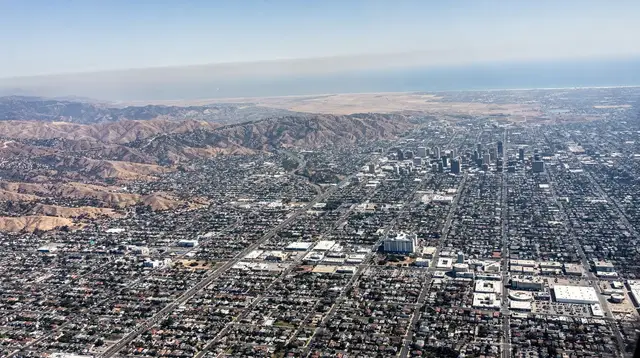
Getting Around the Central Coast: Santa Barbara, Solvang and Beyond
Do you need a car to visit Santa Barbara and the Central Coast?
Yes. There is no Metro-style rail or bus network linking Santa Barbara, Solvang, the Santa Ynez Valley, Ojai and San Luis Obispo — a rental car is the only realistic way to move between these towns. Santa Barbara itself is walkable in its compact downtown core, but everything beyond it requires driving.
Why the Central Coast is not Los Angeles
Visitors arriving from Los Angeles often expect the Central Coast to work the way parts of LA do, with at least some rail or bus connection stitching the towns together. It doesn’t. Santa Barbara, Solvang, the Santa Ynez Valley, Ojai and San Luis Obispo are separate small towns spread across a rural stretch of coastline and inland valleys, and no Metro-style transit system links them.
This page covers how to actually get around this region — distinct from how you’d plan transport within Los Angeles itself, where at least a partial rail and bus network exists in the urban core. Here, a rental car is not one option among several; for most itineraries, it is the only realistic one.
Getting there: the drive from Los Angeles
The reference distance most visitors need is the drive from Los Angeles to Santa Barbara: roughly two hours under normal traffic conditions, covering about 145 km (90 miles) north along US-101 and hugging the coastline for much of the route. That two-hour figure is useful for two different kinds of planning. As a day trip, it means a full day out of Los Angeles gets you four to five usable hours in Santa Barbara before the return drive, which is workable but tight if you also want to see Solvang or the Santa Ynez Valley. As the start of a longer stay, it sets expectations: this is not a quick hop, and traffic on US-101 near Los Angeles and through Ventura can extend the drive meaningfully during weekday rush hours or holiday weekends.
Amtrak’s Pacific Surfliner is a genuine alternative for the Los Angeles-to-Santa Barbara leg specifically. It runs multiple times daily between LA Union Station and the Santa Barbara station downtown, following a scenic coastal alignment, and it removes the need for a car if your visit is confined to Santa Barbara’s walkable core. Some regional and intercity bus services also connect the two cities. But neither the train nor the bus extends meaningfully into Solvang, the Santa Ynez Valley, Ojai or San Luis Obispo, so arriving by train solves only the first leg of a wider Central Coast visit.
If a rental car is part of the plan, the practical choice is where to pick it up. Renting at LAX or another Los Angeles-area location before the drive north means the car is ready the moment you set off, but it also means paying for a vehicle during the two hours you might otherwise have spent on the train enjoying the coastal views.
The alternative is arriving by Pacific Surfliner and picking up a car in Santa Barbara itself, which works well for anyone flying into LAX, taking transit or a shared ride to Union Station, and starting the rental clock only once the wine country and Ojai portion of the trip actually begins. Either approach gets you to the same place; the choice mostly comes down to whether you want to drive through Los Angeles traffic at all.
No Metro, no network: what actually connects these towns
This is the central point to get right before planning a Central Coast trip: unlike the Los Angeles basin, where LA Metro rail and bus lines cover Downtown, Hollywood, Pasadena, Santa Monica and Long Beach reasonably well, the Central Coast has no comparable network. There is no rail line or scheduled bus service running between Santa Barbara and Solvang, between Solvang and the wider Santa Ynez Valley, between Santa Barbara and Ojai, or up the coast to San Luis Obispo, beyond limited long-distance Amtrak and intercity coach stops in the largest towns. A rental car, picked up either in Los Angeles or on arrival in Santa Barbara, is the only realistic way to move between these places on your own schedule.
Within Santa Barbara itself, the picture is different and more forgiving. The compact downtown core — State Street, the waterfront, the Funk Zone — is genuinely walkable, and a local trolley and downtown shuttle cover some of the rest. A trolley tour is a practical way to get oriented on a first visit without needing a car at all for that portion of the trip.
Booking a narrated trolley tour around downtown Santa Barbara ahead of time is a simple way to cover that ground on a busy weekend without hunting for parking. But the moment your plan includes Solvang, the Santa Ynez Valley wine country, Ojai or points further up the coast, you are back to needing a vehicle.
| Route | Approx. driving time from Santa Barbara | Public transport option |
|---|---|---|
| Santa Barbara to Solvang | 45 minutes | None — car or organized tour only |
| Santa Barbara to Santa Ynez Valley wineries | 40-60 minutes | None — car or organized tour only |
| Santa Barbara to Ojai | 45-60 minutes | None — car only |
| Santa Barbara to San Luis Obispo | 2-2.5 hours | Limited Amtrak/bus service |
| Los Angeles to Santa Barbara | 2 hours | Amtrak Pacific Surfliner, intercity bus |
Wine touring and the Funk Zone: driving between tastings
One of the Central Coast’s main draws is wine tasting, split across two very different settings that visitors sometimes conflate. Santa Barbara’s Funk Zone is a compact, walkable district near the waterfront where a cluster of urban tasting rooms sit close enough together to visit several on foot in an afternoon — genuinely one of the few pockets of the Central Coast where a car isn’t needed between stops. The Santa Ynez Valley is a different proposition entirely: the wineries there are spread across open countryside around Solvang, Los Olivos and Buellton, connected only by rural roads, with no walking path or shuttle service between them.
An e-bike wine tour with transport included is one way to cover several valley wineries without driving yourself between each stop, since the tour handles the transfers. A e-bike wine tour that includes transport and a tasting lunch is built specifically around that problem, moving you between wineries so no one in the group has to stay sober behind the wheel.
Whichever format you choose, plan the day around driving time between tastings rather than assuming a European-style walkable wine village. Build in a designated driver, a car service, or a guided tour with transport if tasting is the point of the day — this matters more here than in most wine regions, given the distances involved and the absence of any transit fallback.
Shuttle and guided options for the Santa Ynez Valley
Because there is no public shuttle running loops between tasting rooms, several tour operators have built the transport problem directly into the product, which is worth knowing about even if you’d normally prefer to drive yourself. A Santa Ynez wine shuttle moves a group between a set list of wineries on a fixed schedule, which suits visitors who want the tasting experience without anyone in the car needing to stay sober or navigate unfamiliar rural roads.
For a more flexible pace, a private Santa Ynez wine tour puts a driver and vehicle at your group’s disposal for the day, with stops chosen around your preferences rather than a fixed loop.
For visitors who’d rather join a scheduled group departure than book something private, a general Santa Ynez wine country tour typically departs from a central pickup point and handles all the driving between wineries, and a Santa Ynez 3-winery tour with a picnic lunch and tasting fees included bundles the transport, the tastings and a midday meal into a single booking, which removes most of the day’s logistics in one step. None of these options change the underlying geography — the valley is still spread across open countryside with no walking path between stops — but they do remove the need to drive yourself, which matters on a day built around wine.
Cycling is another way to cover ground in the valley without a car, particularly for shorter distances between neighboring wineries or between Solvang and the nearest tasting rooms. A Solvang and Santa Ynez Valley cycling and wine tasting tour combines the two, covering some of the valley’s rural roads on two wheels with tastings built into the route — a middle ground between driving yourself and being driven, though it still depends on manageable weather and a reasonable fitness level for the distances involved.
Water-based activities: the Gaviota Coast and beyond
The stretch of coastline northwest of Santa Barbara known as the Gaviota Coast is a focus for boat cruises, kayaking and other water-based outings, and here too the same rule applies: departure points are reached by car, not on foot, and there is no shuttle service linking marinas, launch points and hotels. A yacht cruise departing from the Santa Barbara harbor typically starts from a fixed dock downtown, reachable on foot if you’re staying centrally, but kayak outings and cruises further along the Gaviota Coast usually require driving to a separate launch point outside the city center.
Book these activities in advance rather than planning to show up and decide on the day. Boat capacity is limited, weather and sea conditions can affect scheduling, and if your accommodation isn’t within walking distance of the departure point, you’ll need to factor in drive time on top of the activity itself.
For a longer outing along the coastline northwest of the city, a 3.5-hour Gaviota Coast kayak tour near Santa Barbara departs from a launch point outside the downtown core, which means factoring in the drive there and back in addition to the roughly 3.5-hour outing itself. A yacht cruise from the Santa Barbara harbor remains one of the few water-based activities in the area that starts from a dock within walking distance of the city center, removing the need for a separate drive to a launch point.
Getting around Santa Barbara itself: bikes and paddleboards
Within the compact downtown core, a bicycle or e-bike is often a better fit than a car, since parking near State Street and the waterfront fills up quickly on weekends. A full-day e-bike rental in Santa Barbara lets visitors cover the distance between downtown, the waterfront and nearby neighborhoods without hunting for parking at each stop. For visitors who prefer a standard bike and want to plan their own route, a full-day rental with an area map and route suggestions covers the same waterfront path and nearby neighborhoods without a guide.
For a more structured introduction to the city on two wheels, a Santa Barbara city highlights bike tour covers the main downtown landmarks with a guide, which suits a first visit better than renting and navigating alone.
On the water, a stand-up paddleboard rental or a West Beach kayak rental covers the harbor and nearshore waters, both reachable on foot from central Santa Barbara, unlike the Gaviota Coast launch points further out. None of these options replace a car for reaching Solvang or the Santa Ynez Valley, but they remove the need for one entirely on days spent within the city itself.
Weather and why to build in a margin, not a minute-by-minute schedule
The Central Coast shares the mediterranean climate pattern common to Southern California, with a wrinkle that catches out visitors used to inland LA: a coastal marine layer that brings overcast mornings, particularly in late spring and early summer, before burning off by early afternoon. This can affect driving visibility on coastal roads and sea conditions for boat trips and kayaking, particularly in the morning. Winter, meanwhile, brings the bulk of the region’s modest annual rainfall, which can make mountain passes like the route to Ojai or the San Marcos Pass toward Solvang slower and less predictable, and can affect water activities more directly.
None of this should stop you from planning a trip, but it’s a reason to avoid scheduling a Central Coast day around a tight, minute-by-minute itinerary. Reserve tours and cruises in advance, build a buffer of thirty minutes to an hour around driving legs between towns, and treat a foggy morning as normal rather than a sign something has gone wrong. A self-guided or private tour with some built-in flexibility tends to handle these variables better than a rigid stop-by-stop plan.
Extending north to San Luis Obispo
San Luis Obispo sits roughly two to two-and-a-half hours north of Santa Barbara along US-101, well beyond a comfortable day trip if you’re also trying to fit in Solvang or the Santa Ynez Valley. Most visitors treat it as either a stop on the way further up the coast or a separate overnight destination in its own right, rather than something to combine with a Santa Barbara day. Limited Amtrak and intercity bus service reaches San Luis Obispo directly, echoing the Los Angeles-to-Santa Barbara pattern, but once there, the same rule applies: getting around the surrounding countryside means a car.
For visitors basing themselves in San Luis Obispo, the Santa Lucia mountains and surrounding nature areas are a draw in their own right. A guided nature tour by Hummer through the Santa Lucia backcountry covers terrain that would be difficult to reach in a standard rental car, with a guide handling the driving on unpaved sections. San Luis Obispo also sits at the edge of its own wine region, distinct from the Santa Ynez Valley further south, and reachable only by car from either Santa Barbara or San Luis Obispo itself. Anyone planning to see both wine regions in one trip should budget the driving time between them as a genuine leg of the journey, not an afterthought squeezed between tastings.
A practical day in the Central Coast: what driving actually looks like
To make this concrete, a single day covering Santa Barbara’s Funk Zone in the morning, a Santa Ynez Valley wine stop in the afternoon and dinner back in Solvang involves at least three separate drives: into the valley, between wineries once there, and back down to the coast or on to your overnight base. None of these legs is covered by public transport.
A private electric bike tour can substitute for some short-range driving within a single town, but it doesn’t replace the car for moving between Santa Barbara, Solvang and the valley itself. A private electric bike tour with your own guide covers that in-town stretch without needing to find parking at every stop.
If you’re short on time and want to see more of the region in a single day without driving yourself, an organized tour that bundles transport — an e-bike wine tour, a trolley-based city overview, or a guided excursion into the valley — removes the logistics without removing the need for a vehicle; it simply puts someone else behind the wheel. For most independent itineraries, though, renting a car for the Central Coast leg of a California trip, separate from however you got around Los Angeles, is the simplest and most reliable approach.
Planning your route
A sensible baseline for a Central Coast visit: pick up a car either in Los Angeles before the drive north or in Santa Barbara on arrival (if you came by train), use Santa Barbara’s walkable downtown and Funk Zone on foot, and drive for everything else — Solvang, the Santa Ynez Valley wineries, Ojai, the Gaviota Coast launch points, and the longer haul to San Luis Obispo if it’s on your route.
Pair the drive with a multi-day Central Coast itinerary if you want a structured plan, or treat Santa Barbara as a day trip from Los Angeles if time is limited. Either way, the car is not a detail to work around — it’s the backbone of how the Central Coast actually functions for a visitor.
Tours with transport included
Verified deep-linked GetYourGuide tours. Book through these links and we earn a small commission at no cost to you.
GetYourGuide does not provide a product photo for this activity — the image shows the meeting point, photographed by us.