Riverside as a stop, not a destination in itself
Riverside sits inland from Los Angeles, in the part of Southern California known as the Inland Empire — a region defined by freeways, warehouses, citrus-growing history and a scattering of older cities that predate the coastal sprawl most visitors picture when they think of LA. It is worth being direct about what Riverside is not: it is not on the coast, it has no beach, and it does not look anything like the desert-park scenery of Joshua Tree or Death Valley, nor the pine forests around Big Bear Lake.
Riverside is a historic inland city, and the reason it earns a page on a Los Angeles-focused site is that it makes sense as a half-day or full-day stop for visitors who are curious about a different side of Southern California, or who are already driving east toward the desert or the mountains and want to break up the trip.
That framing matters because a fair number of first-time visitors assume anything labelled “Southern California” is within reach of the ocean. It is not. Riverside is roughly 100 kilometres (about 60 miles) east of central Los Angeles as the crow flies, and considerably further by the time you account for the freeway network’s actual routing. Anyone hoping for a beach day should look toward Santa Monica, Venice Beach or Malibu instead — Riverside is a different kind of day entirely.
Getting there: freeway drive, not a quick hop
The trip from Los Angeles to Riverside is a freeway drive, most commonly via the 10 or the 60 depending on where you start and where you’re headed once in Riverside. In free-flowing traffic, budget roughly 60 to 90 minutes; that same drive can stretch well past two hours during the weekday morning and evening rush periods that define Southern California commuting. If your visit is flexible, a mid-morning departure after the worst of the morning rush, or an early-afternoon return before the evening crush builds, will save real time over a strict 9-to-5 window.
There is no fast, direct rail option that removes the need for a car here. Riverside is reachable by regional rail and bus services, but for a single-day visit combined with anything else on an LA itinerary, a rental car or rideshare is the practical choice, in line with how most of the wider Los Angeles region works — public transit covers parts of the coastal basin reasonably well, but it thins out fast once you head east into the Inland Empire.
Because Riverside sits roughly along the corridor toward Palm Springs, the San Jacinto Mountains and Joshua Tree National Park, it works naturally as a stopover on a longer desert-bound trip rather than as a dedicated round trip from the coast. Visitors piecing together a multi-day desert itinerary can read more in our desert adventures guide and the three-day Palm Springs and Joshua Tree itinerary for how the pieces fit together.
What the city actually offers
Riverside’s appeal is concentrated in and around its historic downtown, which reflects the city’s early-20th-century growth as a centre of the Southern California citrus industry. The compact core is walkable once you’ve parked, with restored civic architecture, a landmark historic hotel, and small museums covering local and regional history. This is a city to explore on foot for a couple of hours rather than a sprawling attraction that fills an entire day on its own — most visitors pair it with something else nearby or treat it as a half-day stop.
That citrus-growing history is worth keeping in mind as you walk around, because it explains a lot about why downtown Riverside looks the way it does. Orange groves once covered much of the surrounding land, and the wealth that came with them is visible in the scale and ambition of the older civic architecture — buildings that feel oversized for a city this size elsewhere in the country.
Riverside is also home to a University of California campus, which adds a bit of everyday college-town life to the historic core rather than leaving it purely as a museum piece. None of this makes Riverside a must-see on the level of downtown LA’s landmark sights, but it does make for a pleasant, unhurried couple of hours on foot if history and architecture genuinely interest you — and it is a fair warning to skip Riverside entirely if what you actually want is a beach, a theme park or a big-name attraction, since none of those exist here.
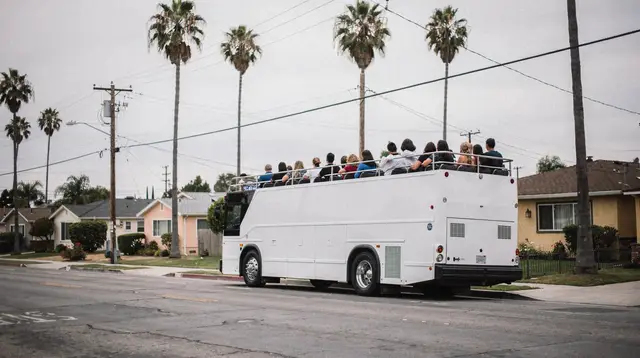
Evenings bring a different kind of programming: themed walking tours built around the city’s older buildings and local lore, including ghost-tour formats that lean into Riverside’s history for storytelling rather than documentation. It’s worth being clear-eyed about what these are: entertainment built on local legend and atmosphere, not a record of verified paranormal events. Treat a themed night tour the way you would treat any storytelling walking tour — as a way to see the historic core after dark with some narrative colour, not as evidence of anything supernatural. These tours commonly run on limited evening time slots and are worth booking ahead rather than assuming a walk-up spot will be available:
a themed evening ghost-tour walk through Riverside’s historic downtownClimate: hotter and drier than the coast
One of the clearest practical differences between Riverside and the coastal parts of the Los Angeles area is temperature. Riverside sits inland, away from the moderating effect of the Pacific, and it shows: summer days here commonly run several degrees hotter than the same day in Santa Monica or Long Beach, and the gap can widen further during Santa Ana wind events in the warmer months. Where the coast might see a comfortable, breeze-cooled afternoon in the high 20s Celsius (low 80s Fahrenheit), Riverside can be well into the mid-30s Celsius (mid-to-high 90s Fahrenheit) on the same day.
That makes Riverside a city best visited outside the height of summer if you plan to spend time walking downtown. October through April brings noticeably milder, more comfortable conditions for exploring on foot. If a summer visit is unavoidable, plan outdoor walking for the morning, keep water on hand, and expect the afternoon heat to push you toward air-conditioned museums or an early exit back toward the coast or the mountains.
A day in Riverside: rough shape
| Time | Activity |
|---|---|
| Morning | Drive from Los Angeles (avoid peak rush-hour departure) |
| Late morning | Walk the historic downtown core, visit a museum |
| Midday | Lunch downtown |
| Afternoon | Historic architecture and landmark sites, or continue east toward the desert |
| Evening (optional) | Booked themed walking or ghost tour of the historic district |
Practical tips for planning a Riverside day trip
A few practical points make a Riverside day run more smoothly, whether it’s a standalone visit or a stopover on the way to the desert:
- Parking downtown is generally easier to find than in central Los Angeles or Santa Monica, though a busy weekend or a popular evening tour can still fill the nearest lots — arrive with a little buffer rather than assuming a spot right outside your stop.
- Heat and hydration: pack water and sun protection regardless of season. Riverside’s inland heat builds faster than the coastal fog and marine layer that keep neighbourhoods like Santa Monica or Venice Beach noticeably cooler on the same afternoon, and there’s little shade once you’re away from the historic core.
- Book evening tours ahead: themed walking and ghost-tour formats run on limited, advance-booking time slots rather than a rolling schedule, and a sold-out evening slot is a common reason visitors miss out on Riverside’s after-dark programming.
- Keep the afternoon loose if Riverside is a stopover rather than the main event — a longer-than-expected freeway drive is the single biggest risk to a tight desert or mountain schedule, so build in slack rather than booking the next stop back-to-back.
Riverside compared with its desert and mountain neighbours
Because this site groups Riverside into the same broad “desert and Inland Empire” region as Palm Springs, Joshua Tree, Death Valley and Big Bear Lake for trip-planning purposes, it’s worth spelling out how different these places actually are on the ground.
| Place | What it actually is |
|---|---|
| Riverside | Historic inland city; downtown, museums, evening walking tours |
| Palm Springs | Resort desert city; midcentury architecture, spas, the aerial tramway |
| Joshua Tree National Park | Desert national park; hiking, rock formations, stargazing |
| Death Valley | Remote desert national park; extreme heat, long distances between services |
| Big Bear Lake | Mountain lake town; forest, hiking, winter snow sports |
| Anza and the San Jacinto Mountains | Mountain wilderness area near Palm Springs |
None of these are interchangeable, and none of them are close enough together to combine casually in a single afternoon. If your interest is genuinely in desert-park scenery, Riverside is not the stop that delivers it — Joshua Tree and Death Valley are. If your interest is a resort town with palm trees, spas and a tramway ride up into the mountains, that’s Palm Springs, reachable with:
a cable-car ride up into the San Jacinto Mountains above Palm Springsand for a look at the city’s midcentury celebrity history:
a guided drive past Palm Springs’s celebrity-owned midcentury homesRiverside earns its place on an itinerary for a different reason entirely: it’s a historic Californian city worth an afternoon, and a sensible waypoint if you’re already driving this direction.
Travelers continuing further into the desert after Riverside often add a guided outdoor activity once they actually reach Joshua Tree, such as a guided rock-climbing trip inside Joshua Tree National Park, rather than trying to fit climbing or hiking into the Riverside stop itself — Riverside’s role in that kind of trip is the drive-through waypoint, not the activity.
Combining Riverside with the rest of a trip
Most visitors will not build a standalone trip around Riverside. It works best in one of two roles: a half-day or full-day detour from a Los Angeles base, or a stopover on the way to or from the desert.
If you’re spending most of your trip in the city itself, Riverside pairs naturally with a broader look at what else Los Angeles offers — see our Los Angeles desert adventures guide for how inland and desert stops fit around a coastal-based stay, or the ghost and true crime guide if evening themed tours like Riverside’s are part of what appeals to you; nearby Pasadena runs similar themed walking formats, covered in its own ghost and true crime guide.
If you’re building a longer desert loop, Riverside slots in naturally alongside Palm Springs and Joshua Tree — our four-day desert itinerary covering Palm Springs, Joshua Tree and Death Valley is a useful reference for how much driving and time that kind of trip actually takes, and our practical piece on visiting the desert in summer is worth reading before committing to a hot-season date.
Riverside also sits within a reasonable driving range of Orange County’s theme-park cluster around Anaheim, which is why some visitors combine a Riverside afternoon with a separate day at Disneyland Resort, or push on to explore Orange County’s coastal towns such as Laguna Beach later in the same trip. For travelers based in Anaheim or Buena Park rather than central LA, a sightseeing tour of Los Angeles departing from Anaheim or Buena Park can bundle a broader look at the city into the Anaheim end of a Southern California trip, without requiring a separate downtown LA base.
Whichever way you approach it, get the driving logistics right first: read driving and parking in Los Angeles and rental car versus rideshare in Los Angeles before you commit to a departure time, since rush-hour traffic is the single biggest variable in how long a Riverside day actually takes. And if your trip has room for a classic LA sight the same day — before or after the drive east — a well-timed early start pairs surprisingly well with:
a guided visit to Griffith Observatory with insider accessRiverside frequently asked questions
Is Riverside close to the beach?
No. Riverside sits well inland in the Inland Empire, east of Los Angeles, with no coastline of its own. For LA-area beaches, look to Santa Monica, Venice Beach or Malibu instead, which are a separate trip entirely.
How far is Riverside from Los Angeles?
Riverside is roughly 60-100+ minutes from central Los Angeles by freeway in normal conditions, and that drive can stretch considerably longer during weekday morning and evening rush hours.
Is Riverside part of the desert region, like Palm Springs or Joshua Tree?
Riverside is grouped with the wider desert and Inland Empire area on this site for trip-planning purposes, but it is its own distinct stop: an urban, historic city, not a desert-park landscape like Joshua Tree or Death Valley, and not a mountain-lake town like Big Bear.
Do I need a car to visit Riverside?
Yes, in practice. A rental car or rideshare is the realistic way to reach Riverside from Los Angeles and to get around once there; there is no direct, fast rail link that makes a car unnecessary for a day trip.
What is there to do in downtown Riverside?
Downtown Riverside centres on a walkable historic core with landmark architecture, museums and a well-known historic hotel, plus seasonal and evening programming such as themed walking and ghost tours that run on limited, advance-booking time slots.
Are Riverside’s ghost tours based on real supernatural events?
No. They are presented as themed entertainment built around local history and legend, not as documented paranormal phenomena. Treat them as a storytelling and sightseeing format, not a claim of anything verifiably supernatural.
What is the weather like in Riverside compared to the LA coast?
Riverside runs noticeably hotter and drier than coastal Los Angeles, especially in summer, when it commonly runs several degrees warmer than Santa Monica or Long Beach on the same day. Fall through spring is the more comfortable window for walking around downtown.
Can Riverside be combined with a desert or mountain trip from LA?
Yes. Riverside sits roughly on the way toward Palm Springs, Joshua Tree and the San Bernardino Mountains from Los Angeles, so it works well as a stopover or half-day add-on to a longer desert or mountain itinerary rather than as a standalone destination.