Shopping and Market Tours in Los Angeles
What kind of shopping tours are available in Los Angeles itself?
Los Angeles shopping tours split into two very different registers: guided walks through the luxury boutiques of Rodeo Drive and Beverly Hills, and browsing at the city's food and vintage markets, such as the Original Farmers Market at Fairfax and the seasonal vintage market at Topanga. The sites are spread across separate districts and generally require a car or rideshare between them, since LA Metro only partially connects this part of the city.
Two very different kinds of shopping in one city
“Shopping in Los Angeles” covers ground that has almost nothing in common from one stop to the next. On one end sits Rodeo Drive in Beverly Hills, a few blocks of flagship boutiques for the world’s biggest luxury houses, the kind of street built for window displays and photographs as much as for buying anything. On the other end sits the Original Farmers Market at Fairfax, an open-air food and produce market that has been trading at the same corner for generations, and the seasonal vintage market at Topanga, where the appeal is secondhand finds and browsing rather than storefront glamour.
Treating these as one uniform “LA shopping” experience misses the point of both. This guide is built around that split, and it stays focused on shopping and market districts inside the city of Los Angeles itself: Beverly Hills, West Hollywood, Downtown LA and Pasadena. It does not cover the outlet malls and themed retail built around Disneyland in Anaheim, which sit in a different county and are covered separately.
A guided walking tour of Rodeo Drive and Beverly Hills works well precisely because the area rewards context: which houses have been there since the street’s early luxury-retail era, how the surrounding residential streets fit into the picture, and what makes Beverly Hills function as a small, separately governed city rather than a Los Angeles neighbourhood. For a walk that pairs the street with its wider setting, a guide such as the Beverly Hills and Rodeo Drive walking tour covers the boutiques alongside the residential streets around them.
Beverly Hills and Rodeo Drive: the luxury register
Rodeo Drive itself is short and entirely walkable, three blocks of designer flagships between Wilshire Boulevard and Santa Monica Boulevard. What makes it worth visiting is less the physical distance covered and more the density of internationally recognised names in a small space, plus the surrounding streets of Beverly Hills, with their palm-lined residential blocks and (from a respectful distance, never inside the gates) a sense of the city’s wealthier corners.
It’s worth being direct about one thing here: prices on Rodeo Drive are not representative of shopping in Los Angeles generally. This is a deliberately curated, high-end retail strip, and treating it as a benchmark for what a shopping trip in the city costs would give a skewed picture. Plenty of visitors budget an hour or two here purely for the walk, the window shopping and the photographs, without expecting to buy anything, and that is a completely normal way to experience the street.
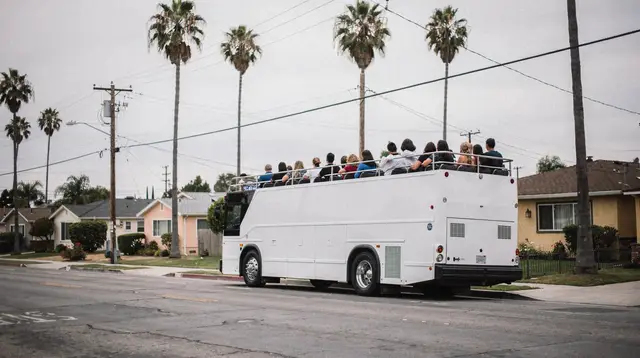
For visitors who want Beverly Hills folded into a broader first look at the city rather than a dedicated shopping stop, a wider option such as the Hollywood and Beverly Hills open-air bus tour covers the district alongside Hollywood landmarks, useful for a first visit where shopping is only part of the plan.
What sits around Rodeo Drive
Beyond the three core blocks, the wider Beverly Hills retail area extends along Wilshire Boulevard and into the streets known locally as the Golden Triangle. This is where more accessible, still upscale-but-not-flagship retail sits, alongside cafés and people-watching spots that make for a natural pause between boutique stops. West Hollywood, immediately adjacent, adds a different flavour again: design showrooms, independent boutiques and a younger, less formal retail scene along stretches like Melrose Avenue, distinct from the polish of Rodeo Drive itself.
The Original Farmers Market at Fairfax: the popular register
A short drive from Beverly Hills, the Original Farmers Market at the Fairfax District sits at the opposite end of the shopping spectrum. It is an open-air market of food stalls, produce counters, spice shops and small specialty vendors that has occupied the same corner of Los Angeles for decades, well before most of the surrounding neighbourhood took its current shape. It functions as much as a place to eat a casual lunch, wander between stalls and pick up small food gifts as it does a conventional shopping stop, and that mix of registers is part of its appeal.
Immediately next door sits the Grove, a separate, newer open-air shopping centre with a more conventional mix of chain retailers, a cinema and landscaped walkways. The two share a corner and, practically, a parking structure, which is why most visitors combine them into a single stop rather than treating them as two separate outings. It’s a useful example of how close two very different kinds of “shopping” can sit without being the same thing at all: one an old-school market built around food stalls, the other a modern retail centre built around brand storefronts.
Because this market draws heavily on food alongside shopping, it pairs naturally with a broader culinary look at the city. Guided food-focused walks around Los Angeles, such as those covered in the Los Angeles food tours guide, often route through or near this corner of the Fairfax District for exactly that reason.
Topanga’s vintage market: browsing over buying
West of the city, toward the Santa Monica Mountains, a seasonal vintage market operates in Topanga, drawing sellers of secondhand clothing, furniture, records and collectibles. Its appeal sits closer to a flea-market instinct than a retail one: browsing tables, negotiating with individual sellers, and the possibility of finding something specific rather than shopping from a fixed, predictable inventory.
One fact worth being upfront about: this market does not run on a fixed, easily quotable weekly schedule, and frequency has varied over time. Rather than planning a whole day around a specific date sight unseen, it’s worth checking current dates closer to a trip. This guide deliberately does not print a schedule or pricing for that reason — treat any specific date or price you see elsewhere as something to reconfirm rather than take as fixed.
Downtown and Pasadena: shopping as part of a wider stop
Downtown LA (DTLA) is not primarily a shopping destination the way Beverly Hills or the Fairfax corner are, but it has its own retail pockets worth knowing about, particularly around the Arts District and Grand Central Market, where small, independent vendors and food stalls sit alongside the area’s converted warehouse spaces. Shopping here tends to be secondary to a visit built around the area’s museums, architecture and food, rather than a standalone reason to go.
Pasadena, northeast of central Los Angeles, offers a different, more local retail feel again, centred on its well-preserved historic Old Pasadena district, with a walkable grid of independent shops and restored early-twentieth-century buildings. It’s a useful stop for visitors who want a shopping district that feels distinctly Southern Californian without the density or price tag of Beverly Hills.
For a broader, guided introduction that can touch several of these districts in a single outing rather than shopping specifically, the Los Angeles city highlights tour with a guide is a reasonable way to see how these neighbourhoods relate to one another before deciding where to spend dedicated shopping time.
Distances and getting between the districts
This is the fact worth repeating clearly: Beverly Hills, West Hollywood, the Fairfax District, Downtown, Pasadena and Topanga are genuinely separate districts spread across the Los Angeles basin, not stops along a single walkable stretch. Realistic driving times between them run roughly fifteen to forty-five minutes depending on the specific pair of neighbourhoods and, heavily, on the time of day. A short late-morning hop between Beverly Hills and the Fairfax corner can stretch well past its off-peak time during the evening rush.
LA Metro covers parts of this picture — Downtown and Pasadena, in particular, sit reasonably close to rail stations — but it does not connect all of these shopping districts to each other in a single convenient line. Beverly Hills, West Hollywood and Topanga in particular are not well served by rail transit, and most visitors default to a rental car or rideshare for a day built around more than one of these stops.
Anyone weighing that decision more broadly should see the guide on renting a car versus using rideshare in Los Angeles, and for the mechanics of finding and paying for parking once you arrive, the driving and parking in Los Angeles guide is worth a look before setting out.
| District | Character | Typical driving time from Beverly Hills |
|---|---|---|
| Rodeo Drive / Beverly Hills | Luxury flagship boutiques | — |
| West Hollywood / Melrose | Independent and design-focused retail | 10-20 minutes |
| Fairfax District (Original Farmers Market + the Grove) | Food market and mainstream retail centre | 10-20 minutes |
| Downtown LA (Arts District, Grand Central Market) | Independent vendors, food-forward | 25-40 minutes |
| Pasadena (Old Pasadena) | Historic, walkable local retail | 30-45 minutes |
| Topanga | Seasonal vintage and flea market | 25-40 minutes |
Times above are rough, off-peak estimates; expect them to roughly double during weekday morning and evening rush periods.
Building a shopping-focused day
A single day that tries to cover Rodeo Drive, the Fairfax Market and Topanga in full is ambitious once driving time and parking are accounted for, especially on a weekend when all three see heavier footfall. A more realistic approach pairs two adjacent districts — Beverly Hills with West Hollywood, or the Fairfax corner with a Downtown food stop — and leaves the third for a separate day or a different trip entirely.
For a day built specifically around your own priorities rather than a fixed route, a private, customisable option such as private Los Angeles tours tailored to your interests allows the itinerary to be built around shopping stops specifically, rather than folding them into a generic sightseeing route.
Visitors combining a shopping day with a wider first look at the city may also find it useful to plan alongside the Hollywood Boulevard guide, since Hollywood and the Fairfax corner sit close enough together to combine on a single day without excessive backtracking, and to check the three-day Beverly Hills and Westside luxury itinerary for a route that treats this side of the city as its main focus rather than a single afternoon detour.
Anyone still deciding where to base themselves for a shopping-heavy visit should also see where to stay in Los Angeles by itinerary, since a hotel near Beverly Hills or West Hollywood cuts down considerably on the driving described above compared with a base further out near the beaches or the airport.
How this differs from shopping near Disneyland
It’s worth stating plainly: this guide does not cover the outlet malls, themed retail streets and shopping built around Disneyland Resort in Anaheim. That area sits in Orange County, a distinct region south of Los Angeles with its own character, transport patterns and price points, and it’s covered in its own dedicated guide to shopping tours near Disneyland and Anaheim. If a trip is built primarily around the theme parks, that guide, not this one, is the more relevant starting point; this page stays centred on the shopping and market districts inside the city of Los Angeles itself.
Things to keep in mind before you go
A few practical notes worth carrying into planning rather than discovering on the day. First, these districts are not walkable to one another — treat each stop as its own destination requiring its own drive or rideshare, not a single continuous shopping street.
Second, Rodeo Drive’s prices are not a fair sample of Los Angeles shopping generally; the Fairfax Market and Topanga’s vintage market sit at a far more accessible, everyday level, and conflating the two registers sets the wrong expectations for a trip. Third, parking is a genuine planning factor: Beverly Hills and the Fairfax/Grove corner both have paid structures that fill on weekends, and building slack time into the schedule for parking avoids turning a relaxed shopping day into a rushed one.
Beyond a specific shopping-focused day, several of these districts reward a second look for reasons that have nothing to do with retail: Beverly Hills and West Hollywood both sit close to well-known celebrity homes routes, Downtown’s Arts District and Grand Central Market fit naturally alongside a look at the city’s museums and landmarks, and for visitors who prefer to explore any of these districts on foot with a local guide rather than driving between fixed stops, the Los Angeles walking tours guide covers other neighbourhood-level options across the city.
Los Angeles shopping and markets: frequently asked questions
Can I walk between Rodeo Drive, the Fairfax Market and Topanga in one day without a car?
Not comfortably. These are separate districts of the Los Angeles area, roughly fifteen to forty-five minutes apart by car depending on traffic, and LA Metro does not connect all three well. Most visitors plan for a car or rideshare between stops rather than attempting to walk or transfer by public transport.
Is shopping in Los Angeles expensive?
It depends entirely on where you go. Rodeo Drive and much of Beverly Hills sit firmly in the luxury bracket and are not representative of everyday prices in the city. The Original Farmers Market at Fairfax and markets like Topanga’s vintage market are far more accessible, with prices closer to typical US market and casual retail levels.
Is the Original Farmers Market at Fairfax the same as the Grove?
They are adjacent but distinct. The Original Farmers Market is an open-air market of food stalls, produce counters and small shops that has operated at the same Fairfax District corner for decades. The Grove is a newer, separate open-air shopping centre built next door, with chain retailers and a more conventional mall layout. Many visitors combine both in a single stop because they share a corner and a parking structure.
Does a guided tour make sense for Rodeo Drive, or can I just walk it myself?
Rodeo Drive itself is a short, easily walkable street, so a guided tour is less about navigation and more about context: which boutiques matter, what the street’s history is, and how Beverly Hills fits into the wider luxury shopping scene. A self-guided visit works fine if you just want to browse and photograph the street.
How often does the Topanga vintage market run?
Frequency varies and is not fixed on a predictable weekly schedule, so it is worth checking current dates before planning a visit around it rather than assuming a specific weekend.
Is this the same as shopping at Disneyland or the Anaheim outlets?
No. Disneyland Resort and the outlet shopping around Anaheim sit in Orange County, a separate area from the city of Los Angeles with its own dedicated coverage. This guide is centred on shopping and market districts across Los Angeles and its closest neighbouring cities: Beverly Hills, West Hollywood, Downtown and Pasadena.
What should I wear or bring to Rodeo Drive versus the Fairfax Market?
Rodeo Drive does not have a formal dress code, but the boutiques lean upscale and staff-assisted, so most visitors dress a notch smarter than beach-casual. The Fairfax Market and Topanga’s vintage market are far more relaxed, closer to what you would wear to any open-air food or flea market, and cash or a card both work at most stalls.
Is parking difficult in these areas?
Parking is a real planning factor rather than an afterthought. Beverly Hills and the Grove/Fairfax corner have paid public parking structures that fill up on weekends, and street parking in West Hollywood and Downtown is often metered and time-limited. Building in extra time to park, especially on weekend afternoons, avoids rushing the visit.
Shopping Tours
Verified deep-linked GetYourGuide tours. Book through these links and we earn a small commission at no cost to you.
GetYourGuide does not provide a product photo for this activity — the image shows the meeting point, photographed by us.