Where Manhattan Beach fits in the South Bay
Manhattan Beach is one of several independent beach cities strung along the coast south of LAX, in the part of the region generally known as the South Bay. It sits between Marina del Rey to the north and Redondo Beach to the south, with Hermosa Beach immediately next door. Unlike the wider South Bay entry, which covers Redondo Beach, Hermosa Beach and Torrance as a group, this page is about Manhattan Beach specifically: a compact, walkable beach town built around a pier, a wide sand strand and a noticeably more residential, upscale character than either Venice Beach to the north or Long Beach to the south.
The town is small by Los Angeles standards, which is part of the appeal. There is no sprawling boardwalk scene here, no skate park crowds and none of the port-city industry that shapes Long Beach. What Manhattan Beach has instead is a quieter downtown of a few blocks, a pier that ends at a small round aquarium building, and a beach that has become one of the most recognized homes of beach volleyball in the United States, thanks to decades of open tournaments held on its sand.
The pier and downtown
The Manhattan Beach Pier is the town’s visual anchor and the natural starting point for a first visit. It is a straightforward wooden pier, shorter and less commercial than the Santa Monica Pier, with no rides or arcade — just open ocean views, fishing spots along the railing, and the Roundhouse Aquarium at its far end, a small marine-life exhibit aimed mainly at families with young children. Sunset is the best time to be on the pier; the town’s flat topography and west-facing coastline give a clean, uninterrupted view over the water.
Behind the pier, a compact downtown runs a few blocks along Manhattan Beach Boulevard and the surrounding streets, with cafés, casual restaurants and boutique shops. It is easy to cover on foot in an hour or two, which is unusual for a Los Angeles-area destination and one of the town’s practical advantages for visitors who don’t want to spend the whole day driving between stops.
The beach and beach volleyball culture
The sand at Manhattan Beach is wide, well maintained and less crowded than Venice on an average day, particularly north and south of the pier. What sets it apart is the volleyball culture: permanent nets line the sand for much of its length, and the beach has hosted major open volleyball tournaments for decades, drawing both competitive players and casual weekend games. Visitors who simply want to watch can usually find a match in progress on a warm afternoon without seeking out a specific event.
The Strand, the paved path that runs along nearly the entire Los Angeles County coastline, passes directly through Manhattan Beach and connects it to Hermosa Beach, Redondo Beach and, further north, Marina del Rey and Venice. It is flat, well maintained and shared by walkers, joggers and cyclists, which makes it one of the easiest stretches of coast in the region to cover without a car once you are already on the sand.
Getting there — no direct Metro line
This is the point worth being clear about before planning a visit: Manhattan Beach has no direct Metro rail or dedicated rapid bus connection from Downtown LA. Reaching it from most of the city means driving — typically around 30 minutes from Downtown LA or from LAX under normal traffic, longer during the morning and evening rush hours common across the LA basin. Ride-hailing services cover the route too, but at rush-hour surge pricing that can add up quickly for a beach day.
A car is therefore the realistic default for a visit, whether a rental or a rideshare, and this matches the practical reality across the wider LA beaches area: none of the South Bay beach cities sit on a rail line, unlike Downtown, Hollywood or Pasadena. Visitors staying near LAX are well positioned, since Manhattan Beach is one of the closest beach towns to the airport — a useful option for a first or last afternoon of a trip, before or after a flight.
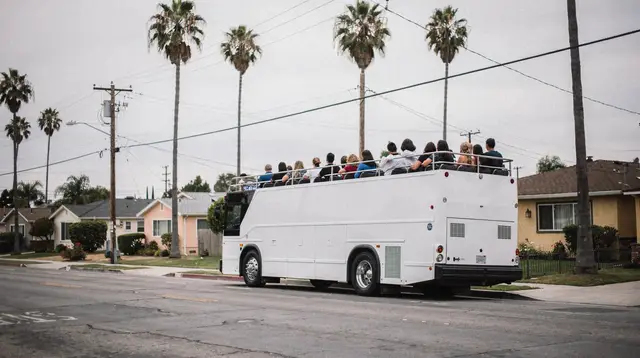
Once in town, a car is not needed to enjoy the pier, downtown and beach — everything within Manhattan Beach itself is walkable. A bicycle is the other practical way to see more of the coast in one outing: the Strand makes it possible to pedal north to Hermosa Beach and Redondo Beach, or further toward Venice and Santa Monica, without touching a car again. Guided electric-bike tours along this stretch of coast exist and typically link several South Bay beaches on the same route; because they run on a fixed schedule with limited group sizes, they need to be booked ahead rather than joined on a walk-up basis.
a guided coastal e-bike route that links several South Bay beach towns in one outingParking — plan for limited space in season
Parking near the beach and pier is limited, and in the warmer months — roughly late May through September, plus busy weekends year-round — the closest lots and metered street spaces near the pier fill early on sunny days. There is no realistic way to guarantee an easy, unrestricted spot right at the sand during peak season; arriving early, being flexible about walking a few extra blocks from a spot further inland, or checking a parking app before setting out are the more reliable approaches. This is the same pattern seen at other popular coastal and hillside sites around the region, where the beach or attraction itself is free or low-cost but parking is the actual constraint.
| Parking type | Typical cost | Notes |
|---|---|---|
| Metered street parking near downtown | Roughly $2-4/hour | Time-limited, fills quickly on weekends |
| Municipal lots near the pier | Roughly $2-4/hour or daily max | Fill early on warm-weather weekends |
| Residential side streets further inland | Often free or permit-only | A short walk to the sand; check posted signs |
A half day vs. a full day
A half day is enough to walk the pier, browse downtown and get a feel for the town, particularly if Manhattan Beach is one stop on a longer South Bay or coastal day that also takes in Venice Beach, Malibu or Marina del Rey. A full day makes more sense for visitors who want real beach time, a swim or a longer Strand ride south toward Redondo Beach and Hermosa Beach, or who plan to watch a volleyball match unfold over an afternoon.
| Plan | What it covers | Good for |
|---|---|---|
| Half day (2-3 hours) | Pier, downtown, a short beach walk | Combining with other South Bay or Westside stops |
| Full day | Beach time, Strand cycling, sunset at the pier | A relaxed, dedicated beach day |
| Add-on to a coastal loop | Manhattan Beach plus Venice, Santa Monica or Malibu | Visitors with a rental car covering the coast in one trip |
How Manhattan Beach compares to nearby beach towns
Visitors weighing where to spend a beach day in the LA area often compare Manhattan Beach with Venice Beach and Long Beach, and the differences are real rather than cosmetic. Venice has the boardwalk energy — street performers, muscle beach, dense foot traffic and a slightly gritty, carnival feel.
Long Beach is a larger, more urban waterfront built around the Port of Los Angeles and the Queen Mary, with a different scale entirely. Manhattan Beach sits apart from both: smaller, quieter, more residential, and defined by its pier and its volleyball courts rather than by nightlife or attractions. None of the three is objectively “better” — they simply serve different kinds of beach days, and a longer LA beaches itinerary often benefits from including more than one.
For visitors who want to see several South Bay towns in sequence rather than choosing only one, the South Bay entry covers Redondo Beach, Hermosa Beach and Torrance as a group, and is the better starting point for planning a broader loop rather than a single-city stop.
Practical notes for a visit
Sales tax in Los Angeles County is added at the till, generally in the roughly 9.5-10.25% range depending on the exact city, and a tip of roughly 18-20% or more is standard at sit-down restaurants — neither is included in a menu’s displayed prices. The Pacific Ocean off Manhattan Beach stays cool year-round; it is not a warm swimming sea, even in the height of summer, which surprises visitors expecting Mediterranean-style water temperatures. Mornings in late spring and early summer can also be overcast under the marine layer known locally as May Gray and June Gloom, even when inland parts of the LA basin are sunny, so afternoon arrivals often see clearer skies than early ones.
For a trip that also mixes in celebrity-spotting coastline further north, a guided route through Santa Monica and Malibu is a common pairing with a South Bay beach day.
a Santa Monica and Malibu beaches and celebrity homes routeVisitors basing a wider Westside day around the pier at Santa Monica and the Hollywood Sign viewpoints can combine that with a Manhattan Beach stop earlier or later in the day.
a combined Santa Monica Pier and Hollywood Sign tourThose wanting a food-focused evening after a beach day elsewhere in the city might look at a hands-on Italian cooking class rather than a restaurant reservation.
a hands-on gnocchi-making class with a local chefPlanning the rest of the trip
Manhattan Beach works well as one stop on a longer coastal day rather than a standalone destination for most itineraries — see the three-day LA beaches itinerary or the more general two-day first-time Los Angeles itinerary for how it fits alongside Santa Monica, Venice and Malibu.
Visitors deciding whether a car is worth renting for a trip that includes the South Bay should read do you need to rent a car in Los Angeles and does the LA Metro cover enough of the city, both of which address exactly the kind of gap Manhattan Beach represents — a genuinely worthwhile stop that the rail network simply doesn’t reach.
For visitors weighing Manhattan Beach against Venice specifically, Santa Monica vs. Venice Beach covers a closely related comparison one town up the coast. Anyone renting a car for the South Bay and beyond may also find rental car vs. rideshare in Los Angeles and driving and parking in Los Angeles useful for setting expectations before arrival.
General South Bay activity options, including water sports and bike rentals beyond the guided e-bike route, are listed on the things to do in the South Bay page and the Manhattan Beach bike and scooter tours guide. For timing a trip around the region’s weather patterns, the best time to visit Los Angeles by zone page explains why coastal mornings and inland afternoons often call for different plans, and the best time to visit Los Angeles planner can help fit a beach day into a wider trip.
Manhattan Beach FAQ
Is Manhattan Beach accessible by Metro from Downtown LA?
No. Manhattan Beach has no direct Metro rail or rapid bus line from Downtown LA. Reaching it means driving or taking a rideshare, typically around 30 minutes depending on traffic, or approaching by bike along the Strand from a neighboring beach city.
How far is Manhattan Beach from LAX?
Manhattan Beach is one of the closest beach towns to LAX, generally around 30 minutes by car, though this can extend during rush-hour traffic. It is a reasonable option for a beach stop right before or after a flight.
Is parking near the beach guaranteed in summer?
No. Parking near the pier and beach is limited and fills early on warm-weather weekends and throughout the peak summer months. Arriving early or parking a few blocks inland is the more reliable approach rather than expecting an open spot right at the sand.
What makes Manhattan Beach different from Venice Beach?
Manhattan Beach is smaller, quieter and more residential, centered on a simple pier and a beach volleyball culture, without Venice’s boardwalk, street performers and denser foot traffic. It suits visitors looking for a calmer beach day rather than a boardwalk scene.
Can I bike between Manhattan Beach and other South Bay towns?
Yes. The Strand, a paved coastal path, connects Manhattan Beach to Hermosa Beach and Redondo Beach directly, and further north toward Marina del Rey and Venice. Guided electric-bike tours along this route exist and need to be booked in advance.
Is Manhattan Beach good for families?
The beach, pier and small aquarium suit families with children, and the flat, walkable downtown makes it an easy half-day stop. It has fewer dedicated children’s attractions than the theme parks further south, so it works best as one part of a broader family itinerary.
Is the water warm enough to swim at Manhattan Beach?
The Pacific Ocean here stays cool year-round, including in summer, and is not comparable to a warm Mediterranean-style swimming sea. Many visitors wade or swim briefly rather than swim for extended periods, even on hot days.
Does Manhattan Beach have its own downtown separate from Los Angeles?
Yes. Manhattan Beach is an independent incorporated city with its own downtown, government and identity, not a neighborhood of the City of Los Angeles, even though it sits within the same wider metropolitan area.