A studio town that works better as a base than a destination
Culver City rarely appears at the top of a Los Angeles wish list, and that is more or less the point. Ask why the city exists in its current form and the answer runs through the film industry: this was, for most of the twentieth century, a working production town, home to major studio lots that turned out a large share of Hollywood’s output while Hollywood itself became the industry’s marketing address. That split has stuck. Hollywood built the tourist-facing image — the Walk of Fame, the sign in the hills, the boulevard lined with theatres. Culver City kept the production side: soundstages, backlots and post-production houses that, in many cases, are still active working sites rather than attractions built for visitors.
That history gives Culver City a genuinely different feel from Hollywood a few miles north. The downtown core is compact and walkable, with restored early-twentieth-century storefronts, a growing restaurant and bar scene, and a noticeably more local, less tourist-oriented atmosphere. It reads as a real neighbourhood people live and work in, not a stage set. For a visitor building a Los Angeles itinerary, though, the more useful way to think about Culver City is less “a place to spend a full day exploring” and more “a well-placed base to work from” — a spot with easy road access to the city’s major districts and, just as importantly, to the longer regional excursions that make up so much of a Southern California trip.
This page sets out what that means in practice: what Culver City itself offers, why it is not a substitute for a Hollywood studio-tourism day, and how to use it as a launch point for the wider region — from Downtown LA and the beaches to Palm Springs, Joshua Tree and beyond. For the broader picture of how Los Angeles is structured as a sprawling, multi-centre region, the Los Angeles overview page is a useful companion to this one.
Getting oriented: where Culver City sits in the LA puzzle
Los Angeles has no single centre, and Culver City’s location illustrates that well. It sits on the city’s Westside, roughly between Downtown LA to the east and Santa Monica to the west, with Beverly Hills and West Hollywood to the north and Marina del Rey and the coast to the southwest. On a map that looks tight. In practice, every one of those areas is a separate car trip, and none of them is walkable from Culver City.
As a rough planning guide:
| From Culver City to | Typical drive time (light traffic) | Typical drive time (rush hour) |
|---|---|---|
| Downtown LA | 20-25 minutes | 40-55 minutes |
| Hollywood | 20-30 minutes | 40-60 minutes |
| Santa Monica / Venice Beach | 15-20 minutes | 25-40 minutes |
| Beverly Hills | 15-20 minutes | 25-35 minutes |
| LAX | 15-20 minutes | 25-35 minutes |
| Pasadena | 30-40 minutes | 50-70 minutes |
These numbers move around with the time of day more than with the distance itself — a pattern that holds across the whole region, not just here. Anyone basing themselves in Culver City should plan around traffic windows rather than mileage, and should expect a car (or reliable rideshare access) to be the default way of getting anywhere beyond the immediate neighbourhood. For a deeper look at that trade-off, do you need to rent a car in Los Angeles walks through the practical reasoning, and rental car vs rideshare in Los Angeles compares the two main options directly.
What Culver City actually offers on the ground
Culver City’s own attractions are modest by Los Angeles standards, and that is a fair trade for its convenience and quieter pace. The downtown historic district, centred on Culver Boulevard and Washington Boulevard, is the main reason to spend time here on foot: restored 1920s-era buildings now house a dense cluster of restaurants, coffee shops, breweries and small galleries, walkable in an afternoon or evening without needing a car at all once you have arrived.
The studio history is present but not staged for visitors the way it is elsewhere in the region. Several major production facilities remain active working lots, which means access is generally limited to industry business rather than open to casual sightseeing. That is a meaningful distinction from the studio experiences built specifically for tourists elsewhere in the Los Angeles area, and it is worth being clear-eyed about before planning a visit around it — see the note on studio tours below.
Beyond downtown, Culver City has a handful of small museums and gallery spaces, some pleasant hiking on the Baldwin Hills Scenic Overlook nearby, and a growing dining scene that draws visitors from across the Westside. None of this amounts to a full day’s itinerary on its own for most travellers, which is exactly why the base-camp framing fits: a morning or evening here, paired with excursions elsewhere, tends to work better than trying to fill several full days within Culver City’s own borders.
Why Culver City is not a Hollywood substitute
It is worth stating plainly: Culver City does not offer a tourist experience comparable to Hollywood’s. Hollywood was built, deliberately, as the industry’s public face — a walk down Hollywood Boulevard, a look at the Hollywood Sign and Griffith Observatory, a stop at a studio experience designed with visitors in mind. Culver City’s studio heritage runs deeper in production terms, but it was never built for that kind of casual sightseeing, and treating it as a like-for-like alternative sets up disappointment.
Visitors specifically interested in studio history and film-industry tourism are generally better served by combining a Culver City stay with a proper studio-focused excursion elsewhere in the region — see Los Angeles studio tours for how that distinction between a working production lot and a visitor-oriented studio experience plays out across the city, and Los Angeles Hollywood Boulevard for the more classic tourist walk. A guided overview of the city’s landmarks can also help place Culver City’s studio history in context alongside Hollywood’s more visitor-facing version of the same industry.
a guided city highlights tour covering Los Angeles’s key landmarks is a practical way to see how the studio-town history of Culver City connects to Hollywood’s more polished tourist version, without needing to piece the story together alone.
No beach, and that matters for planning
One thing to be clear about before booking a stay: Culver City does not have direct beach access. It sits inland from the coast, and the nearest shoreline — Marina del Rey, then Venice Beach and Santa Monica beyond it — is a separate drive of roughly 15 to 25 minutes depending on traffic. That is a short trip by Los Angeles standards, but it is still a trip, not a walk from a hotel room. Visitors who want to combine a Culver City stay with beach time should build that into the day’s plan rather than assume it is within walking distance.
For beach-focused time, Santa Monica and Venice Beach are the closest options, both reachable in under half an hour outside peak traffic. A guided option covering the pier and coastline can bundle that with a look at the Hollywood Sign from a distance.
a Santa Monica pier and Hollywood Sign viewing tour pairs a beach-adjacent outing with one of the region’s signature views, without requiring a separate self-driven detour.
Culver City as a launch point for regional excursions
This is where Culver City earns its keep on a Los Angeles itinerary. Its position on the Westside, close to LAX and within a reasonable drive of the region’s major freeways, makes it a workable staging point for the multi-day excursions that define a longer Southern California trip — provided those excursions are planned and booked in advance rather than improvised.
A few of the regional trips visitors commonly stage from a Westside base like Culver City:
- The desert: Palm Springs and Joshua Tree sit roughly two hours east, making them a long day trip or, better, a one- to two-night addition to the itinerary. See four days: desert, Palm Springs, Joshua Tree and Death Valley for how that fits together.
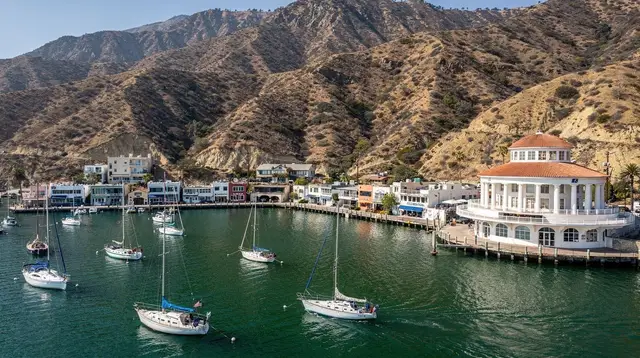
- Catalina Island: reached by ferry rather than car, Catalina Island requires advance timing around crossing schedules, not a spontaneous drive.
- Santa Barbara and the Central Coast: Santa Barbara is roughly a two-hour drive up the coast, workable as a long day trip or an overnight.
- Downtown and Hollywood proper: for visitors who want the classic sights without changing hotels, three days: Los Angeles classics and two days: first-time Los Angeles both assume a base similar to Culver City’s location.
The common thread across all of these is advance planning. Ferry crossings, desert park logistics, and even simple hotel-to-hotel repositioning all work far better when booked ahead rather than decided on the day. A longer, structured multi-day tour can take some of that planning off a visitor’s hands entirely.
a seven-day guided tour covering the wider Los Angeles region is one way to let a fixed itinerary handle the logistics of stringing several of these excursions together, rather than assembling each leg independently from a Culver City base.
A day plan that uses Culver City as intended
For visitors staying in Culver City rather than just passing through, a workable pattern looks like this: use the morning for the walkable downtown core and a proper coffee or breakfast stop, then commit the rest of the day to one clearly chosen excursion rather than trying to sample several distant neighbourhoods at once. Trying to fit Downtown LA, Hollywood and the beach into a single day from a Culver City base generally means more time in the car than at any destination — a trap that catches many first-time visitors underestimating how spread out the region really is.
A single well-chosen outing works better. Griffith Observatory and the surrounding park, for instance, make a strong half-day trip that pairs naturally with a Culver City base:
an insider-led Griffith Observatory tour covers the practical constraints — parking that fills early, the free general admission versus the separate paid planetarium ticket — that are easy to misjudge on a first visit.
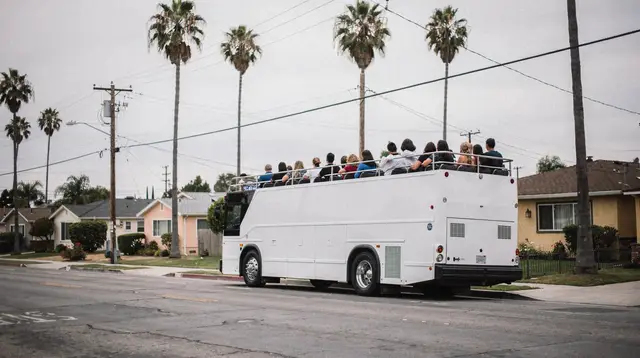
For a broader sweep of the Westside’s landmark neighbourhoods in a single guided outing, an open-air bus format covers ground efficiently without the driver needing to navigate unfamiliar freeways.
an open-air bus tour through Hollywood and Beverly Hills is a low-effort way to see two of the Westside’s headline districts in a single outing, returning to a Culver City base by evening.
Seasonal considerations
Culver City follows the same broad climate pattern as the rest of the Los Angeles basin: dry, warm summers and a wetter, milder winter, with most of the region’s modest annual rainfall falling between roughly November and March. Spring and autumn tend to offer the most comfortable conditions for both walking Culver City’s downtown core and driving out on longer excursions, since neither the coastal marine layer of late spring nor the peak summer heat inland is at its strongest.
Because Culver City itself is inland rather than directly on the coast, it runs a little warmer than beach-adjacent neighbourhoods like Santa Monica on the same day, though nowhere near as hot as the desert communities further east. That makes it a reasonably comfortable year-round base, with the caveat that any desert excursion staged from here should account for significantly higher temperatures once you leave the coastal basin, particularly from late spring through early autumn.
Practical notes for a Culver City stay
Budget in Culver City tracks close to the wider Los Angeles average: a casual meal generally runs in the region of $12-20 per person before tax and tip, a mid-range dinner more like $30-60 or more, and sales tax will be added at the till rather than shown on the menu, typically in the 9.5%-10.25% range for the wider county. Tipping follows standard US norms — expect 18-20% or more at a sit-down restaurant, a little less than that for a taxi or rideshare.
Parking is more manageable here than in denser tourist areas like Hollywood or Santa Monica’s core, which is one more point in favour of using Culver City as a base rather than trying to park repeatedly in busier districts throughout a stay. A rental car remains the practical default for reaching most of the excursions described above; for visitors without one, rideshare fills the gap for shorter Westside trips but becomes considerably more expensive for the longer regional routes toward the desert or the Central Coast.
Where Culver City fits in a longer trip
Treated on its own, Culver City is a pleasant but limited stop. Treated as a base — for a night or two of comfortable, well-located lodging between a coastal day, a Hollywood-area day and a longer regional excursion — it does real work in a Los Angeles itinerary. That is the honest way to plan around it: not as a headline destination, but as the practical hinge that lets the rest of a Southern California trip come together with less time lost to repositioning.
For visitors weighing where else to base themselves instead, Downtown LA vs Hollywood: where to stay covers the two more tourist-centred alternatives, while how many days in Los Angeles helps size the overall trip before deciding how much of it Culver City should anchor.