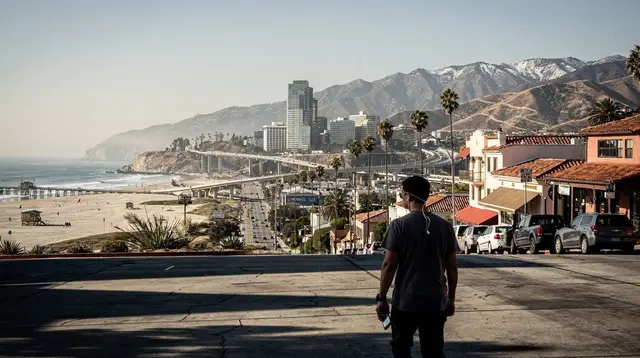
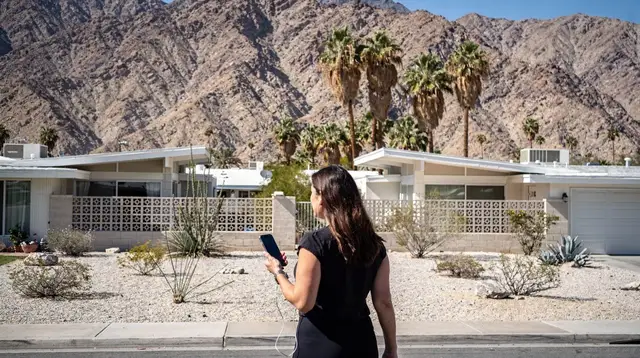
Self-Guided Audio Tours of Los Angeles: Hollywood, Downtown and Beyond
Are self-guided audio tours a good way to see Los Angeles?
Yes for Hollywood, Downtown, Griffith Observatory, Beverly Hills, West Hollywood and Pasadena, provided you have a car for most of the driving between them. LA Metro only reaches part of Downtown, Hollywood and Koreatown, and the Hollywood Sign itself has no direct access, so these routes are built around marked viewpoints and driving legs rather than a single walkable path.
What “self-guided” actually means in Los Angeles
A self-guided audio route in most cities means an app or a downloaded track and a walking loop. In Los Angeles that model only works in patches. The city is a sprawling basin of districts that were never built to be strung together on foot, and a route that mixes Hollywood, Downtown LA, Griffith Observatory, Beverly Hills, West Hollywood and Pasadena in a single day has to accept that driving is part of the format, not an interruption to it.
This page is about self-guided audio tours of Los Angeles itself — the areas above, plus pockets of Koreatown — not the wider Southern California region. If your trip is centred on the desert resort towns roughly two hours east, the format works the same way but the logistics are different enough that it gets its own page: see the Palm Springs self-guided audio guide.
And if you would rather have someone else handle the driving and narration, that’s a different product entirely — covered in our roundup of Los Angeles private tours and sightseeing tours, where a driver or guide does the work a self-guided route leaves to you.
The car is the backbone, not an option
Every practical version of this route assumes a car for most of the day. LA Metro’s rail lines do reach parts of Hollywood, Downtown and Koreatown, which is genuinely useful for a short, self-contained audio walk confined to one of those pockets. What Metro does not do is connect those pockets to Beverly Hills, West Hollywood, Pasadena or the viewpoints inside Griffith Park in any reasonable time. Those legs need a car or rideshare, and pretending otherwise is the single most common way visitors end up burning half a day on a transfer that should have taken twenty minutes.
A one-way self-driving experience through the city is one way to structure the driving portion without committing to a full rental for the whole trip:
a short self-driving car experience through central Los Angelesgives a taste of covering ground under your own control, though at twenty minutes it’s a sampler rather than a full day’s transport — most self-guided itineraries below will still need a rental car or repeated rideshare bookings behind them.
Hollywood and the sign you can’t walk up to
Hollywood Boulevard itself is walkable in sections — the Walk of Fame, the TCL Chinese Theatre forecourt, the Dolby Theatre — and this is the one stretch of the route where an audio track genuinely carries you block to block on foot. Where self-guided plans go wrong is assuming the Hollywood Sign is part of that same walk. It isn’t. There is no public path to the sign’s base and no direct access for casual visitors, full stop.
What a self-guided audio route can honestly offer instead are the established viewpoints: Griffith Observatory, Lake Hollywood Park, and a handful of marked trails inside Griffith Park. Each gives a different angle and a different amount of walking, and an honest audio script should say so rather than implying you’ll get close to the letters. For the full rundown of where each viewpoint actually sits and how to reach it, see how to see the Hollywood Sign.
Griffith Observatory itself deserves its own stop regardless of the sign. General admission and the exhibit halls are free, the building and grounds cost nothing to walk through, and the constraint is parking rather than money — the lot fills early, especially around sunset and on weekends. The planetarium show inside is a separate, paid, timed ticket, distinct from walking the grounds. Build in slack for circling for parking, and treat the observatory as a viewpoint-plus-museum stop rather than a quick photo pull-off.
Downtown, Koreatown and the Metro pocket that actually works
Downtown LA (DTLA) is the one part of this route where a self-guided audio walk can genuinely stand on its own two feet without a car, at least for the stretch between Union Station, the Arts District and Grand Central Market. Metro rail serves this pocket reasonably well, and a walking audio track through Downtown’s older core plus a short hop into Koreatown is a realistic half-day on foot and transit.
The catch is treating Downtown as the centre of a Los Angeles visit the way a European old town would be. It isn’t. Many visitors give it a few hours and move on, and the audio content for this leg should be scoped as one stop among several rather than the spine of the day. If Downtown, Hollywood and Koreatown are the pockets you want to link by transit before switching to a car for the rest, a short loop built around those Metro-served sections is described in one day: Hollywood and Griffith, which mixes a transit-friendly morning with a driving afternoon.
For a broader read on whether Metro can realistically carry your whole trip or whether you’re better off renting from the start, see do you need to rent a car in Los Angeles and does the LA Metro cover enough of the city.
Beverly Hills and West Hollywood: close on the map, not close on the road
Beverly Hills and West Hollywood sit right next to each other on a map, and both sit close to Hollywood on the same map. In practice, moving between any two of these three areas at the wrong hour can cost 30 to 60 minutes, not the ten or fifteen a map distance suggests. A self-guided audio route through Rodeo Drive, the Sunset Strip and Melrose works well as a driving loop with short walking stretches at each stop, and it works badly as a plan to “just walk over” from one to the next.
An audio narration built around a scenic drive rather than a fixed walking path handles this reality better, since it can call out landmarks as they pass the window rather than assuming you’re on foot the whole time. A guided version of the same idea, with someone else driving, is:
an open-air bus tour linking Hollywood and Beverly Hillswhich covers the same ground as a self-guided driving loop but hands the navigation to someone else — useful if you’d rather listen than watch for the next turn in unfamiliar traffic.
Pasadena: a full detour, not a quick add-on
Pasadena sits apart from the rest of this route, both geographically and in character — older civic architecture, the Rose Bowl area, a walkable stretch of Old Pasadena. It is close enough to fold into a Los Angeles-themed audio itinerary, but far enough that it needs its own dedicated block of time and its own drive, not a stop squeezed in on the way to somewhere else. Audio content covering Pasadena works best as a half-day on its own, ideally scheduled apart from the Hollywood/Griffith/Downtown cluster rather than stacked onto the same day.
When a self-guided route stops being the right tool
Self-guided audio makes sense when you want to set your own pace, skip sections that don’t interest you, and not depend on anyone else’s schedule. It stops being the right tool once you’d rather not deal with LA traffic, parking, or navigating unfamiliar freeways yourself. At that point a guided alternative with a driver handles the same ground with none of the logistics:
a private driving tour with a local guide covering Los Angeles highlightstrades the self-paced flexibility of an audio route for someone else’s local knowledge and someone else’s hands on the wheel, which is worth the trade for a lot of visitors on a short trip. A shorter, guided version of the same idea — city highlights with a live guide rather than a recorded track — is:
a guided city highlights tour of Los Angelesand for something that skips both driving and walking entirely, an aerial pass over parts of the city gives a completely different vantage point on the same landmarks a ground-level audio route describes.
A few of these routes use a specific vehicle, not just your own car
Not every self-guided or self-driving product in the Los Angeles market assumes a generic rental car. A small number are built specifically around a collector car, a luxury vehicle, or a particular driving experience, and these need to be booked and confirmed ahead of the day rather than arranged on arrival. If a route you’re considering is described this way, treat the vehicle itself as part of the booking, with its own availability and lead time, separate from your regular rental car for the rest of the trip.
Putting a day together
A workable self-guided audio day for Los Angeles itself, built around driving legs between fixed stops, might look like this:
| Block | Area | Format | Realistic time |
|---|---|---|---|
| Morning | Hollywood Boulevard | Walking audio | 1.5–2 hours |
| Mid-morning | Griffith Observatory / Lake Hollywood Park | Drive + short walk, Hollywood Sign viewpoint | 1.5–2.5 hours (parking-dependent) |
| Early afternoon | Beverly Hills / West Hollywood | Driving loop, short stops | 2–3 hours |
| Late afternoon | Downtown LA (optional Metro leg) | Walking audio | 1.5–2 hours |
Pasadena is best treated as a separate day rather than squeezed into the block above. None of these figures account for rush-hour traffic, which can roughly double any of these driving legs on weekday mornings and early evenings — build slack in rather than stacking stops back to back.
Common mistakes with this format specifically
Visitors planning a self-guided audio day around Hollywood and Griffith most often go wrong in three predictable ways. First, assuming the Hollywood Sign is reachable on foot from the Boulevard — it isn’t, and no audio route changes that. Second, assuming Beverly Hills, West Hollywood and Downtown are a short walk or a five-minute drive apart because they look close on a map — budget 30 to 60 minutes between any two, depending on the hour. Third, assuming LA Metro can carry the whole day — it covers real ground in Hollywood, Downtown and Koreatown specifically, and stops well short of everywhere else on this list.
None of these are reasons to skip the self-guided format. They’re reasons to build the day around a car for the parts Metro doesn’t reach, and around the actual viewpoints for the Hollywood Sign rather than an approach that doesn’t exist.
Frequently asked questions about self-guided audio routes in Los Angeles
Can I get close to the Hollywood Sign on a self-guided audio route?
No. There is no public path leading up to the Hollywood Sign and no direct access for casual visitors. Self-guided routes work around this by pointing you to viewpoints such as Griffith Observatory, Lake Hollywood Park and trails inside Griffith Park, where you see and photograph the sign from a distance.
Do I need a car for a Los Angeles self-guided audio tour?
For most of this route, yes. A car is the practical default for reaching Griffith Observatory’s viewpoints, Beverly Hills, West Hollywood and Pasadena in the same day. LA Metro covers only part of Downtown, Hollywood and Koreatown, and it will not link those areas to the wider route on its own.
Does the LA Metro cover Hollywood, Downtown and Koreatown?
Partially. Metro rail reaches sections of Hollywood, Downtown and Koreatown, which makes short, focused audio walks possible in those specific pockets. It does not connect them efficiently to Beverly Hills, West Hollywood, Pasadena or the Griffith Park viewpoints, which still require driving or rideshare.
What’s the difference between this route and the Palm Springs self-guided audio guide?
Same audio-guided format, entirely different region. This page covers Los Angeles itself: Hollywood, Downtown, Griffith Observatory, Beverly Hills, West Hollywood and Pasadena. The Palm Springs version covers the desert resort area roughly two hours east, with its own pacing, climate and driving distances.
Should I book a guided tour instead of a self-guided route?
That depends on what you want from the day. A self-guided audio route lets you set your own pace and skip sections freely. A guided tour with a driver or local guide adds narration, logistics and often skip-the-drive convenience, which suits visitors who would rather not navigate LA traffic themselves.
Can I combine Beverly Hills, West Hollywood and Downtown in one day on foot?
Not comfortably. These areas look close together on a map but represent roughly 30 to 60 minutes of driving between them depending on traffic, and none of them connects to the others by a walkable route. Treat each as its own stop with a drive in between, not a single continuous walk.
Do any of these self-guided routes use a classic or luxury car?
Some do. A handful of self-guided and self-driving experiences in the Los Angeles area are built around a collector or luxury vehicle rather than your own rental car, and these require booking and confirming availability in advance rather than showing up on the day.
Where can I actually see the Hollywood Sign up close?
The closest practical vantage points are Griffith Observatory, Lake Hollywood Park and several marked trails inside Griffith Park. All of these are viewpoints at a distance, not access to the sign’s base, and they are the reference points used throughout this route.
Self-Guided Audio Tours
Verified deep-linked GetYourGuide tours. Book through these links and we earn a small commission at no cost to you.
GetYourGuide does not provide a product photo for this activity — the image shows the meeting point, photographed by us.