Los Angeles on a Tight Budget
What is the single biggest lever for keeping a Los Angeles trip affordable?
Basing yourself somewhere the LA Metro actually reaches, so you can skip or shorten the rental car, and picking one theme park instead of several. Neither move makes the trip free, but together they cut the two largest cost categories most visitors underestimate.
I will not pretend I can tell you what a week in Los Angeles costs. Too many variables move that number: where you sleep, how many nights you spend near the beach versus inland, whether you have kids who want the theme park with the mouse or the one with the roller coasters, whether you eat where the locals eat or where the view is. What I can tell you is how I think about the budget before I book anything, because after several trips here the same few decisions keep making the biggest difference.
Start with where you sleep, not where you want to visit
My first mistake, years ago, was picking a hotel because it looked close to everything on a map. Los Angeles does not work that way. The city is a basin the size of a small country, and “close” on a screen can mean forty minutes of freeway in real life. So now I flip the question: instead of asking where I want to stay, I ask which neighborhoods the LA Metro rail and bus network actually reaches well — Downtown LA, Hollywood, Pasadena, Santa Monica, Long Beach — and I try to build my stay around one or two of those.
That single choice ripples through the whole budget. If I am within walking distance of a rail stop, I can go days without touching a rental car, and a rental car is one of the largest line items in an LA trip once you add insurance, parking, and gas. I still rent a car for a day or two if I want to reach Malibu or the desert, but I no longer default to a car for the entire stay the way I did the first time. For a deeper look at whether you personally need one, I found it worth reading through do you need to rent a car in Los Angeles before committing to a neighborhood.
Pick one theme park, not a checklist
The theme parks are where I have seen budgets quietly explode. It is tempting to think “we are here anyway, let’s do Disneyland and Universal Studios Hollywood and maybe Knott’s Berry Farm too.” Each one is a full day, a dated ticket bought in advance, and its own transport plan, and the tickets are not the only spend — food inside the gates, parking, and any queue-skipping add-ons stack on top. I no longer treat the parks as a checklist. I pick the one park that matters most for this particular trip, give it one full day, and treat any other park as something for a future visit rather than something to squeeze in.
That does not mean I am promising a cheap day at the gate — a single park day is still a real expense, tickets included. What changes is that it becomes one planned expense instead of two or three unplanned ones.
Alternate a paid day with a free day
The habit that has helped my budget more than any single money-saving trick is simply alternating. A day with an entrance fee — a park, a paid museum, a guided outing — gets followed by a day built entirely around free or low-cost things: the coastline, a trail, a neighborhood walk. It is not about maximizing how much I “see” per day; it is about not stacking paid activity on paid activity for a whole week.
On the free side, two spots have become fixtures for me. Griffith Observatory costs nothing to enter, and the exterior terraces — where most people actually take their photos and watch the sunset — are free even without the paid planetarium show inside. And Lake Hollywood Park, a short walk from a residential street in the hills, gives one of the better postcard views of the Hollywood Sign without paying for a tour or a helicopter ride.
I do still book the odd paid outing on top of these — the guided hike up toward the Sign is worth it if you want the full story behind the landmark rather than just the photo, and I’ve used the guided hike up to the Hollywood Sign for exactly that. But I treat it as one of my “paid days,” not something layered onto an already expensive one.
For an orientation day early in the trip, I have also found it useful to book something that covers a lot of ground at once rather than piecing together separate paid stops — I once took the guided highlights tour of the city on my first morning, which meant I skipped several smaller paid detours later because I had already seen enough to know what was worth a return visit.
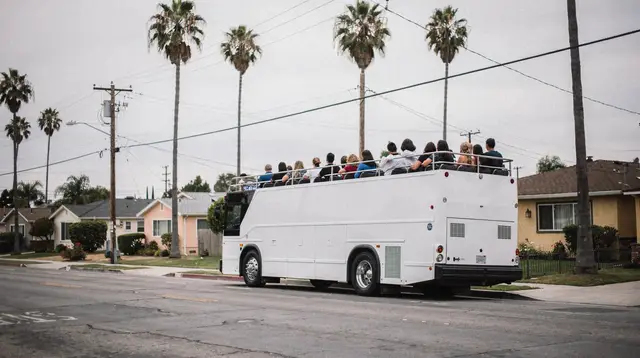
If you’d rather move at your own pace, the open-air bus tour through Hollywood and Beverly Hills works the same way, letting you hop off only where it’s worth it. For a broader list of no-cost and low-cost ideas beyond these two anchors, the dedicated free and low-cost things to do in Los Angeles piece goes much further into specifics than I will here — this is about the overall strategy, that one is about the individual ideas.
The bill is never the number on the menu
Something that caught me off guard on my first visit, and that I now budget for deliberately, is that the price on a menu or a price tag in Los Angeles is never the final price. Sales tax gets added at the register, and it is not a token amount — it is enough to notice on a family dinner. Then there is the tip, which in the United States is not a nice-to-have the way it can feel elsewhere; it is expected on top of an already tax-added restaurant bill.
Between the two, a meal can end up costing noticeably more than the number you first saw. I have started mentally padding every restaurant estimate rather than taking the printed price at face value, and I budget cooking-adjacent options — markets, food halls, casual counters — into a few days of the trip specifically to give the tipped, sit-down meals some breathing room elsewhere in the week.
What I don’t promise myself
I want to be honest about the limits of all this. None of it adds up to a guaranteed number, and I stopped trying to pin one down after my first trip — too much depends on season, party size, and personal taste in restaurants. And none of it makes the major attractions free. The theme parks remain a real, planned expense; so does a well-located hotel.
What these habits actually do is stop the budget from leaking in ways I don’t notice — an extra rental car day here, an extra park ticket there, a tipped dinner I forgot to account for. If you’re still deciding how many days to give the trip in the first place, how many days in Los Angeles is a useful companion to this, since the length of the stay changes how much slack the alternating-days approach actually gives you.
Frequently asked questions about budgeting a Los Angeles trip
Do I need a rental car for the whole trip to keep costs down?
Not necessarily. If you base yourself near a LA Metro rail line, you can cover a meaningful part of a trip — Downtown, Hollywood, Pasadena, Santa Monica — without a car every day, and rent one only for the days you head to Malibu or the desert.
Is it cheaper to do Disneyland and Universal Studios Hollywood in the same trip?
Doing both means two full dated-ticket days plus separate transport and in-park spending for each. I have found it more manageable to commit to one park per trip and save the other for a future visit rather than trying to fit both into one budget and one itinerary.
Are Griffith Observatory and Lake Hollywood Park really free?
The Griffith Observatory grounds and exterior terraces cost nothing to visit; only the planetarium show inside is a separate paid ticket. Lake Hollywood Park is a public park with no entrance fee, and it’s one of the better free viewpoints toward the Hollywood Sign.
Why does my restaurant bill end up higher than the menu prices?
Sales tax is added at checkout rather than built into the listed price, and a tip is expected on top of that at sit-down restaurants and bars. Together they can push the final bill noticeably above what the menu suggested.
Can I see Los Angeles without renting a car at all?
It’s possible if you stay near Metro-served neighborhoods and focus your days there, but you’ll likely miss places like Malibu or the desert that the rail network doesn’t reach. I treat “no car at all” as workable for part of a trip, not the whole thing.
What currency should I bring or plan around?
The US dollar (USD) is the currency used throughout Los Angeles and all of Southern California; card payments are widely accepted, but expect tax and tips to be added on top of listed prices as described above.
Is alternating paid and free days actually enough to control the budget?
It won’t produce an exact final number, but in my experience it prevents the most common leak: several paid activities stacking up on consecutive days without anyone noticing until the bill arrives.
Does booking a guided tour early in the trip actually save money later?
For me it has, indirectly — an orientation tour like the city highlights tour helped me skip smaller paid detours afterward, since I’d already seen enough to know what wasn’t worth a separate paid stop.
Tours to help plan your Los Angeles trip
Verified deep-linked GetYourGuide tours. Book through these links and we earn a small commission at no cost to you.
GetYourGuide does not provide a product photo for this activity — the image shows the meeting point, photographed by us.